Ingredients
Method
- In a small food processor, blend garlic, onion, Adobo seasoning, oregano, salt, cumin, thyme, rosemary, black pepper, chicken bouillon cube, Sazón, olive oil, and lemon juice until smooth.
- Pat dry the pork shoulder with paper towels to remove excess moisture. Use a sharp knife to poke holes all around the pork.
- Pour the marinade over the pork shoulder, ensuring it penetrates the holes for maximum flavor.
- Place the pork shoulder in a roasting pan with a wire rack, fat side up. Secure the skin with toothpicks to keep it from touching the foil. Cover with aluminum foil.
- Marinate in the fridge for at least 4 hours or overnight.
- Roast at 350°F for 4 hours covered. Then, remove the foil and roast uncovered for an additional hour until the skin is crispy. For extra crispiness, broil for the last 5 minutes.
- Let the pork rest for 15-20 minutes before slicing. Serve with rice and beans or your favorite sides.
Nutrition
Notes
Pro Tips:
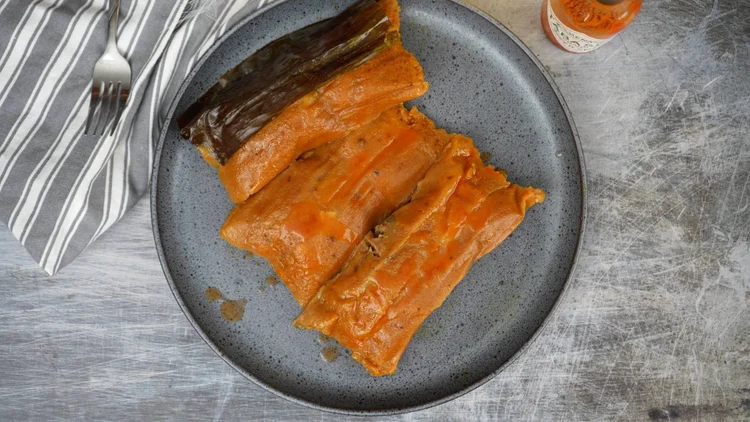
Grate your yautía and other root vegetables on the finest setting of your grater, then let the mixture sit for 10 minutes before squeezing out excess liquid through cheesecloth. This prevents watery masa that won't hold together when steaming. Source your bijao leaves from a Latin market that stores them properly frozen — they should be deep green and pliable when thawed. Avoid dried or yellowing leaves because they'll crack and make wrapping impossible. After years of making these, I always make my sofrito base three days ahead and let it rest in the fridge. The flavors meld completely and the mixture thickens, making it easier to portion onto the masa without creating soggy spots. Tie your pasteles with kitchen twine in a specific pattern: one lengthwise tie, then two crosswise ties. This traditional Dominican method ensures even pressure during the long boiling process and prevents the filling from shifting to one end.
Grate your yautía and other root vegetables on the finest setting of your grater, then let the mixture sit for 10 minutes before squeezing out excess liquid through cheesecloth. This prevents watery masa that won't hold together when steaming. Source your bijao leaves from a Latin market that stores them properly frozen — they should be deep green and pliable when thawed. Avoid dried or yellowing leaves because they'll crack and make wrapping impossible. After years of making these, I always make my sofrito base three days ahead and let it rest in the fridge. The flavors meld completely and the mixture thickens, making it easier to portion onto the masa without creating soggy spots. Tie your pasteles with kitchen twine in a specific pattern: one lengthwise tie, then two crosswise ties. This traditional Dominican method ensures even pressure during the long boiling process and prevents the filling from shifting to one end.