Ingredients
Method
- In the bowl of a standing mixer fitted with a paddle attachment, cream together the butter and sugar for about a minute until light and incorporated. Add the egg yolks and extract, then mix for another minute, scraping the sides of the bowl occasionally.
- Add the flour and salt, and mix until the dough comes together.
- Line a large baking sheet with parchment paper. Using a one tablespoon-size cookie scoop, scoop the cookie dough onto the baking sheet. Roll each ball of cookie dough between your palms until smooth.
- Using either your thumb or the back of a round ½ teaspoon, gently make an indent in the center of each cookie. Place the baking sheet in the freezer for 20 minutes.
- Preheat your oven to 350 degrees. Bake for 12-14 minutes or until the edges are lightly golden.
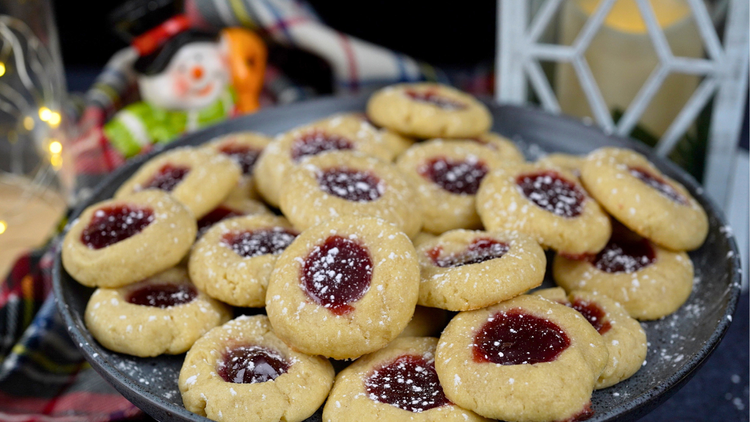
- Remove from oven and let cool on the baking sheet for 5 minutes. Fill each indent with about half a teaspoon of your favorite jam. Transfer to a wire rack to cool completely.
Nutrition
Notes
Pro Tips:
Use guava paste instead of regular jam – thin it with a tablespoon of rum and a squeeze of lime. The alcohol evaporates during baking, leaving behind complex flavor notes that pair beautifully with the buttery cookie, and the paste holds its shape better than loose jam. Press your thumbprints when the dough is slightly chilled but not rock-hard – about 15 minutes in the fridge. If it's too soft, the walls collapse; too hard and they crack. The dough should give way smoothly without the edges splitting. After twelve years of making these, I've learned to re-press the thumbprints halfway through baking when they start to puff up. The cookies are forgiving at this stage, and this second press ensures your jam pocket stays deep and defined. Choose jam with visible fruit pieces rather than smooth varieties – the fruit chunks create texture contrast and prevent the filling from becoming too liquid during baking, which can cause overflow and burnt spots on your pan.
Use guava paste instead of regular jam – thin it with a tablespoon of rum and a squeeze of lime. The alcohol evaporates during baking, leaving behind complex flavor notes that pair beautifully with the buttery cookie, and the paste holds its shape better than loose jam. Press your thumbprints when the dough is slightly chilled but not rock-hard – about 15 minutes in the fridge. If it's too soft, the walls collapse; too hard and they crack. The dough should give way smoothly without the edges splitting. After twelve years of making these, I've learned to re-press the thumbprints halfway through baking when they start to puff up. The cookies are forgiving at this stage, and this second press ensures your jam pocket stays deep and defined. Choose jam with visible fruit pieces rather than smooth varieties – the fruit chunks create texture contrast and prevent the filling from becoming too liquid during baking, which can cause overflow and burnt spots on your pan.
