Ingredients
Method
- Take the steaks out of the refrigerator and let them sit at room temperature for 30-60 minutes. Preheat your grill to high heat or heat a heavy skillet over medium-high heat. Pat the steaks dry with paper towels, then season both sides generously with salt and pepper.
- Brush the steaks with olive oil. Grill the steaks for 4-5 minutes per side for medium-rare, or until they reach your desired level of doneness. If using a skillet, sear the steaks for the same amount of time. Once cooked, transfer the steaks to a plate and tent with foil to rest while you prepare the sauce.
- In the same skillet used to cook the steaks (if using), add minced garlic and cook for 1-2 minutes until fragrant. Pour in beef broth, red wine, and balsamic vinegar, scraping up any browned bits from the bottom of the pan. Allow the sauce to simmer and reduce by half, about 5-7 minutes. Remove the skillet from heat and whisk in the butter until the sauce is smooth and glossy. Season with salt and pepper to taste.
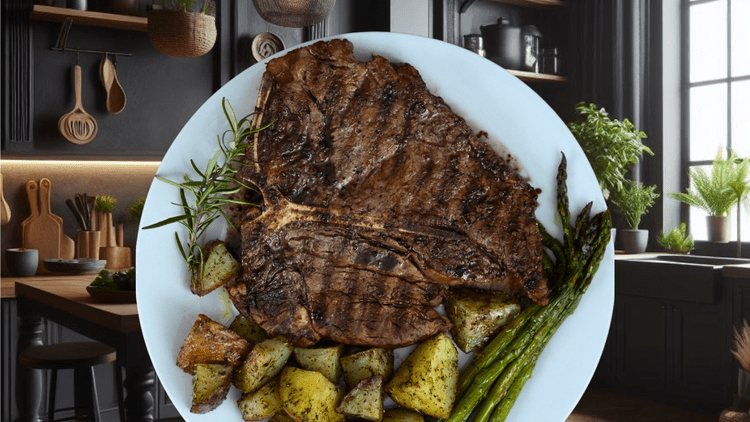
- Plate the T-bone steaks and drizzle the red wine reduction over the top. Garnish with fresh rosemary and serve alongside roasted potatoes or your favorite sides.
Nutrition
Notes
Pro Tips:
Choose T-bones cut 1.5 inches thick because thinner cuts cook too fast for the bone marrow to properly render, leaving you with great meat but a weak fond for your reduction. After years of making this dish, I always move my steak to the cooler side of the grill during the last 3 minutes because the bone conducts heat differently than meat, preventing overcooking. Use a Cabernet Sauvignon or Malbec from high-altitude regions because the concentrated tannins break down beautifully with the beef fat, creating that silky reduction texture you want. Start your reduction in the same pan you seared the steak in, but wipe out excess fat first – you want just enough to coat the bottom because too much fat will prevent proper wine evaporation.
Choose T-bones cut 1.5 inches thick because thinner cuts cook too fast for the bone marrow to properly render, leaving you with great meat but a weak fond for your reduction. After years of making this dish, I always move my steak to the cooler side of the grill during the last 3 minutes because the bone conducts heat differently than meat, preventing overcooking. Use a Cabernet Sauvignon or Malbec from high-altitude regions because the concentrated tannins break down beautifully with the beef fat, creating that silky reduction texture you want. Start your reduction in the same pan you seared the steak in, but wipe out excess fat first – you want just enough to coat the bottom because too much fat will prevent proper wine evaporation.
