
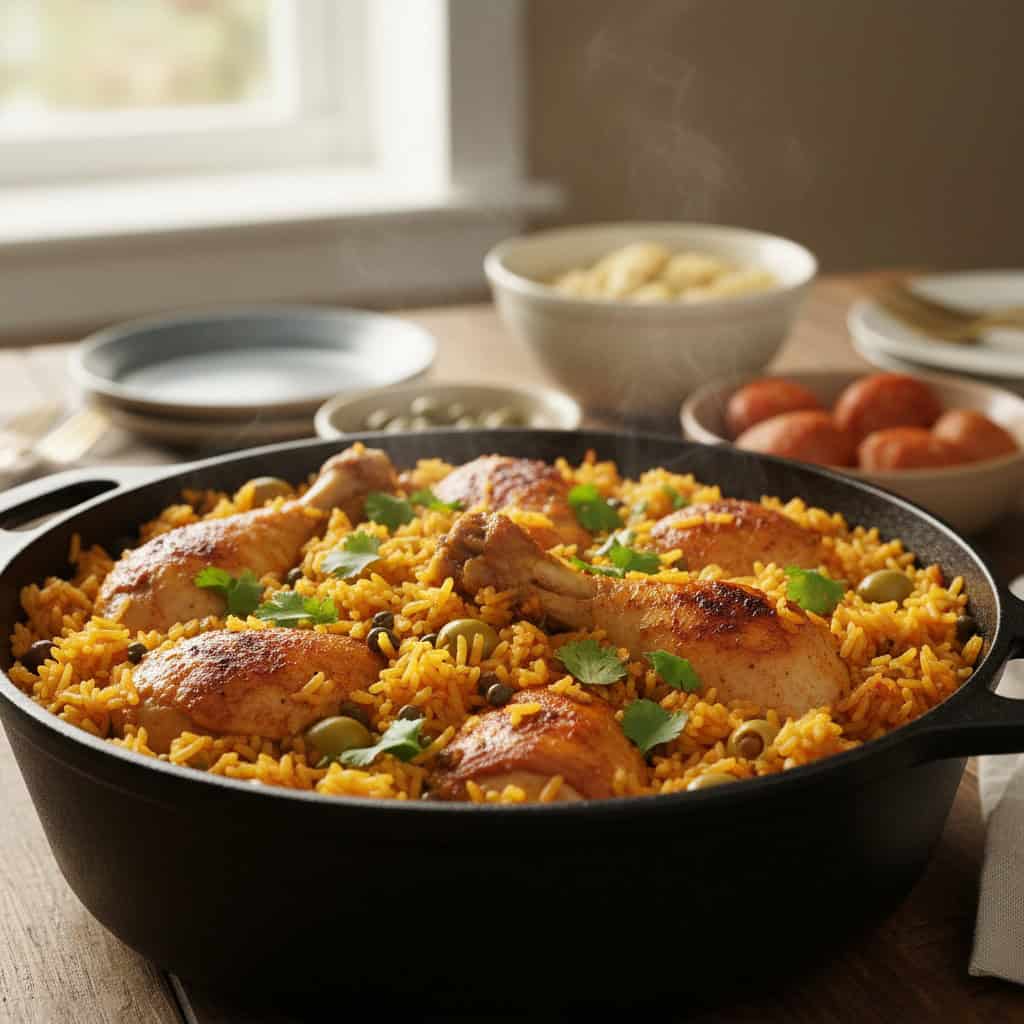
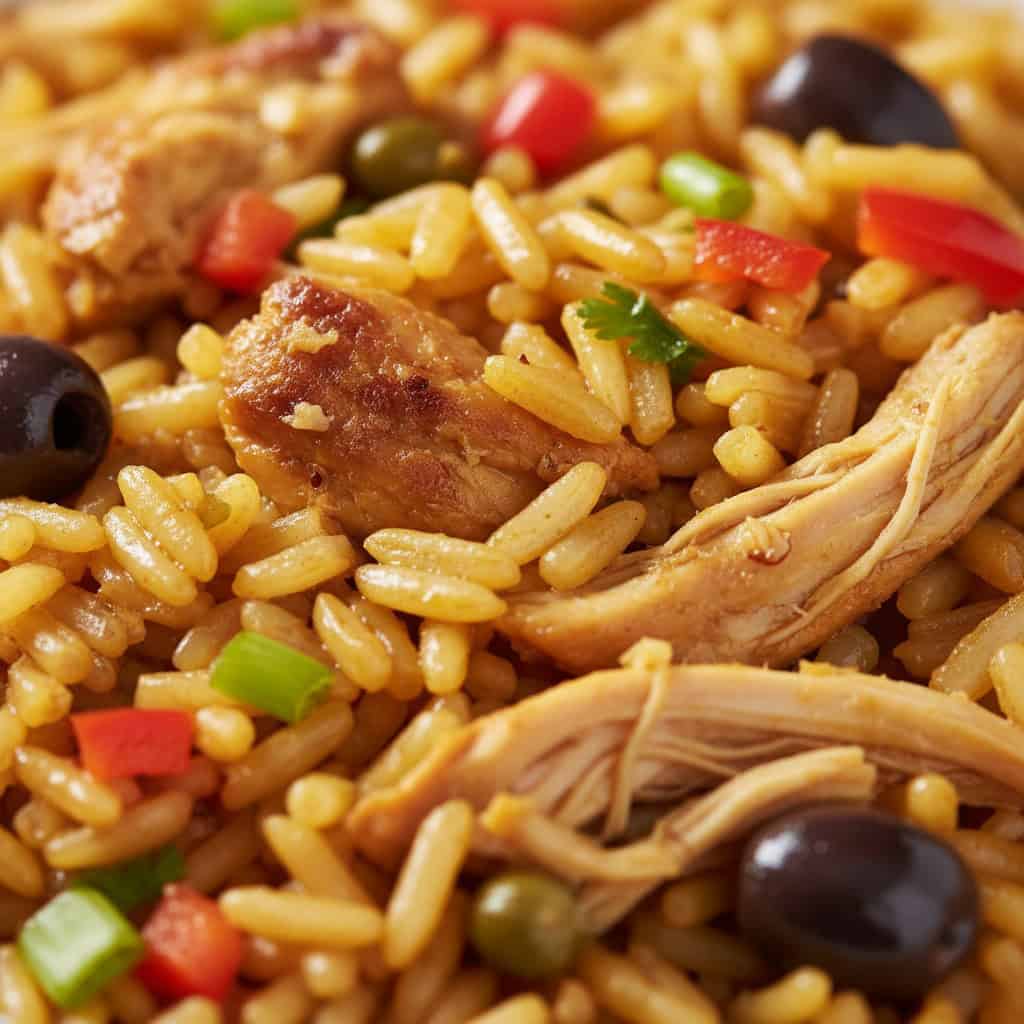
Locrio de pollo is the Dominican version of arroz con pollo, but trust me — it's better. Where Puerto Rican arroz con pollo is bright yellow with sofrito and saffron, Dominican locrio is darker, deeper, more savory. The chicken gets seared in azúcar quemada first, then the rice cooks in the chicken drippings until every grain is infused with flavor.
This is the dish my mom made for weeknight dinners growing up. One pot, one hour, feeds the whole family. We didn't have meal prep apps in 1990s Santo Domingo. We had locrio de pollo.
I'll show you the Dominican technique that makes the rice and chicken taste like they were always meant to be together.
Why You'll Love This Locrio de Pollo Recipe
- One-pot meal: Chicken and rice cook together in one pot — less cleanup.
- Authentic Dominican flavor: Azúcar quemada and sofrito create the signature dark, savory taste.
- Weeknight friendly: Ready in under an hour — perfect for busy weeknights.
- Feeds a crowd: Easily stretches to feed 6-8 people for under $15.
- Better leftovers: Day-2 locrio is somehow even more flavorful.
What Is Locrio de Pollo?
Locrio de pollo is rice and chicken cooked together in a single pot — the Dominican equivalent of arroz con pollo. The word 'locrio' refers specifically to a one-pot rice dish where rice cooks in the same pot as another protein, absorbing all the flavors as it cooks.
Dominican locrio differs from Puerto Rican arroz con pollo in three key ways: the use of azúcar quemada (caramelized sugar) to sear the chicken, which gives the dish its signature dark color; the absence of sofrito as the primary base (Dominicans typically use fresh aromatics chopped fresh); and the addition of olives and capers for brininess.
Locrio is everyday food in the Dominican Republic — not a special occasion dish like sancocho or pernil. It's what you make on a Tuesday when you need to feed a family quickly with whatever's in the kitchen.
Locrio also has a special place in Dominican working-class culinary tradition. Like many one-pot Dominican dishes, locrio was developed as economical food that could feed a family completely from a single pot using affordable ingredients. A pound of chicken thighs and 3 cups of rice cost very little but can feed 6-8 people generously. This economic origin explains why locrio remains so beloved — it represents the wisdom of stretching resources without sacrificing flavor. The dish also became important during economic hardships in the Dominican Republic. During the 1980s and 1990s, when many Dominican families faced economic pressure, locrio was a way to put a substantial meal on the table for less money. The Dominican diaspora carried this practical tradition with them — many Dominican-American families still make locrio specifically when they want a budget-friendly family meal. Beyond its economic role, locrio also serves as the canvas for using up odds and ends in Dominican kitchens. Got leftover roast chicken? Make locrio. Got a piece of fish? Locrio de pescado. Got smoked sausage? Locrio de longaniza. The technique is so flexible that it can absorb almost any protein and produce a satisfying meal. This is what makes locrio one of the most fundamental dishes in the Dominican culinary repertoire — once you know how to make it, you can adapt it to whatever's in your refrigerator.
Locrio also represents an important shift in how Dominican home cooks approach weekday meals. Where many home cooking traditions are facing decline as families turn to processed foods and takeout, locrio remains popular precisely because it solves the modern problem of fast, satisfying, healthy home cooking. A 45-minute one-pot meal that feeds 6 people for $15 is hard to beat. Younger Dominican-Americans who grew up eating locrio often continue making it as adults specifically because it represents a practical alternative to fast food. This makes locrio one of the rare traditional dishes that is actually growing in popularity rather than declining. Cooking blogs, YouTube channels, and TikTok accounts are full of Dominican-American home cooks sharing their locrio variations and techniques.
Ingredients You'll Need
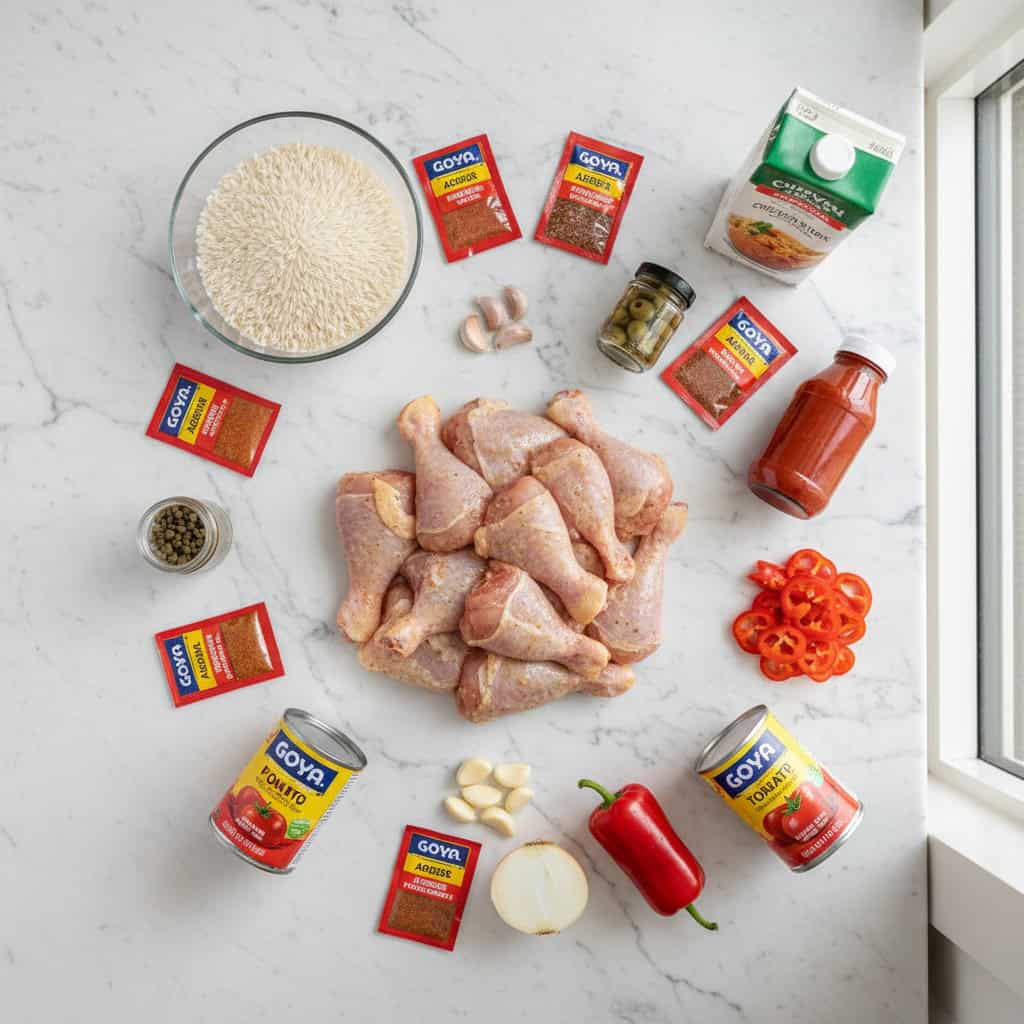
- 3 lbs bone-in chicken pieces, cut into smaller pieces
- 2 packets sazón con culantro y achiote
- 1 tablespoon adobo seasoning
- 1 teaspoon dried oregano
- 4 cloves garlic, minced
- 3 tablespoon vegetable oil
- 2 tablespoon granulated sugar
- 1 large onion, diced
- 1 cubanelle pepper, diced
- ½ red bell pepper, diced
- 2 tablespoon tomato paste
- ¼ cup tomato sauce
- ¼ cup pimiento-stuffed olives
- 1 tablespoon capers
- 3 cups long-grain rice
- 4 ½ cups chicken stock
- 1 tablespoon fresh cilantro, chopped
- Salt and pepper to taste
Equipment: A large heavy pot or All-Clad Dutch Oven is essential.
Step-by-Step Instructions
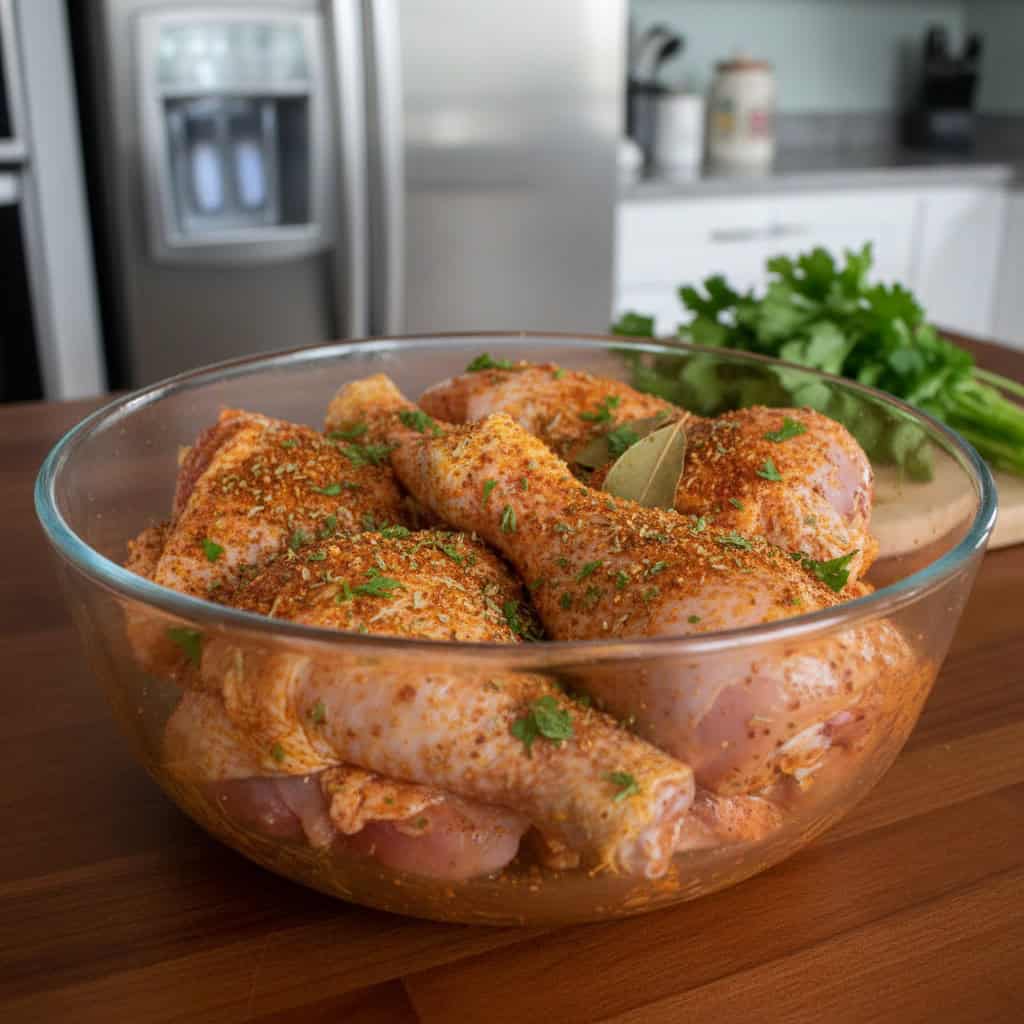
Step 1 — Season the Chicken
Season chicken with sazón, adobo, oregano, garlic. Let sit 30 min minimum.
Step 2 — Make Azúcar Quemada
Heat oil in heavy pot over medium-high. Add sugar, let caramelize without stirring 2-3 min until deep mahogany.
Step 3 — Sear the Chicken
Add chicken in single layer (work in batches). Sear 3-4 min per side until golden. Remove and set aside.
Step 4 — Build the Sofrito
Add onion, cubanelle, red bell pepper. Sauté 5 min. Add tomato paste, caramelize 2 min. Add tomato sauce, olives, capers.
Step 5 — Add Rice and Liquid
Add dry rice. Stir to coat in sauce. Add chicken stock. Stir once. Return chicken pieces to pot, nestling them in.
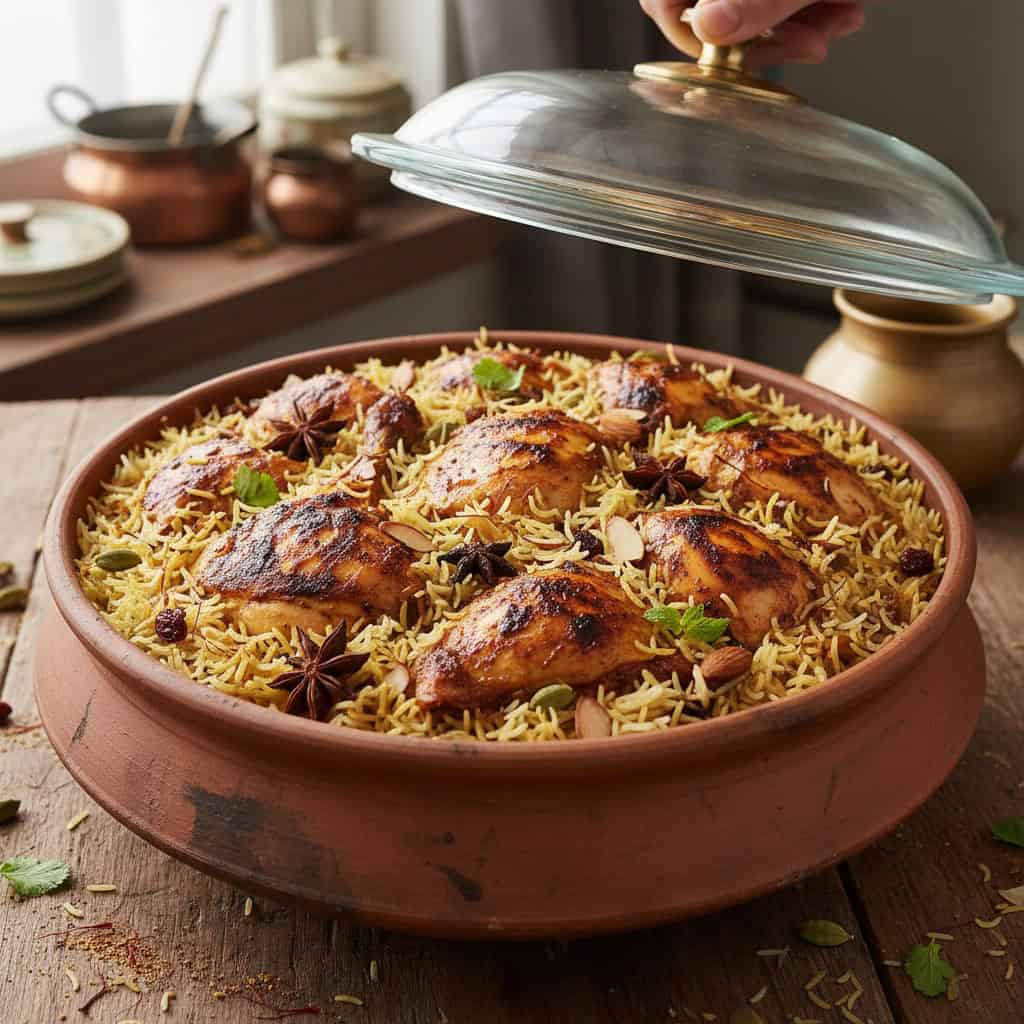
Step 6 — Cook Covered
Bring to boil. Cover tightly, reduce to lowest heat. Cook 25-30 min undisturbed.
Step 7 — Rest and Serve
Off heat, let sit covered 10 min. Stir in cilantro. Fluff and serve.
Pro Tips for Perfect Locrio de Pollo
- Use bone-in chicken: The bones release flavor into the rice as it cooks.
- Don't lift the lid: Once it's covered, leave it alone for 25-30 min. Steam is cooking everything.
- Heavy pot only: Thin pots scorch the rice unevenly. Use a Dutch oven or thick caldero.
- Get the rice-to-liquid ratio right: 1.5:1 chicken stock to rice — slightly less than plain rice because of the moisture in the chicken.
- Aim for concón: If you let the locrio sit on low heat 5 extra min, you'll develop a crispy bottom — the best part.
- Cut chicken into smaller pieces: If your chicken thighs are huge, cut them into 2-3 smaller pieces with a heavy knife. This helps them cook more evenly with the rice and ensures every serving gets a piece of chicken.
- Develop concón at the end: After the rice is done cooking, leave the pot on the lowest heat for an extra 5-7 minutes (don't lift the lid). This forms a crispy bottom layer of rice that's the most coveted part of any Dominican locrio.
- Use a heavier pot for the best results: Locrio cooks best in a heavy aluminum caldero or cast iron Dutch oven. Thinner pots cause uneven cooking and risk scorching. The heavy bottom retains heat evenly throughout the cooking process.
- Adjust seasoning for the rice: Since the rice absorbs all the cooking liquid, taste the broth before adding the rice and adjust salt accordingly. The rice will dilute strong flavors but not weak ones — better to err slightly on the side of more seasoning before the rice goes in.
Variations
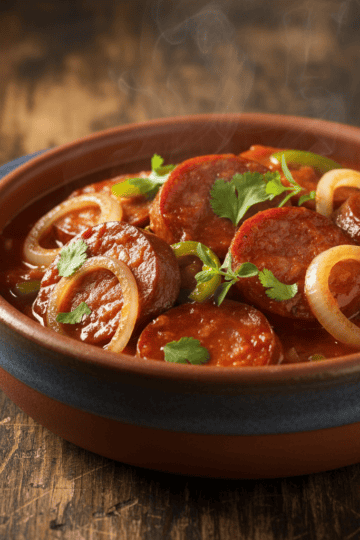
Locrio de Salami
Substitute chicken with sliced Dominican salami. Vegetarians can use mushrooms. Same technique.
Locrio de Mariscos (Seafood)
Use shrimp, calamari, and chunks of white fish instead of chicken. Add seafood in last 10 min only — it cooks fast.
Instant Pot Locrio
Sauté and sear on sauté mode. Pressure cook 8 min with 10 min natural release. Foolproof.
What to Serve With Locrio de Pollo
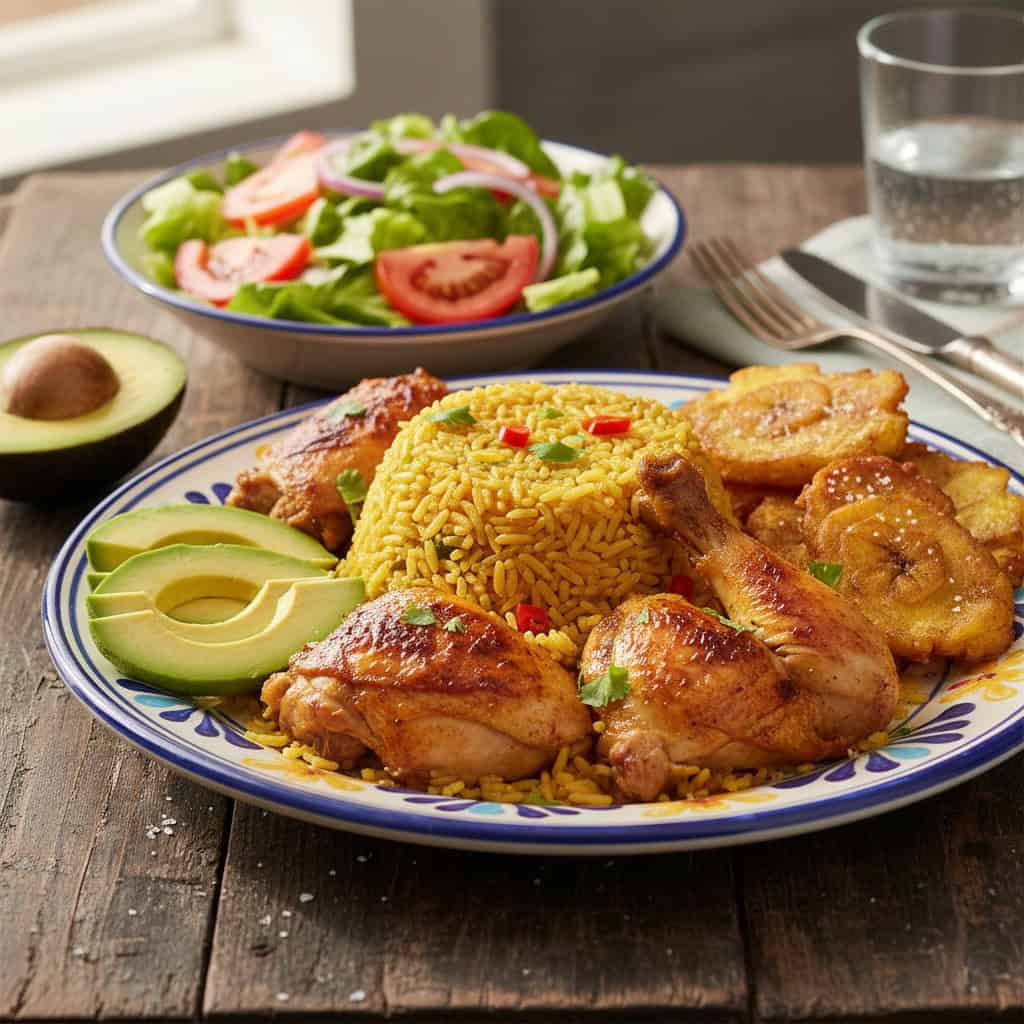
- Sliced avocado: Always.
- Ensalada verde: Simple lettuce, tomato, cucumber salad with lime dressing.
- Tostones: Crispy plantains for crunch.
- Habichuelas guisadas on the side: Some Dominicans love beans alongside locrio.
- Pickled onions: Cebolla curtida adds bright acid to cut richness.
You May Also Like
Frequently Asked Questions
What's the difference between locrio and arroz con pollo?
Locrio is the Dominican name; arroz con pollo is more general Latin American. Dominican locrio uses azúcar quemada (caramelized sugar), giving it a darker, more savory color than the bright yellow Puerto Rican or Cuban versions.
Can I use boneless chicken?
Yes, but the flavor won't be as rich. Bone-in pieces release collagen and flavor into the rice. If using boneless, reduce cooking time to 20 minutes total.
Why is my rice mushy?
Too much liquid, or you opened the lid during cooking. Stick to the 1.5:1 ratio of stock to rice and don't lift the lid for at least 25 minutes.
Can I use brown rice?
Yes — increase liquid to 2:1 ratio and cook 40-45 minutes. The texture will be different but still delicious.
How do I get concón in locrio?
After the 25 minutes of cooking, leave the pot on the lowest heat for an additional 5-7 minutes. Listen for crackling. Don't lift the lid.
Can I make locrio ahead?
Yes — locrio reheats beautifully. Refrigerate up to 5 days. Reheat covered with a splash of water in the microwave or stovetop.
What if I don't have azúcar quemada?
You can skip it but the dish loses its signature dark color. Substitute with 1 tablespoon paprika for color (won't be the same flavor though).
Why is my locrio rice mushy?
Two common reasons: too much liquid, or you opened the lid too early. Stick to the 1.5:1 ratio of stock to rice (slightly less than plain rice because the chicken adds moisture). Once you cover the pot, don't lift the lid for at least 25 minutes.
Can I make locrio with brown rice?
Yes, but adjust your liquid and time. Use 2 cups of stock per cup of brown rice, and increase the cooking time to 40-45 minutes. The texture will be slightly chewier than white rice, but the flavors absorb beautifully. Brown rice locrio is a popular healthier modern variation.
What's the difference between locrio and arroz con pollo?
Locrio is specifically Dominican; arroz con pollo is the general Spanish-language term used across Latin America. The Dominican version uses azúcar quemada (caramelized sugar) which gives it a darker, more savory character than the bright yellow Puerto Rican or Cuban arroz con pollo. Dominican locrio is also typically heavier on tomato and lighter on saffron/achiote.
Can I make locrio in advance?
Yes — locrio actually reheats beautifully and is often made the day before for meal prep. Refrigerate up to 5 days in airtight containers. Reheat covered with a splash of water or stock in the microwave or on the stovetop. The texture stays good and the flavors continue to develop.
Why is locrio considered a complete meal?
Locrio combines all the macronutrients in one pot: protein (chicken), complex carbohydrates (rice), and vegetables (sofrito ingredients, peppers, olives). It also includes healthy fats (olive oil, chicken skin) and is well-seasoned for satisfying flavor. With a side of avocado for fiber and good fats, locrio is nutritionally complete and traditionally served as a one-dish meal in Dominican households.
Should the chicken be cooked through before adding the rice?
Not completely — sear the chicken to develop color and flavor (about 3-4 minutes per side), but don't try to cook it fully at this stage. The chicken finishes cooking with the rice during the 25-30 minute simmer. If you cook the chicken too much during searing, it will overcook and become dry by the time the rice is done.
Can I add vegetables to locrio?
Yes — many Dominican families add diced carrots and peas to locrio for color and nutrition. Add them when you add the rice and stock. They cook perfectly during the 25-minute simmer. This is a popular variation called 'locrio con verduras' and is becoming more common as families incorporate more vegetables into traditional dishes.
Dominican Locrio de Pollo
Ingredients
Method
- Season chicken with sazón, adobo, oregano, garlic. Sit 30 min.
- Heat oil + sugar in heavy pot. Caramelize 2-3 min to mahogany.
- Sear chicken in batches 3-4 min per side. Set aside.
- Sauté onion, peppers 5 min. Add tomato paste, caramelize 2 min. Add tomato sauce, olives, capers.
- Add rice, stir to coat. Add stock, stir once. Return chicken to pot.

- Boil. Cover, lowest heat, 25-30 min undisturbed.
- Rest covered 10 min. Stir in cilantro. Fluff and serve.

Notes
Tried this recipe?
Let us know how it was!Shop This Recipe
View on Amazon →
View on Amazon →
View on Amazon →
As an Amazon Associate I earn from qualifying purchases at no extra cost to you.
Make this on a Tuesday and you'll wonder why you ever ordered takeout.


Leave a Reply