
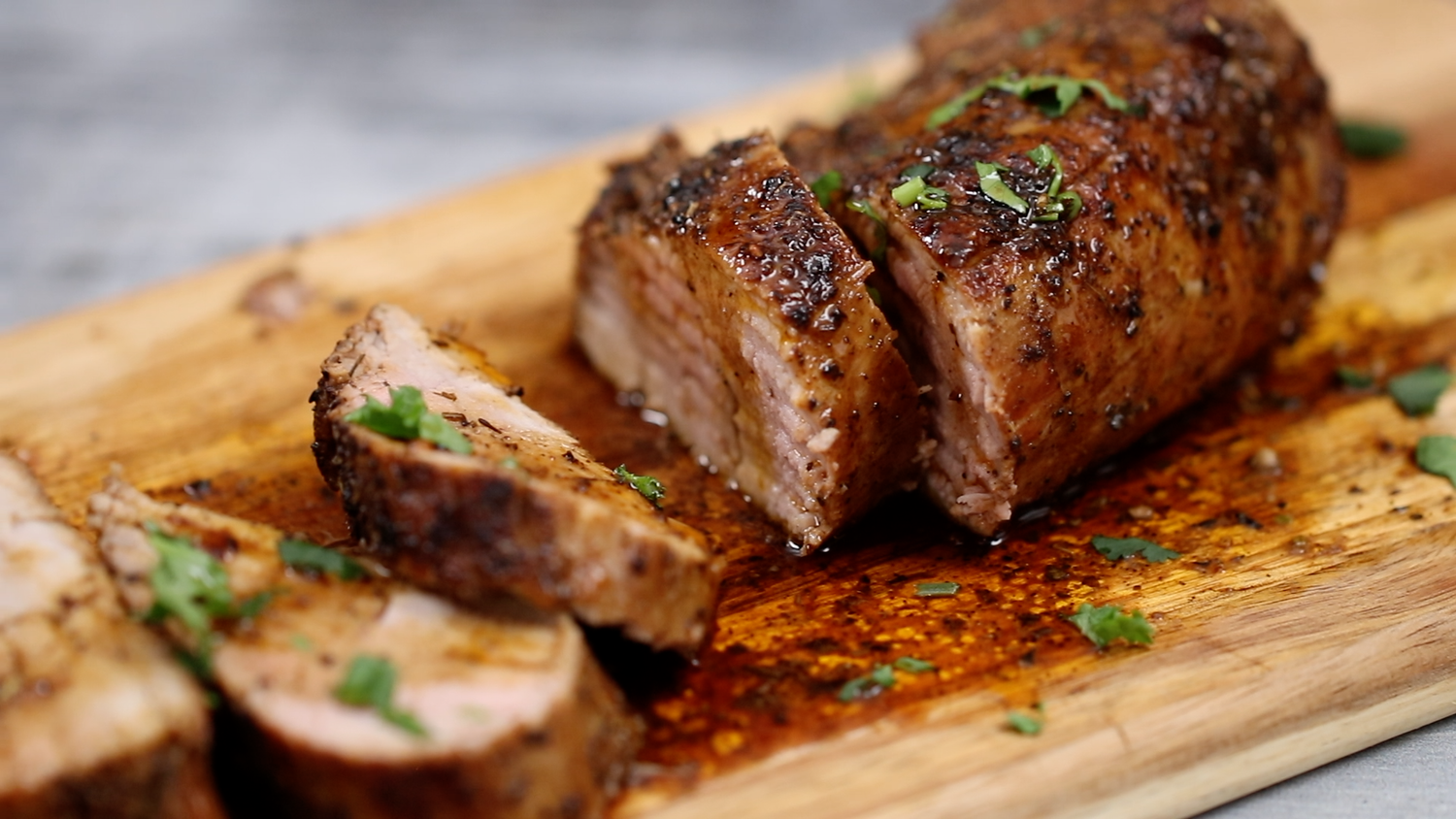
This Juicy Pork Tenderloin is one of our all-time favorite weeknight dinners. Perfectly seasoned with a flavorful spice rub and roasted until golden and tender, it comes together in under 30 minutes. Serve it sliced with your favorite sides for a meal the whole family will love!
About This Recipe
Here's something that'll blow your mind: pork tenderloin is actually leaner than most chicken thighs, with only 3 grams of fat per 3.5-ounce serving compared to chicken thigh's 9 grams. But here's the kicker – tenderloin's unique muscle structure means it contains more selenium per ounce than almost any other cut of pork. This trace mineral is crucial for your thyroid function and acts as a powerful antioxidant. What makes this matter for our baked recipe is that selenium actually becomes more bioavailable when cooked at moderate temperatures (like our 425°F), but it starts breaking down above 450°F. That's why I never blast tenderloin at high heat – you're literally cooking away one of its best nutritional benefits. Plus, that low fat content means every degree of temperature control matters for keeping it juicy. When you nail this recipe, you're getting restaurant-quality protein that's doing serious work for your metabolism.
Ingredients for Juicy Pork Tenderloin Recipe – Easy & Baked
- 1 teaspoon kosher salt — or to taste
- ½ teaspoon freshly ground black pepper
- ½ teaspoon smoked paprika
- 1 teaspoon Italian seasoning
- 1 teaspoon garlic powder
- 1 teaspoon ground coriander
- ½ teaspoon dried rosemary
- 2 tablespoon extra light olive oil or avocado oil — divided
- 2 lbs Pork Tenderloin
- Italian parsley for garnish — optional
How to Make Juicy Pork Tenderloin Recipe – Easy & Baked
- 1. Preheat the Oven:
- 2. Prepare the Pork Tenderloin:
- 3. Season the Pork:
- 4. Sear the Pork:
- 5. Roast in the Oven:
- 6. Rest and Serve:
- Enjoy your perfectly roasted and juicy pork tenderloin!
What to Serve With Juicy Pork Tenderloin Recipe – Easy & Baked
This tender pork absolutely shines alongside my Dominican-style moros y cristianos - the earthy black beans and fluffy rice create the perfect canvas for the pork's savory crust. The combination is pure comfort food that reminds me of Sunday dinners growing up.
For a lighter balance, try pairing this with roasted Brussels sprouts tossed with crispy bacon and a splash of balsamic glaze. The slight bitterness of the sprouts cuts through the pork's richness beautifully, while the bacon echoes those smoky flavors without overwhelming your palate.
Sweet potato mash brings out the pork's natural sweetness while adding that creamy texture contrast you crave. I love finishing it with a pat of butter and just a hint of cinnamon - it's like having dessert built right into your main course.
Frequently Asked Questions
1. What temperature should I bake pork tenderloin?
Sear in a hot skillet first, then bake at 400 degrees for 18-22 minutes until the internal temperature reaches 145 degrees. The sear-and-bake method gives the best crust and juiciest interior.
2. What internal temperature is pork tenderloin done?
145 degrees Fahrenheit per current USDA guidelines. Pull at 140 degrees and rest 8 minutes — carryover heat brings it to 145. At this temperature, the meat is slightly pink and incredibly juicy.
3. Should I remove the silver skin?
Always — the silver skin is a tough, silvery membrane that does not render during cooking. Slide a sharp knife under one end and pull it off in strips for the most tender result.
4. What seasoning works best?
A simple rub of garlic powder, smoked paprika, onion powder, dried thyme, salt, and pepper. For something bolder, a honey garlic or Dijon herb crust adds extra flavor dimension.
5. How do I sear pork tenderloin?
Get an oven-safe skillet very hot with oil. Sear the tenderloin on all sides for 2-3 minutes per side until deeply browned. Transfer the whole skillet directly to the preheated oven.
6. Why is my pork tenderloin dry?
Overcooked past 145 degrees or not rested after cooking. Pork tenderloin is very lean with almost no fat, so every degree past 145 dries it out significantly. A meat thermometer is essential.
7. How long does pork tenderloin take per pound?
About 20-25 minutes per pound at 400 degrees after searing. A typical 1.25-pound tenderloin takes about 18-22 minutes. Always use a thermometer rather than time alone.
8. Should I brine pork tenderloin?
A quick 30-minute brine in salted water or a dry brine with salt overnight adds significant moisture and flavor. Brining is the best insurance against dry pork tenderloin.
9. What sides pair with baked pork tenderloin?
Roasted sweet potatoes, garlic mashed potatoes, sauteed green beans, apple-walnut salad, or rice pilaf all complement the mild, tender pork beautifully.
10. How do I slice pork tenderloin?
Rest 8-10 minutes first, then slice crosswise into ½-inch thick medallions against the grain. Fan the slices on a platter and drizzle with any pan juices.
Juicy Pork Tenderloin Recipe – Easy & Baked Video
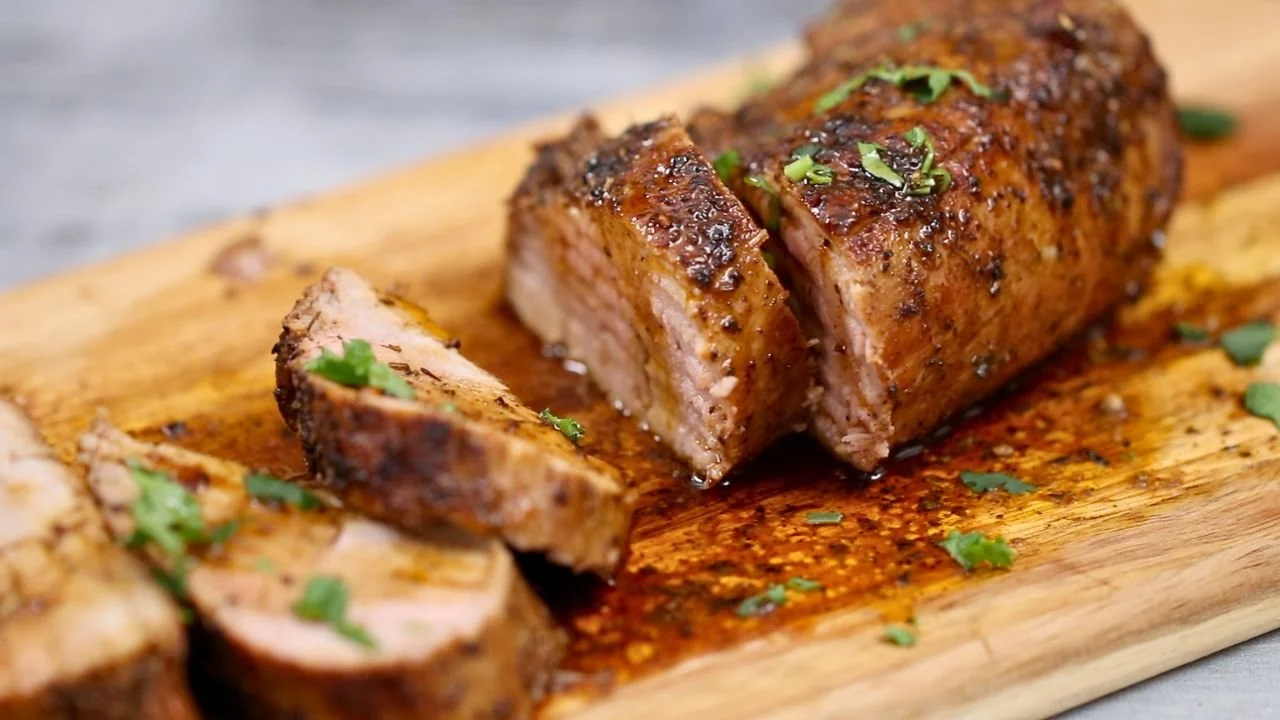
Juicy Pork Tenderloin Recipe – Easy & Baked
Ingredients
Method
- 1. Preheat the Oven:
- 2. Prepare the Pork Tenderloin:
- 3. Season the Pork:
- 4. Sear the Pork:
- 5. Roast in the Oven:
- 6. Rest and Serve:
- Enjoy your perfectly roasted and juicy pork tenderloin!
Nutrition
Notes
Choose tenderloins that feel firm but give slightly to pressure – they should have a pale pink color with minimal silver skin. Avoid any with dark spots or excessive liquid in the package because that indicates the meat was previously frozen and thawed improperly, which ruins the texture. After years of making this, I learned to tent the tenderloin with foil halfway through baking if the top starts browning too fast. The lean meat can go from perfectly golden to tough and dry in just 5 minutes, so this prevents overcooking while the center reaches temperature. Let your seasoned tenderloin sit at room temperature for exactly 20-30 minutes before baking. This isn't just about even cooking – tenderloin's dense muscle fibers need time to relax and absorb the seasonings, otherwise you get bland meat with all the flavor sitting on the surface. Slice against the grain at a 45-degree angle using a very sharp knife. Tenderloin has long muscle fibers that become chewy if cut straight down, but that angled cut breaks them properly and creates those picture-perfect medallions that actually taste as good as they look.

Leave a Reply