
If you've never braised pork hocks before, you're about to discover one of the most underrated cuts in the entire butcher case. Pork hocks — those thick, meaty cross-sections of the leg — are dirt cheap, packed with collagen, and practically impossible to mess up when you cook them low and slow. Combined with split pork feet, which add even more body and gelatin to the braising liquid, you end up with a sauce so rich and silky it could make a Michelin chef weep. This is pure, unapologetic comfort food — the kind of dish that fills your entire kitchen with the most incredible aroma for hours and rewards your patience with meat so tender it falls apart at the touch of a fork. Whether you serve it over creamy mashed potatoes, soft polenta, or just a slab of crusty bread to soak up that sauce, this is a meal that punches way above its price point.
What Are Pork Hocks?
Pork hocks (also called ham hocks or pork knuckles) are cut from the lower leg of the pig, right above the foot and below the ham. They're a tough, sinewy cut loaded with connective tissue, skin, tendons, and a modest amount of meat surrounding a central bone. That might not sound glamorous, but it's exactly what makes them perfect for braising. All that connective tissue is pure collagen, and when you cook it low and slow in liquid, it breaks down into gelatin — transforming the braising liquid into a luxuriously thick, glossy sauce without adding a single thickener. Pork hocks are used across cuisines worldwide — German Schweinshaxe, Chinese red-braised pork knuckle, Filipino crispy pata — and for good reason. They deliver massive flavor for very little money.
When you add pork feet to the braise alongside the hocks, you're doubling down on that collagen richness. Pork feet are almost entirely skin, bone, and connective tissue — they don't contribute much meat, but they make the sauce extraordinarily rich and full-bodied. Together, pork hocks and feet create a braise that's greater than the sum of its parts.
Why This Recipe Works
- Budget-friendly: Pork hocks and feet are some of the cheapest cuts available — often under $3/lb. This entire recipe feeds 4-6 people for around $12.
- Collagen-rich and naturally thickened: The combination of hocks and feet produces an incredibly silky, glossy sauce with zero added thickeners beyond a touch of flour for the initial roux.
- Deeply savory flavor: Searing builds a fond, tomato paste adds umami depth, white wine brings acidity, and the long braise concentrates everything into a rich, complex sauce.
- Foolproof technique: Once everything is in the pot, you just let it simmer. No fussing, no basting, no tricky temperatures. Time does the work.
- Make-ahead and freezer-friendly: Like all braises, this tastes even better the next day and freezes beautifully for up to 3 months.
Ingredients You'll Need
This recipe uses simple, widely available ingredients. The magic is in the technique and the time, not exotic pantry items.
- 4 thick-cut pork hocks
- 4 pork feet, sliced in half
- 1 tablespoon olive oil
- 1 tablespoon butter
- 1 large yellow onion, diced
- 1 large carrot, diced
- 2 ribs celery, diced
- 1 teaspoon kosher salt
- ¼ cup tomato paste
- 2 tablespoons all-purpose flour
- 1 cup white wine
- 2 cups chicken stock
- 1 bay leaf
- ½ teaspoon dried thyme
- ½ teaspoon dried rosemary
- ⅛ teaspoon ground oregano
- 1 teaspoon smoked paprika
- Salt and pepper to taste
- Chopped Italian parsley for garnish
Equipment: A heavy Dutch oven is essential here — it goes from stovetop to oven (or stays on the stovetop) and distributes heat evenly. If you prefer a hands-off approach, a slow cooker works too — sear first on the stove, then transfer everything to the slow cooker on low for 6-8 hours.
Step-by-Step Instructions
Step 1 — Season and Sear the Meat
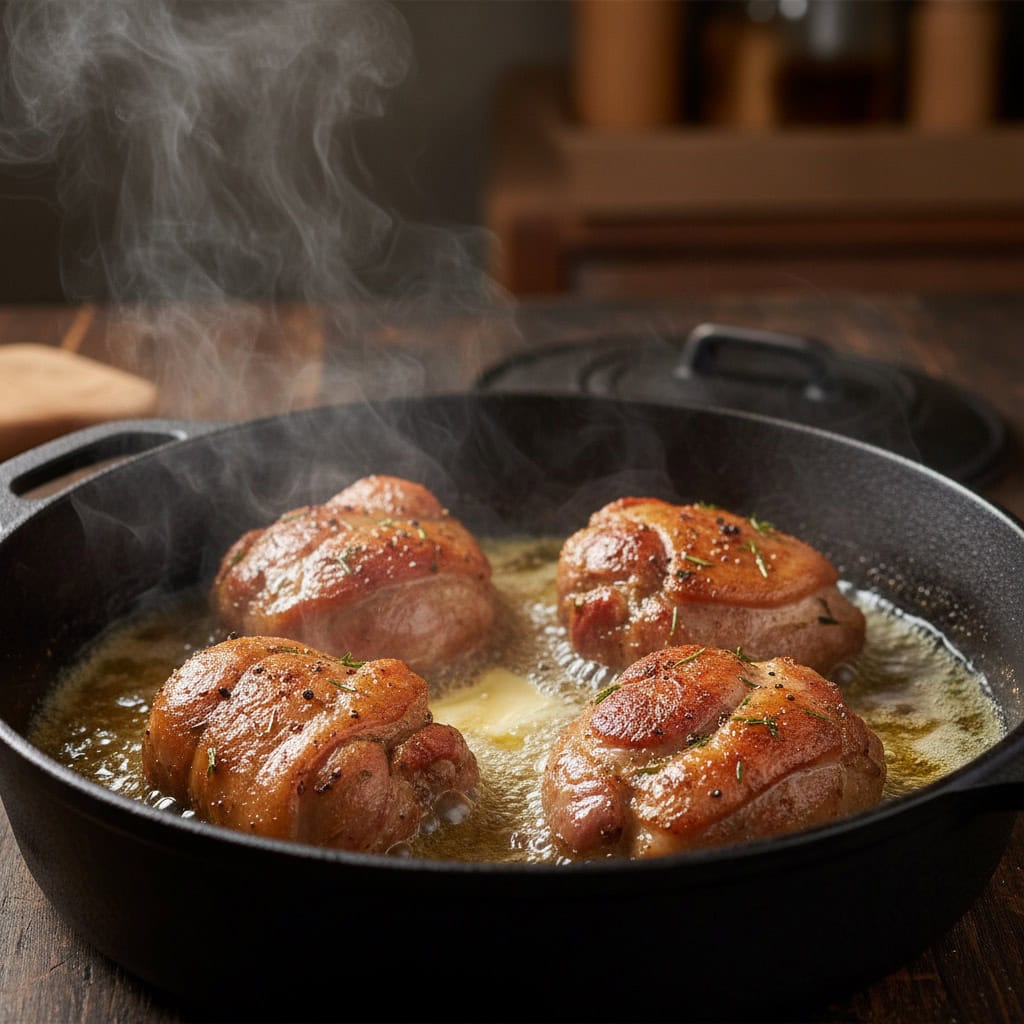
Pat the pork hocks and feet completely dry with paper towels — this is crucial for a good sear. Season generously on all sides with salt and pepper. Heat olive oil and butter in a large Dutch oven over high heat until the butter is foaming. Working in batches to avoid crowding, sear the pork hocks and feet for 3-4 minutes per side until you get a deep golden-brown crust. Don't rush this step — that caramelized crust is flavor you can't get any other way. Remove the seared meat and set aside on a plate.
Step 2 — Build the Aromatic Base
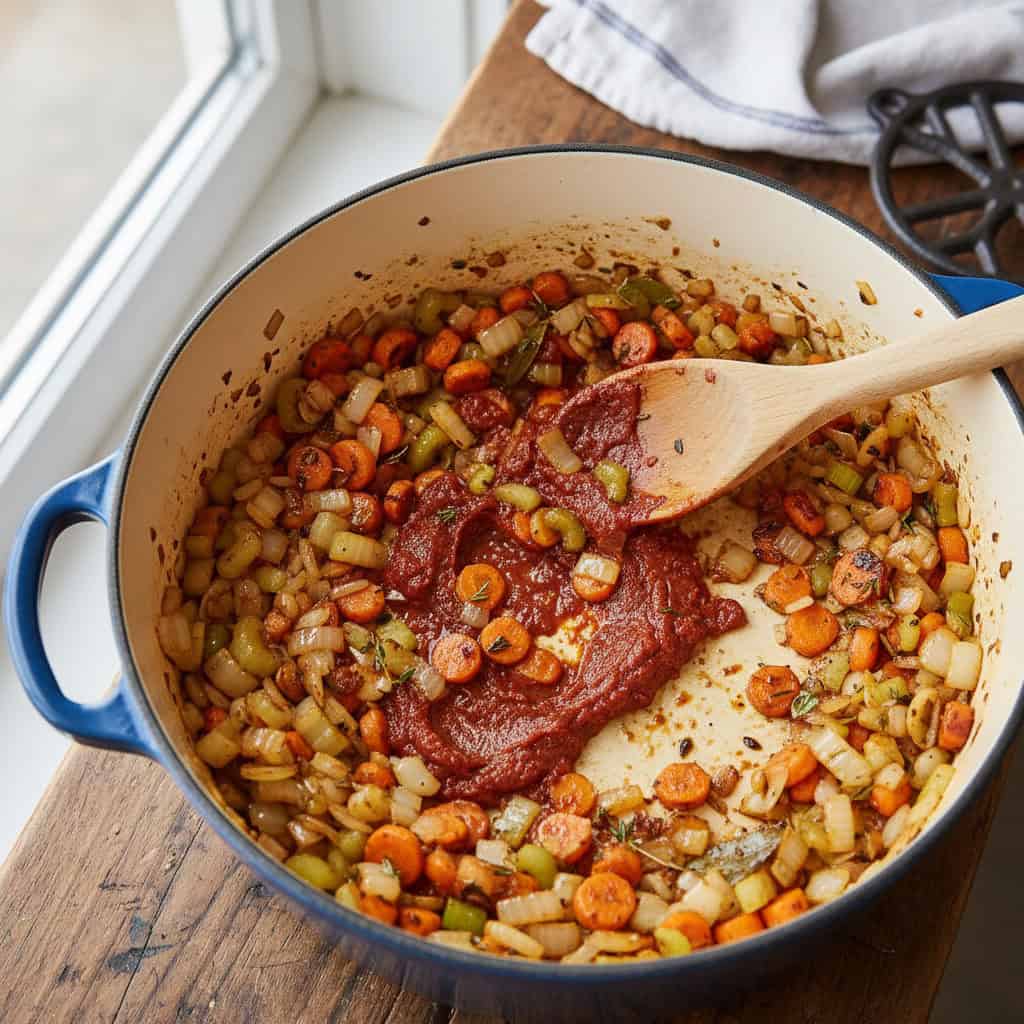
In the same pot with all those beautiful browned bits (the fond), add the diced onion, carrot, celery, and kosher salt. Cook over medium heat until the vegetables are softened and translucent, about 5-6 minutes. The salt helps draw out moisture and speeds up the softening process. Add the tomato paste and stir it into the vegetables. Let it cook for 2 minutes — you want it to caramelize slightly and deepen in color. This toasted tomato paste is a secret weapon for building savory depth. Sprinkle in the flour and stir constantly for another 2 minutes to cook out the raw flour taste and create a light roux that will help thicken the sauce.
Step 3 — Deglaze and Build the Braising Liquid
Pour in the white wine and raise the heat to medium-high. Use a wooden spoon to scrape up all the browned bits stuck to the bottom of the pot — that's pure concentrated flavor. Let the wine reduce slightly for 2-3 minutes, then add the chicken stock, bay leaf, thyme, rosemary, oregano, and smoked paprika. Stir everything together and bring to a simmer.
Step 4 — Braise Low and Slow
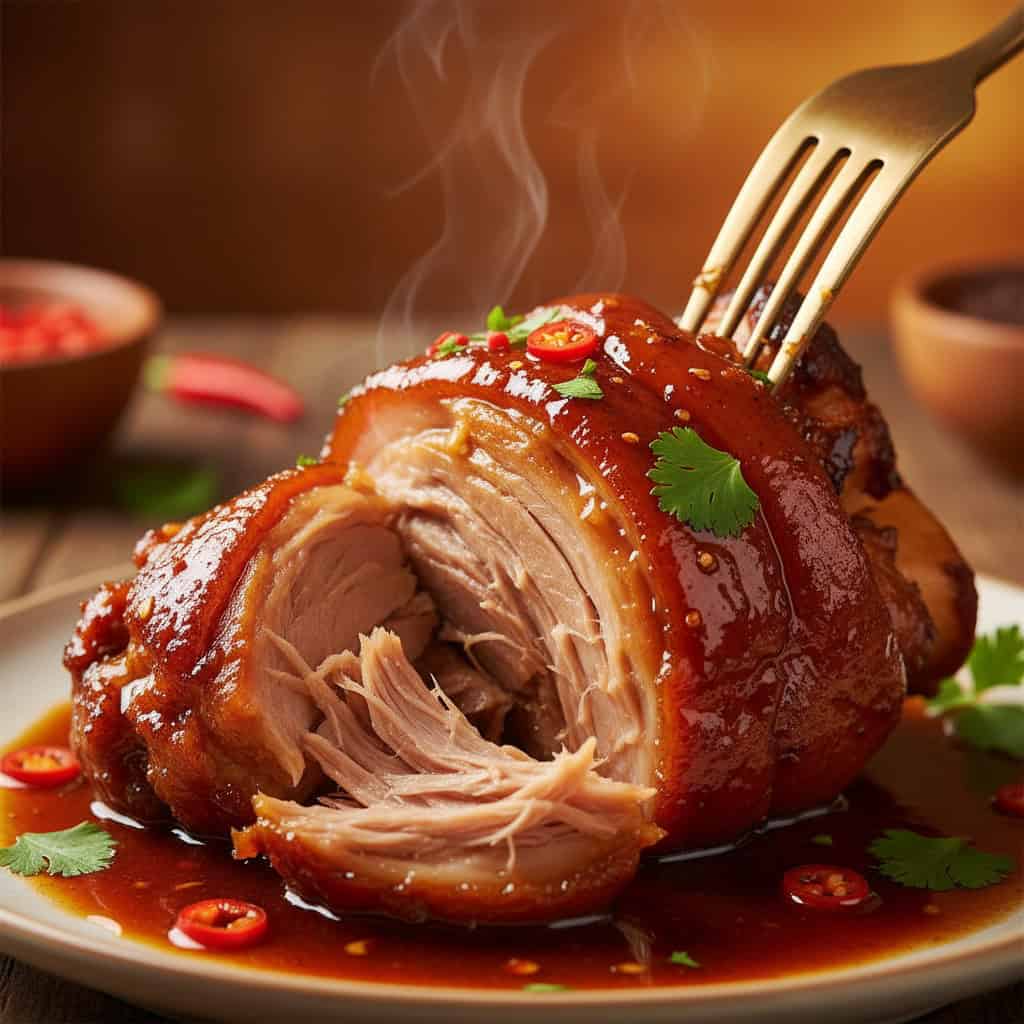
Return all the seared pork hocks and feet to the pot. The liquid should come about two-thirds of the way up the sides of the meat — add a splash more stock or water if needed. Bring to a gentle boil, then reduce the heat to the lowest setting. Cover the pot with a tight-fitting lid and let it simmer gently for 3 to 3.5 hours. Check every hour or so — you want a lazy, barely bubbling simmer, not a rolling boil. The pork is done when it's completely fork-tender and the meat is pulling away from the bone. The sauce should be thick, glossy, and deeply flavored from all that rendered collagen.
Step 5 — Garnish and Serve
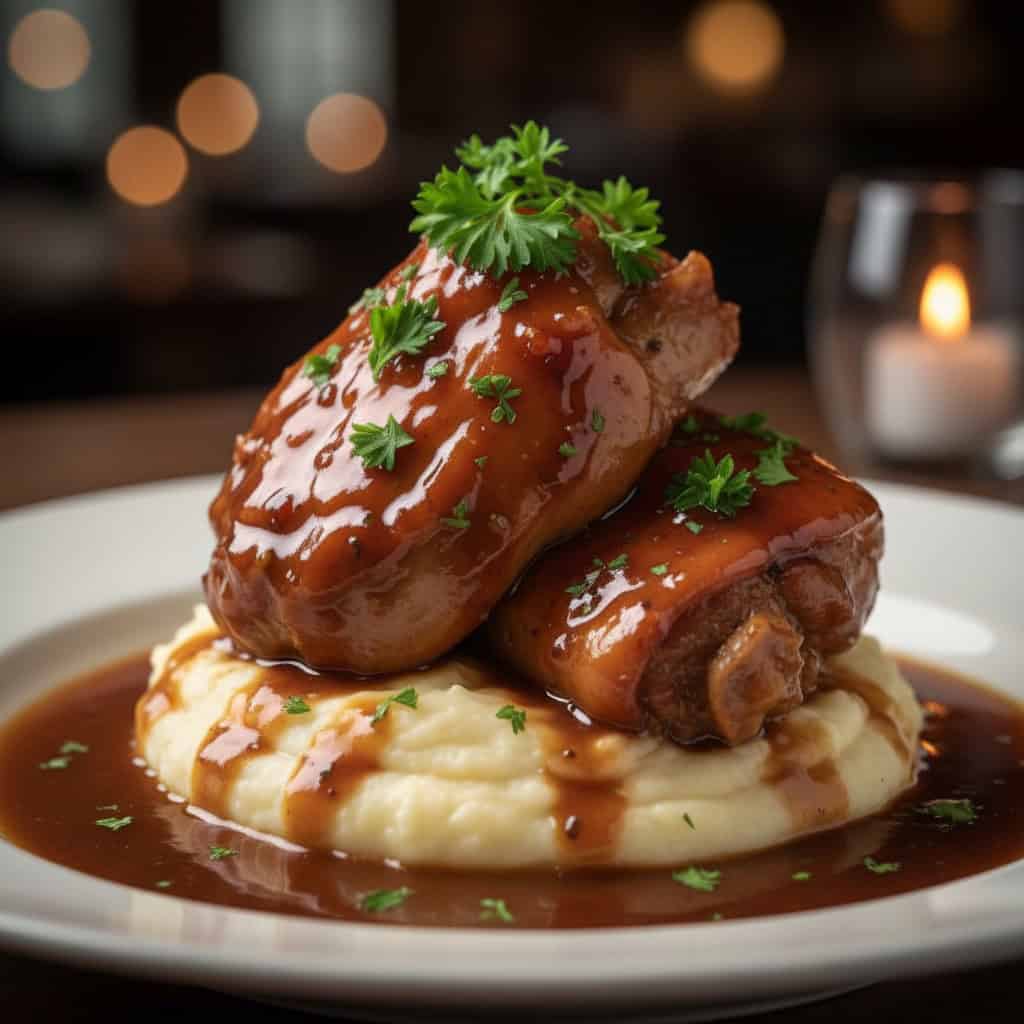
Remove the bay leaf. Taste the sauce and adjust the seasoning with salt and pepper as needed. If the sauce is too thin, remove the meat and simmer the sauce uncovered for 10-15 minutes to reduce it. Garnish generously with chopped fresh Italian parsley and serve immediately.
What to Serve With Braised Pork Hocks
The rich, glossy sauce from braised pork hocks demands something starchy to soak it all up. Here are the best pairings:
- Creamy mashed potatoes: The classic pairing. Buttery, fluffy mashed potatoes are the perfect canvas for that rich braising sauce. Make them extra creamy with butter and heavy cream.
- Soft polenta: Creamy polenta is an Italian-inspired match made in heaven. The corn sweetness plays beautifully against the savory, herby sauce.
- Crusty bread: A thick slice of sourdough or French bread to mop up every last drop of sauce. Sometimes the simplest pairing is the best.
- Egg noodles: Wide, buttery egg noodles tossed with a little of the braising sauce make this feel like the ultimate cold-weather comfort meal.
- Roasted root vegetables: Roasted parsnips, turnips, or more carrots alongside the pork make for a hearty, complete dinner.
Storage and Reheating Tips
- Refrigerator: Store in an airtight container for up to 5 days. The sauce will set into a firm jelly when cold — that's the collagen and it's a sign of a great braise. It liquefies right back into a glossy sauce when reheated.
- Freezer: Portion into freezer-safe containers and freeze for up to 3 months. Thaw overnight in the fridge before reheating.
- Reheating: Stovetop is best — low heat with a splash of stock or water, covered, until warmed through. The sauce reconstitutes beautifully.
Frequently Asked Questions
What's the difference between pork hocks and ham hocks?
Pork hocks are raw (fresh) while ham hocks are cured and/or smoked. This recipe uses fresh pork hocks. Ham hocks have a smoky, salty flavor and are typically used to season soups and beans rather than served as the main protein.
Can I make this in a slow cooker?
Yes. Sear the meat and build the base on the stovetop as directed, then transfer everything to a slow cooker. Cook on low for 6-8 hours or high for 4-5 hours until the pork is fork-tender.
Can I use a pressure cooker or Instant Pot?
Absolutely. After searing and building the base, pressure cook on high for 45-50 minutes with natural release. The results are nearly identical to the stovetop method in a fraction of the time.
Do I have to use pork feet?
No, but they add incredible body to the sauce. If you can't find pork feet, the recipe still works great with just hocks — you'll just have a slightly thinner sauce. You can compensate by reducing it a bit longer at the end.
Can I use red wine instead of white?
Yes. Red wine will give you a deeper, more robust flavor and darker sauce. Both work beautifully. Use whatever you have open or whatever you'd enjoy drinking alongside the meal.
Where do I buy pork hocks?
Most grocery store meat counters carry them, though you may need to ask. Asian markets, Latin grocery stores, and butcher shops are the most reliable sources. They're very inexpensive — usually $2-3 per pound.
How do I know when the pork hocks are done?
The meat should be pulling away from the bone and completely fork-tender. You should be able to easily pull pieces of meat off with a fork. The skin should be soft and gelatinous, not chewy.
Why is my sauce too thin?
If the sauce hasn't thickened enough, remove the meat and simmer the sauce uncovered over medium heat for 10-15 minutes until it reaches your desired consistency. The collagen from the pork will help it set even more as it cools.
Can I braise pork hocks in the oven?
Yes — after bringing everything to a simmer on the stovetop, you can transfer the covered Dutch oven to a 325°F (160°C) oven for the same 3-3.5 hours. The oven provides more even, gentle heat.
Are pork hocks healthy?
Pork hocks are rich in protein and collagen, which supports joint and skin health. They are higher in fat than lean cuts, but much of that fat renders out during the long braise. Enjoyed in moderation, they're a nutritious and satisfying choice.
Can I freeze braised pork hocks?
Yes, they freeze beautifully for up to 3 months. The high gelatin content actually helps preserve texture during freezing. Thaw overnight in the fridge and reheat gently on the stovetop.
What does the flour do in this recipe?
The flour creates a light roux with the tomato paste and vegetables, which helps thicken the braising liquid into a proper sauce. It also gives the sauce a smoother, more velvety texture.
Why do you sear the meat first?
Searing creates a deep, caramelized crust through the Maillard reaction, which adds incredible flavor to both the meat and the sauce. It also leaves behind browned bits (fond) in the pot that get deglazed into the braising liquid. Never skip the sear.
Can I add other vegetables to the braise?
Absolutely. Potatoes, turnips, parsnips, or mushrooms can be added during the last hour of cooking. Root vegetables hold up well in a long braise. More delicate vegetables like peas or greens should be added in the last 10 minutes.
What if I can't find thick-cut hocks?
Ask your butcher to cut them thicker — about 2-3 inches. If you can only find thin-cut hocks, reduce the braising time by about 30-45 minutes and start checking for tenderness earlier.
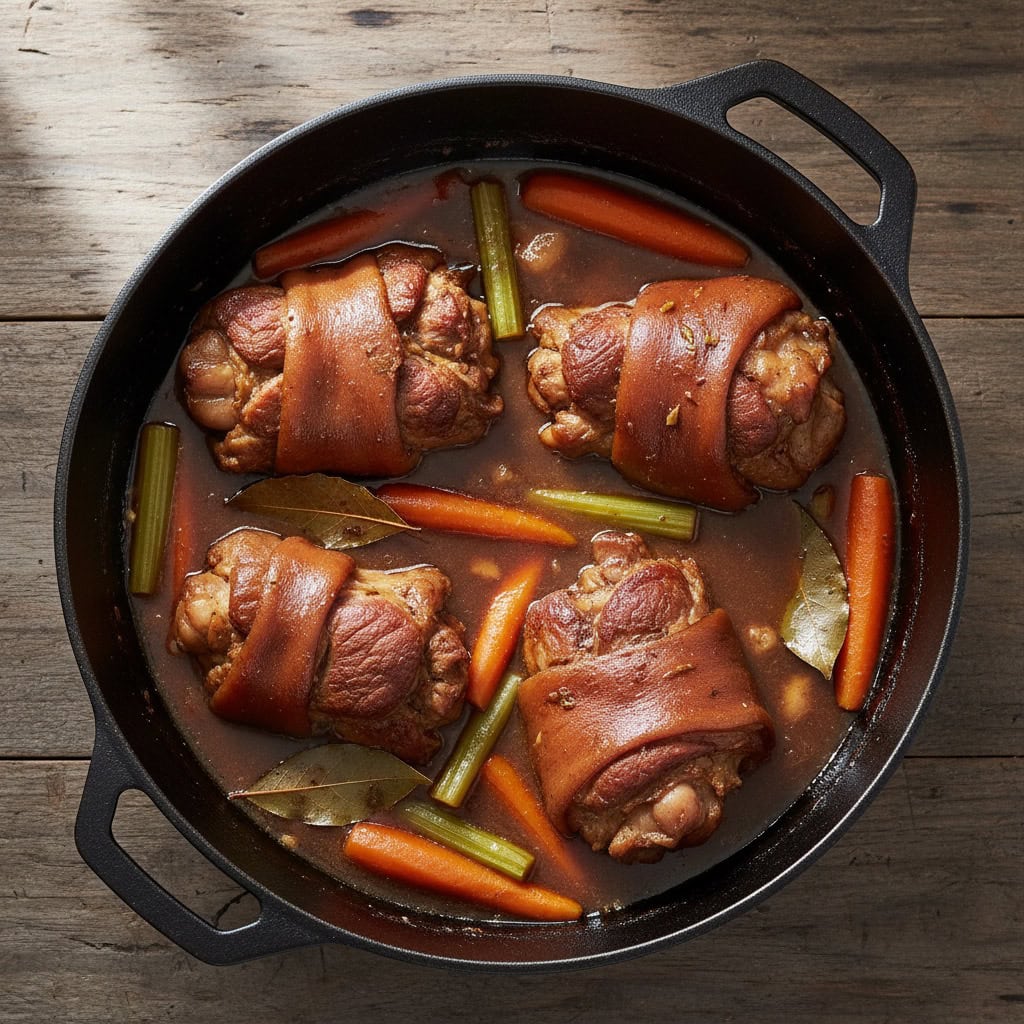
Savory Braised Pork Hocks with Pork Feet
Ingredients
Method
- Season pork hocks and feet generously with salt and pepper on all sides.
- Heat olive oil and butter in a large Dutch oven over high heat. Sear the pork hocks and feet for 3-4 minutes per side until deep golden brown. Work in batches. Remove and set aside.
- Add onion, carrot, celery, and kosher salt to the pot. Cook over medium heat until the vegetables are softened and translucent, about 5-6 minutes.
- Add tomato paste and cook for 2 minutes, stirring to caramelize. Add flour and stir constantly for 2 minutes to cook out the raw taste.
- Pour in the white wine and raise heat to medium-high. Scrape up the browned bits from the bottom. Let the wine reduce slightly, about 2-3 minutes.
- Add bay leaf, thyme, rosemary, oregano, smoked paprika, and chicken stock. Stir to combine.
- Return the seared pork hocks and feet to the pot. Bring to a gentle boil, reduce heat to low, cover, and simmer for 3 to 3.5 hours until fork-tender and meat is falling off the bone.
- Remove bay leaf. Taste and adjust seasoning. Garnish with chopped Italian parsley and serve over mashed potatoes, polenta, or crusty bread.
Notes
- Don't skip the sear — it builds the flavor foundation for the entire dish.
- Toast the tomato paste until it darkens slightly for deeper, more complex flavor.
- The sauce will thicken further as it cools thanks to the collagen. If it seems thin while hot, it will set up perfectly.
- Slow cooker option: After searing and building the base on the stovetop, transfer to a slow cooker on low for 6-8 hours.
- Oven option: Transfer the covered Dutch oven to a 325°F oven for 3-3.5 hours.
Tried this recipe?
Let us know how it was!More Pork Recipes You'll Love
If you enjoyed this recipe, check out some of our other pork favorites:
- Dominican Braised Pig Feet (Patas de Cerdo Guisadas)
- Puerto Rican Pernil (Slow Roasted Pork)
- Smothered Pork Chops
- Carnitas Street Tacos (Instant Pot)
- The Best Pan Fried Pork Chops
This post may contain affiliate links. As an Amazon Associate, I earn from qualifying purchases at no extra cost to you.





Leave a Reply