You found the perfect recipe — but it feeds 8, and you only need 2.
Or maybe you’re cooking for a crowd and need to double it… but don’t want to accidentally end up with a salty disaster.
Here’s how to confidently scale any recipe up or down — with pro tips to keep flavor, texture, and cooking time on point.
🧠 Step 1: Know the Math (But I’ll Make It Easy)
Start with your scaling factor:
-
Want to halve a recipe? Multiply all ingredients by 0.5
-
Want to double it? Multiply by 2
-
Need a specific number of servings?
New Servings ÷ Original Servings = Scaling Factor
Example: Original serves 4, you want 6
→ 6 ÷ 4 = 1.5
→ Multiply each ingredient by 1.5
🥄 Step 2: Adjust Measurements Carefully
Here’s how to handle common ingredient types:
Liquids & Dry Goods
✅ Easy — just multiply normally.
Eggs
🥚 This one’s tricky. You can:
-
Beat an egg and divide it (ex: half = 2 tbsp)
-
Use just the yolk or white depending on the recipe
-
Use small eggs if halving a 1-egg recipe
Spices & Seasonings
⚠️ Go light when scaling up.
Start with ¾ of the scaled amount and adjust to taste.
Spices don’t scale linearly — a double dose can overwhelm.
⏱️ Step 3: Cooking Time Might Change
Cooking time doesn’t always double when you double a recipe.
Baking?
-
Bigger pans or more batter = slightly longer time
-
Lower oven temp slightly for even baking
-
Always test doneness with a toothpick or thermometer
Stovetop or skillet?
-
Use a bigger pan to avoid overcrowding
-
Keep heat medium to high to maintain proper sear/sauté
Oven dishes (like lasagna or casseroles)?
-
Add 10–15% more time
-
Cover with foil if top is browning too fast
📏 Pro Tips for Scaling Like a Chef
✅ Use a kitchen scale
Measuring by weight = more accuracy, especially for baking
✅ Write down the new measurements
No one wants to do math while stirring a pot
✅ Taste as you go
Flavor can change when quantities shift
✅ Stick to even ratios in sauces, dressings, and marinades
If one flavor dominates, balance is off
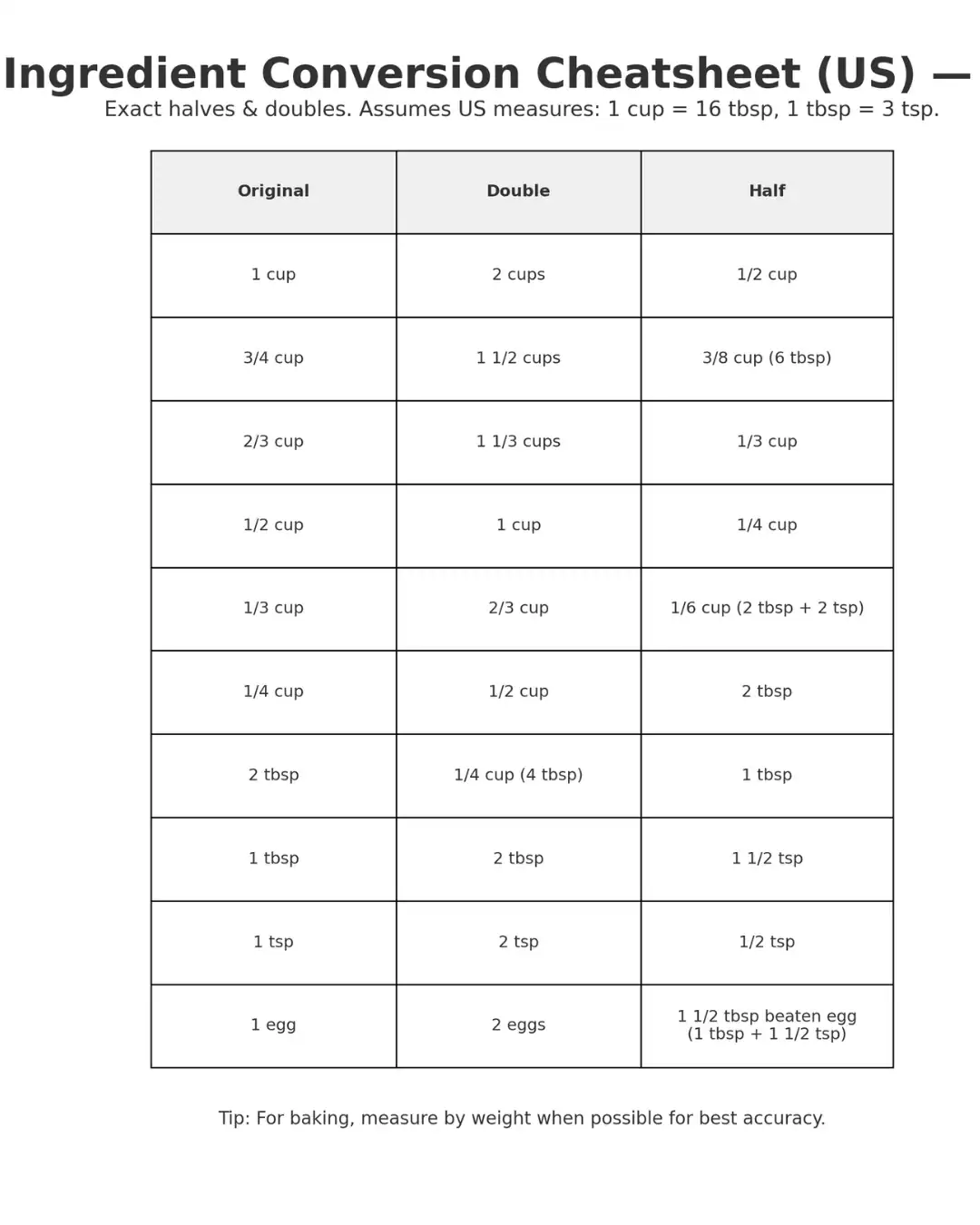
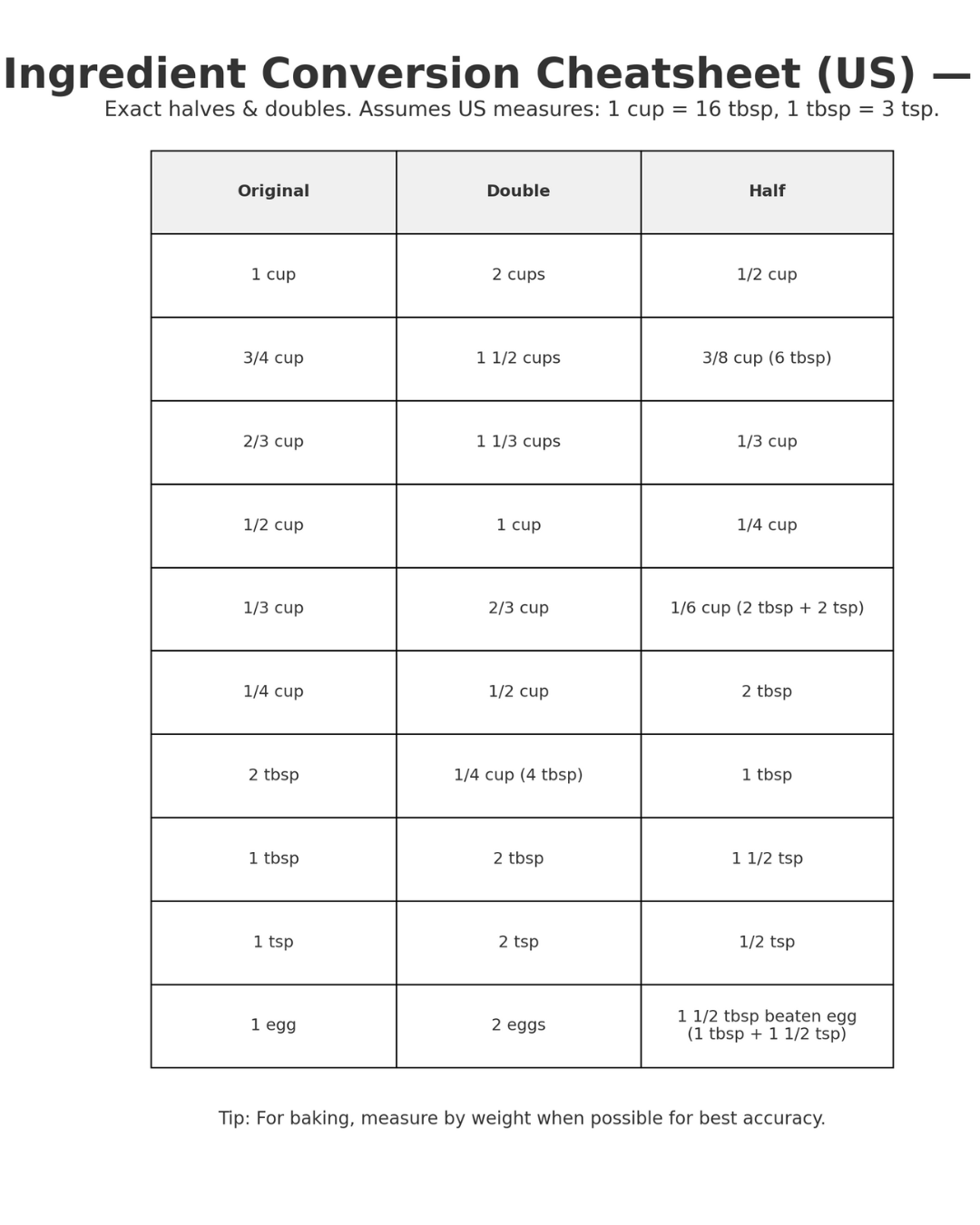
OriginalDoubleHalf1 cup2 cups½ cup¾ cup1½ cups6 tbsp½ cup1 cup¼ cup⅓ cup⅔ cup2 tablespoon + 2 tsp¼ cup½ cup2 tbsp1 tbsp2 tbsp1½ tsp1 tsp2 tsp½ tsp1 egg2 eggs2 tablespoon beaten egg
Save this table — or pin it on your fridge. You’ll use it all the time.
👨🍳 Final Thoughts
Scaling recipes doesn’t have to feel like algebra class.
With the right tools and mindset, you can make any recipe work for you, whether you’re feeding one or ten.
👇 Recipes You’ll Want to Scale (Up or Down):
🔍 FAQ
What’s the best way to scale baking recipes?
By weight (grams or ounces). Volume measuring is okay, but not always accurate.
Can I freeze extra portions if I scale up?
Absolutely! Label and date your containers — especially soups, stews, cooked proteins.
Why do some recipes not scale well?
Complicated chemical reactions (in soufflés or meringues) don’t always behave the same in large batches. Stick to exact science there.
📌 Cook for who you want, when you want — without wasting time or ingredients.
Pro Tips
When scaling recipes with dried herbs and spices, don't multiply them linearly - use the 'square root rule' because flavor compounds concentrate differently in larger volumes. I discovered this ruining a massive batch of sazón by doubling everything exactly.
For Dominican sofrito or any aromatic base, always prepare your scaled base separately first, then taste before adding to the main dish. The holy trinity of ají dulce, cilantro, and garlic changes personality dramatically when quantities shift.
Source your proteins based on your final serving size, not your original recipe - butchers cut differently for small versus large quantities, and this affects cooking times more than the math suggests, especially with bone-in pieces.
When scaling baked goods or rice dishes, reduce liquid by 10-15% for larger batches because evaporation rates don't scale linearly - learned this from countless oversized rice pots that turned into mush despite perfect ratios on paper.
What to Serve With
Since recipe conversion is all about flexibility, pair this technique with dishes that showcase different flavor profiles beautifully. My Dominican-Style Roast Chicken scales perfectly using these methods - whether you're cooking for two or twenty, the garlic-citrus marinade intensifies just right when proportioned correctly.
Traditional mangú becomes your best friend when practicing these conversion skills, since the creamy mashed plantains forgive small measurement variations while you're learning. The rustic texture actually improves when you're adjusting quantities, making it perfect for testing your newfound confidence with recipe mathematics.
Fresh tostones offer the ideal contrast - their crispy exterior and fluffy interior depend on technique more than exact measurements, giving you a delicious safety net. While you're calculating conversions for complex dishes, these twice-fried plantains stay consistently perfect, proving that some recipes are naturally forgiving.