
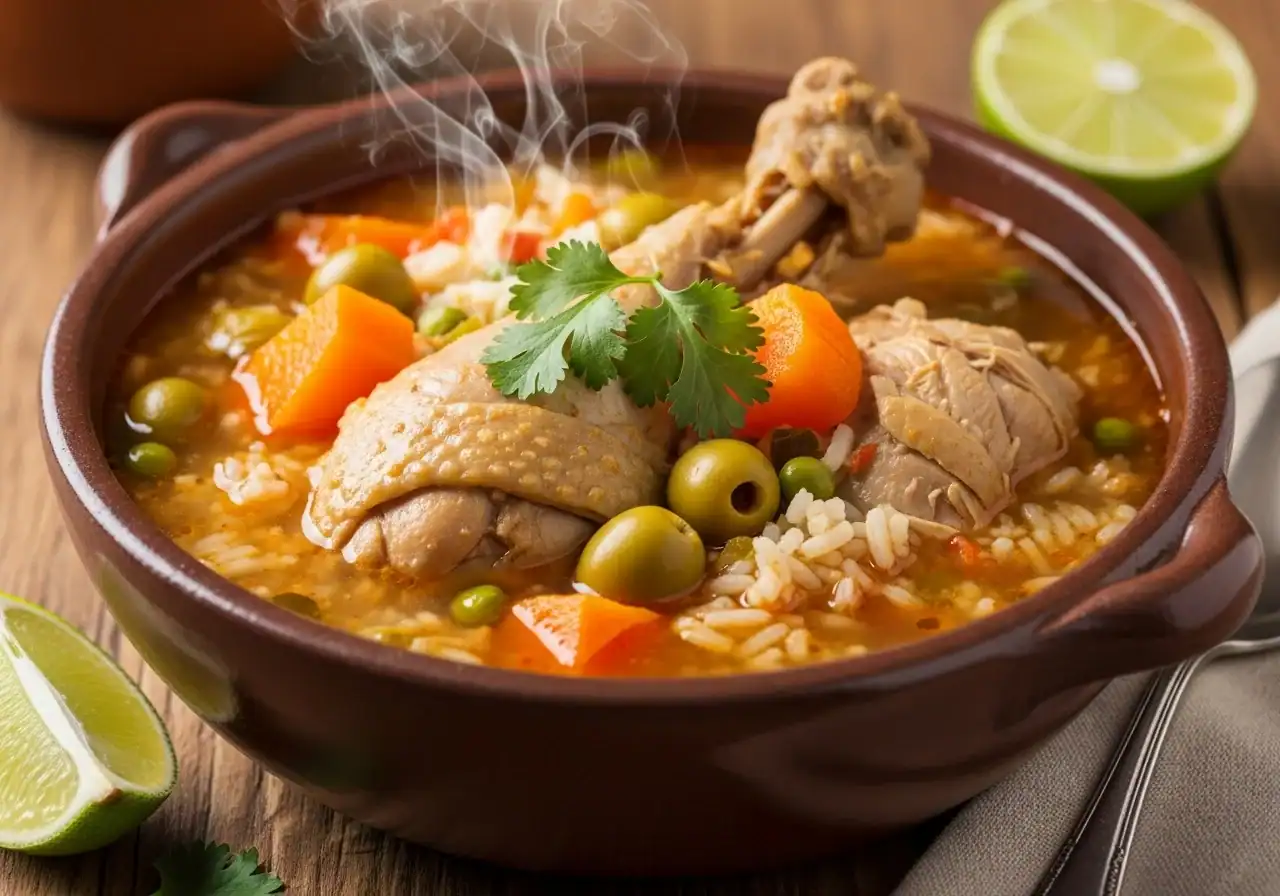
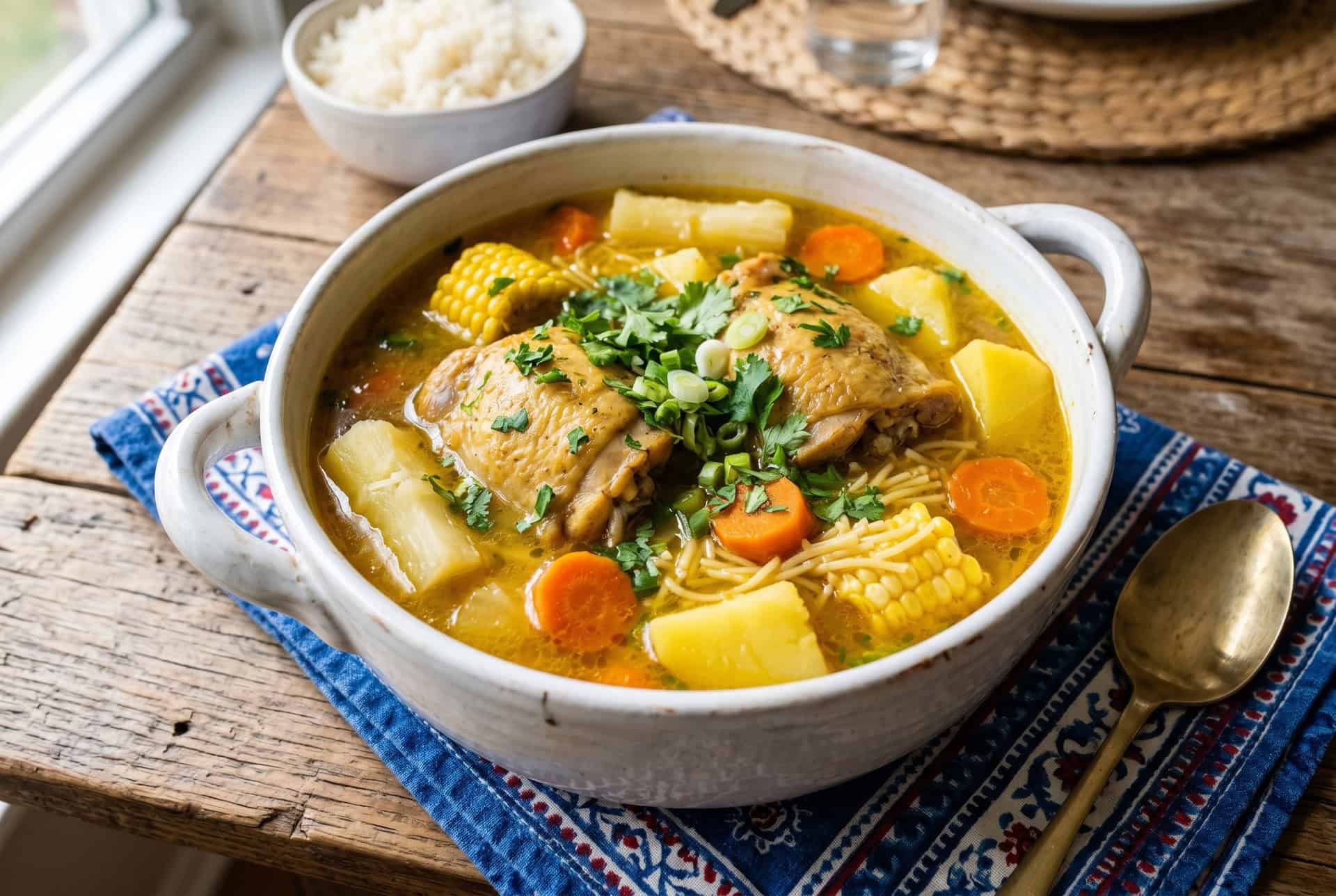
Asopao de pollo is what a Dominican mom makes when it rains, when you're sick, when you had a bad day, or when she just feels like it's been too long since she filled the house with the smell of sofrito and chicken broth.
It sits in the beautiful gray zone between a soup and a stew. Thicker than sopa. Looser than arroz con pollo. The rice is there but the broth is still the main event. You eat it out of a deep bowl, with a spoon, and by the time you finish the first bowl you are already thinking about a second.
This is the one-pot, weeknight-friendly version. Bone-in chicken, sofrito, sazón, long-grain rice, a little auyama for color and body, olives and capers for that briny Dominican zing. One pot, 45 minutes of cook time, an entire family fed.
What Is Asopao de Pollo
Asopao literally means "soupy" in Spanish (asopar = to make soupy). It's a rice-based stew popular across the Dominican Republic, Puerto Rico, and parts of Cuba. Every island has its own version.
The Dominican version leans on:
- Bone-in chicken (thighs, drumsticks, or a cut-up whole chicken)
- Long-grain white rice
- A proper sofrito base
- Sazón for color
- Olives and capers — the salty briny punch
- Auyama (Dominican kabocha pumpkin) — traditional, thickens the broth slightly
- A broth-to-rice ratio of about 8:1 (much soupier than regular rice)
The result is something that feels like the best version of chicken and rice you've ever had, swimming in a bowl of its own sauce.
Ingredients That Matter
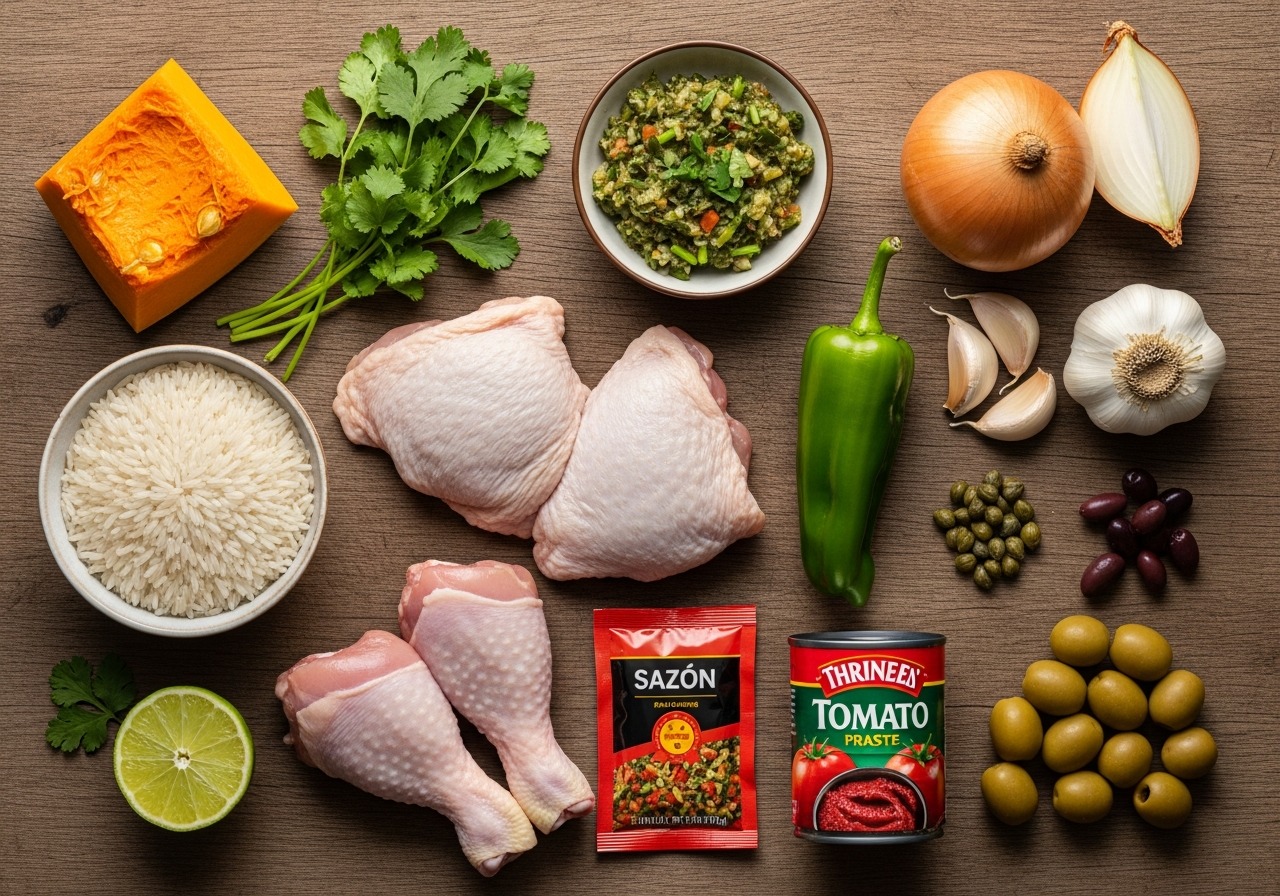
Bone-in Chicken, Please
Use bone-in, skin-on chicken thighs and drumsticks. The bones are doing half the flavor work here — they release gelatin into the broth and give it body. Boneless skinless breast will give you dry chicken floating in flat broth. Not the vibe.
You can remove the skin if you want less fat — the broth still comes out great as long as the bones are in.
Rice Choice
Long-grain white rice is what Dominican households use. Rinse it until the water runs clear — starchy rice turns the asopao gummy.
Don't use jasmine (too floral), basmati (wrong texture), or brown rice (needs way different cooking time).
The Sofrito Base
Use green Dominican sofrito — onion, cubanelle pepper, cilantro, culantro, garlic, blended. A quarter-cup is perfect. If you don't have sofrito made, fresh onion + cubanelle + garlic + cilantro will carry you.
Olives and Capers
Non-negotiable in traditional Dominican asopao. They add a salty briny counterpoint that cuts the richness. Pitted green olives (Spanish Manzanilla style) and small capers. If you think you don't like olives, try it anyway — they dissolve into the broth flavor and become part of the background.
How to Make Asopao de Pollo
Step 1 — Marinate the Chicken (15 minutes)
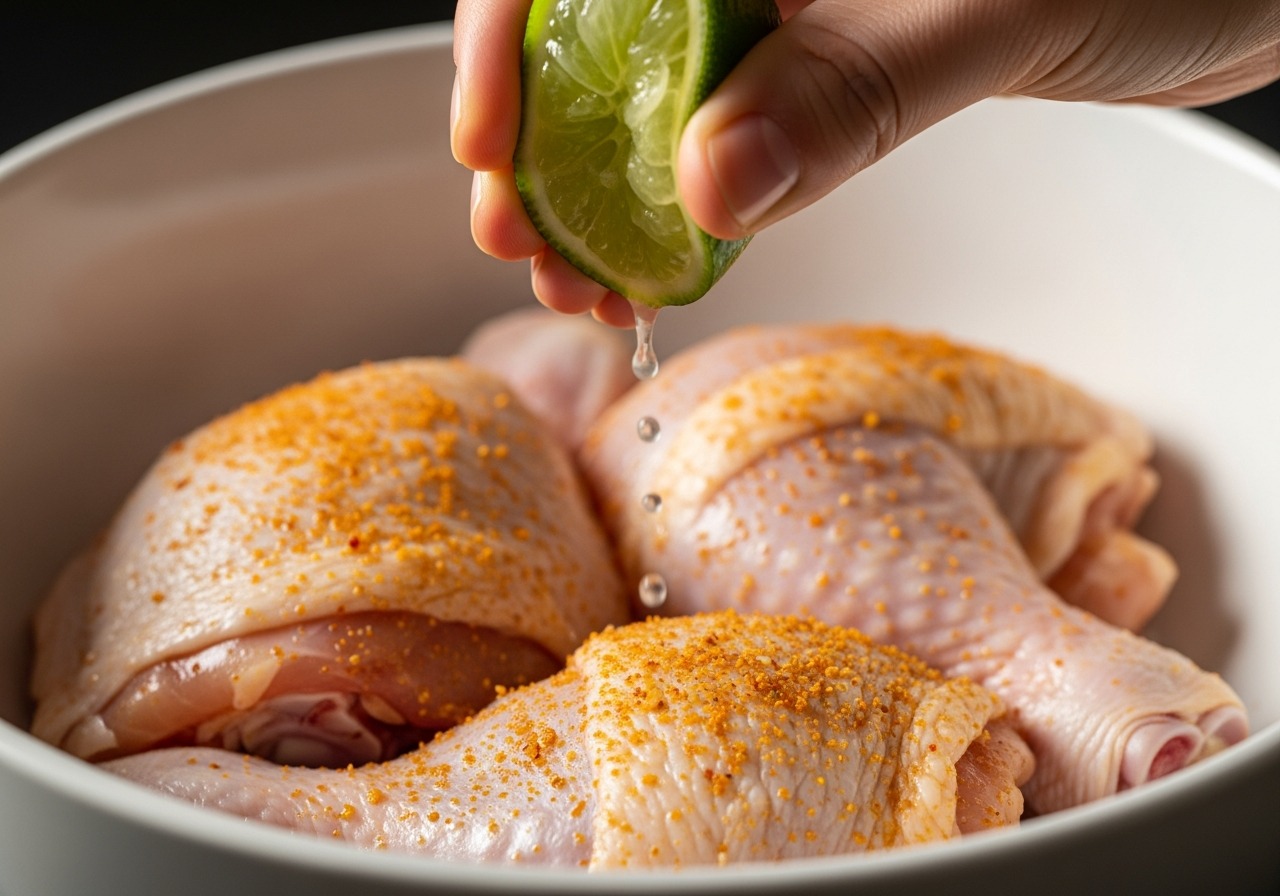
Toss the chicken with adobo and lime juice in a bowl. Let it sit 15 minutes at room temperature while you prep the rest of the ingredients. This is the minimum. If you have time, marinate overnight in the fridge — the flavor gets much deeper.
Step 2 — Brown the Chicken
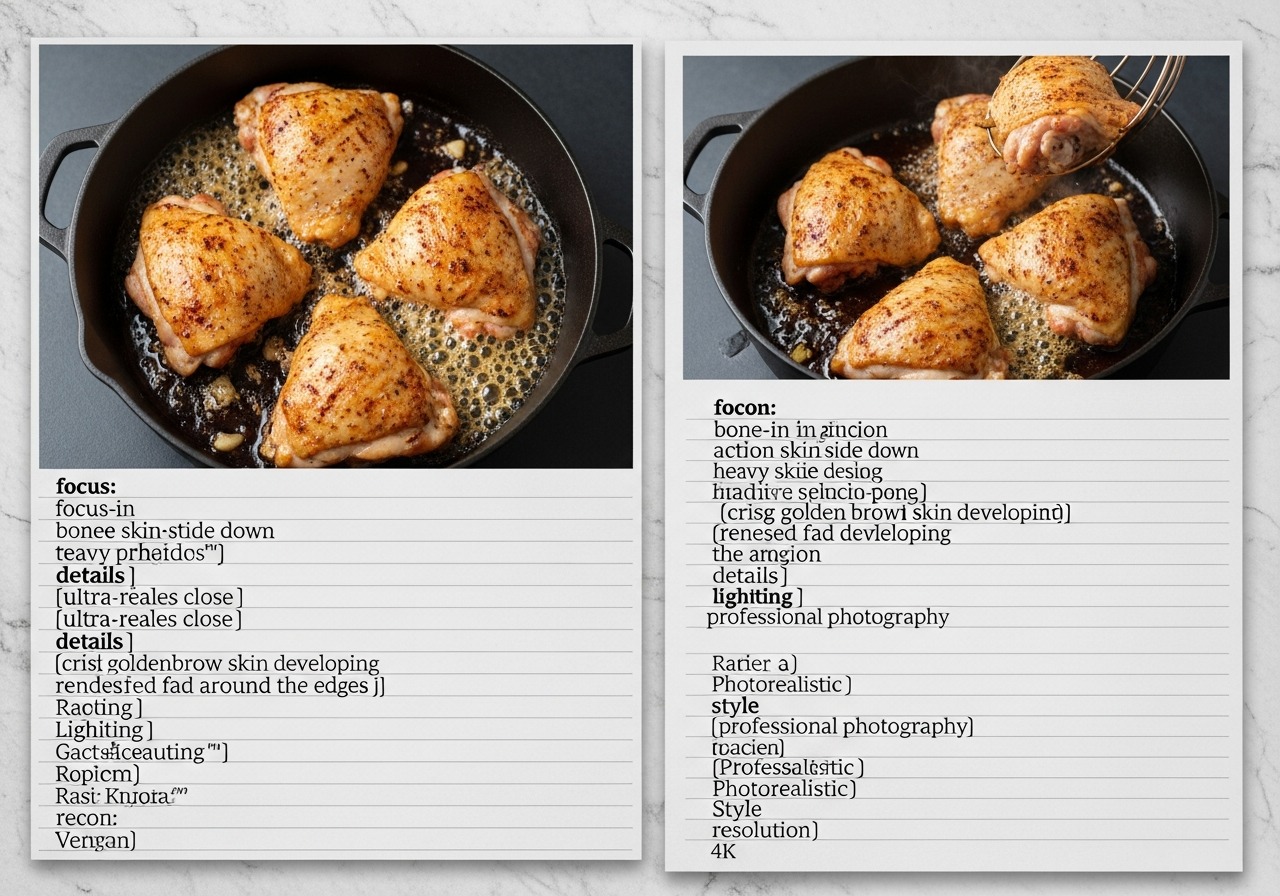
Heat olive oil in a heavy pot over medium-high until shimmering. Lay the chicken skin-side down. Don't crowd — work in batches if you need to. Brown 3-4 minutes per side until the skin is deep golden.
Remove the chicken to a plate. Leave the fat in the pot. That fat is gold.
Step 3 — Build the Sofrito Base
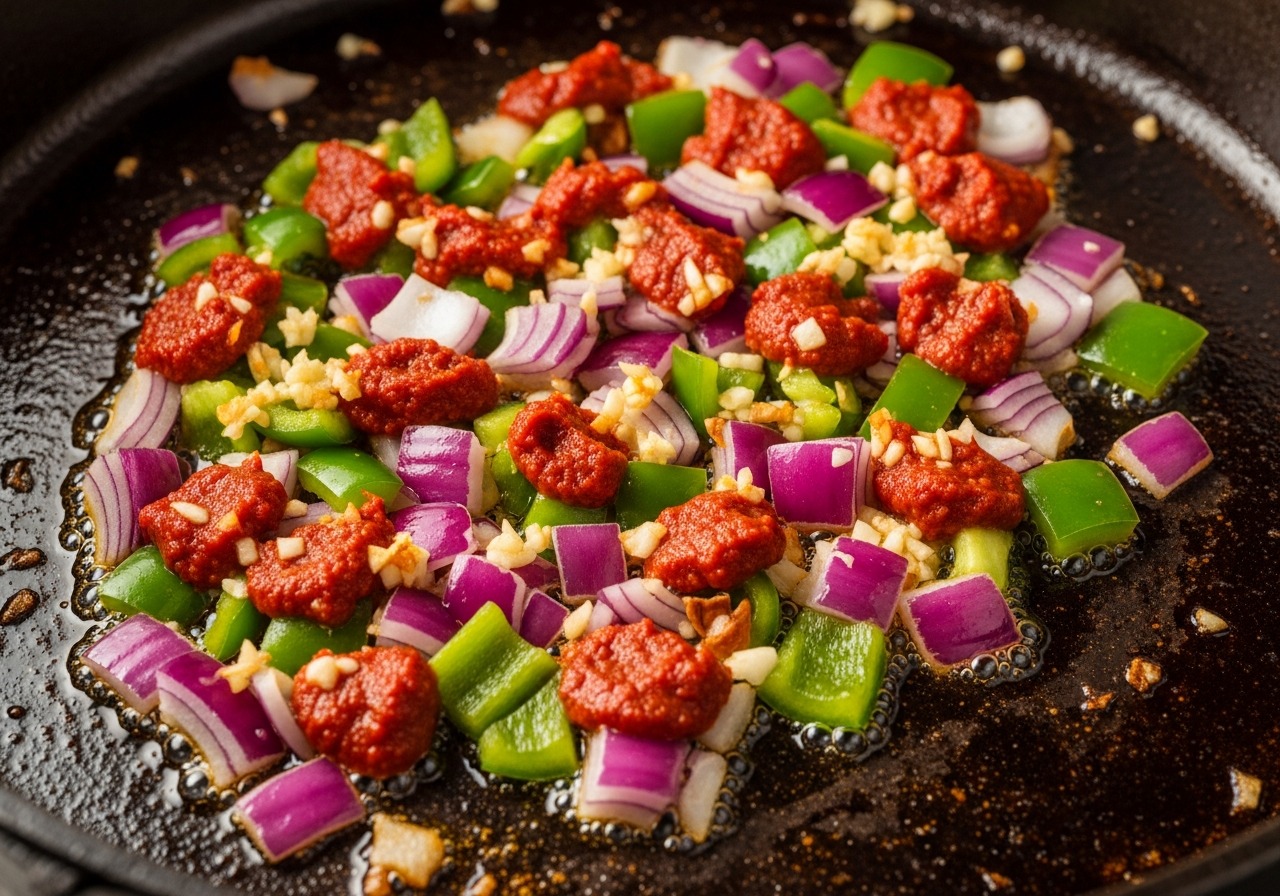
Into the same pot with the chicken fat, add diced onion, cubanelle pepper, and garlic. Sweat them 2 minutes. Add sofrito, tomato paste, and sazón. Stir for 1 minute until the color deepens and the smell turns deep and aromatic.
Step 4 — Toast the Rice
Add the rinsed rice. Stir for 1 minute, coating every grain in the sofrito and oil. This toast step gives the rice a slightly nutty flavor and helps keep the grains separate in the final dish.
Step 5 — Add Broth and Everything Else
Return the chicken to the pot, nestling the pieces in. Pour in 8 cups of chicken broth (this is the ratio that keeps it soupy — regular rice uses 2 cups of liquid for 1 cup of rice; asopao uses 8). Add oregano, salt, diced auyama, olives, and capers.
Stir once. Bring to a full boil.
Step 6 — Simmer
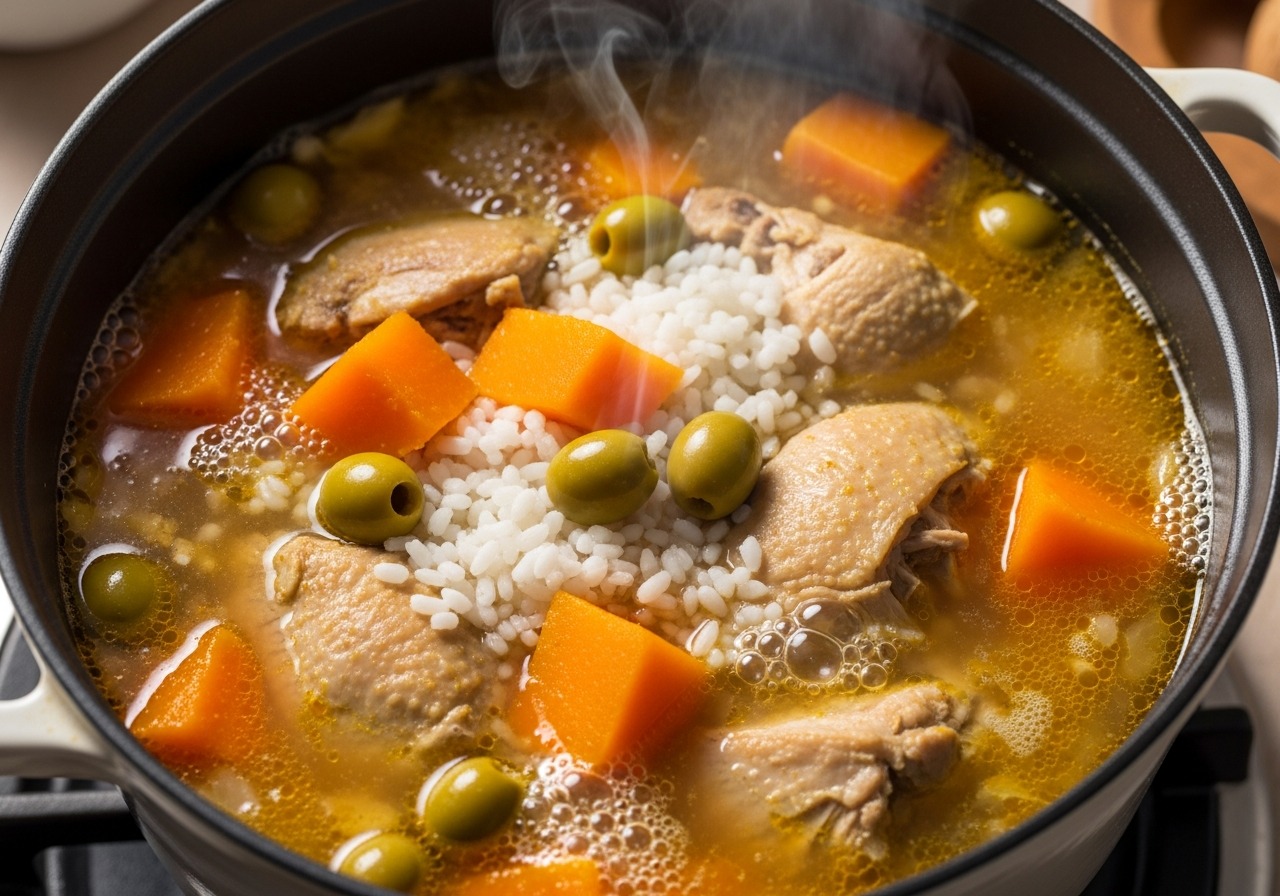
Reduce the heat to medium-low. Cover the pot partially — leave the lid cracked to let steam escape. Simmer 25 minutes. Stir gently every 5-6 minutes to keep the rice from sticking to the bottom.
At 25 minutes, the rice is tender, the chicken is falling off the bone, and the broth is thick but still clearly a soup. If it looks too thick, add ½ cup more broth. If it looks too thin, cook uncovered another 3-4 minutes.
Step 7 — Finish and Rest
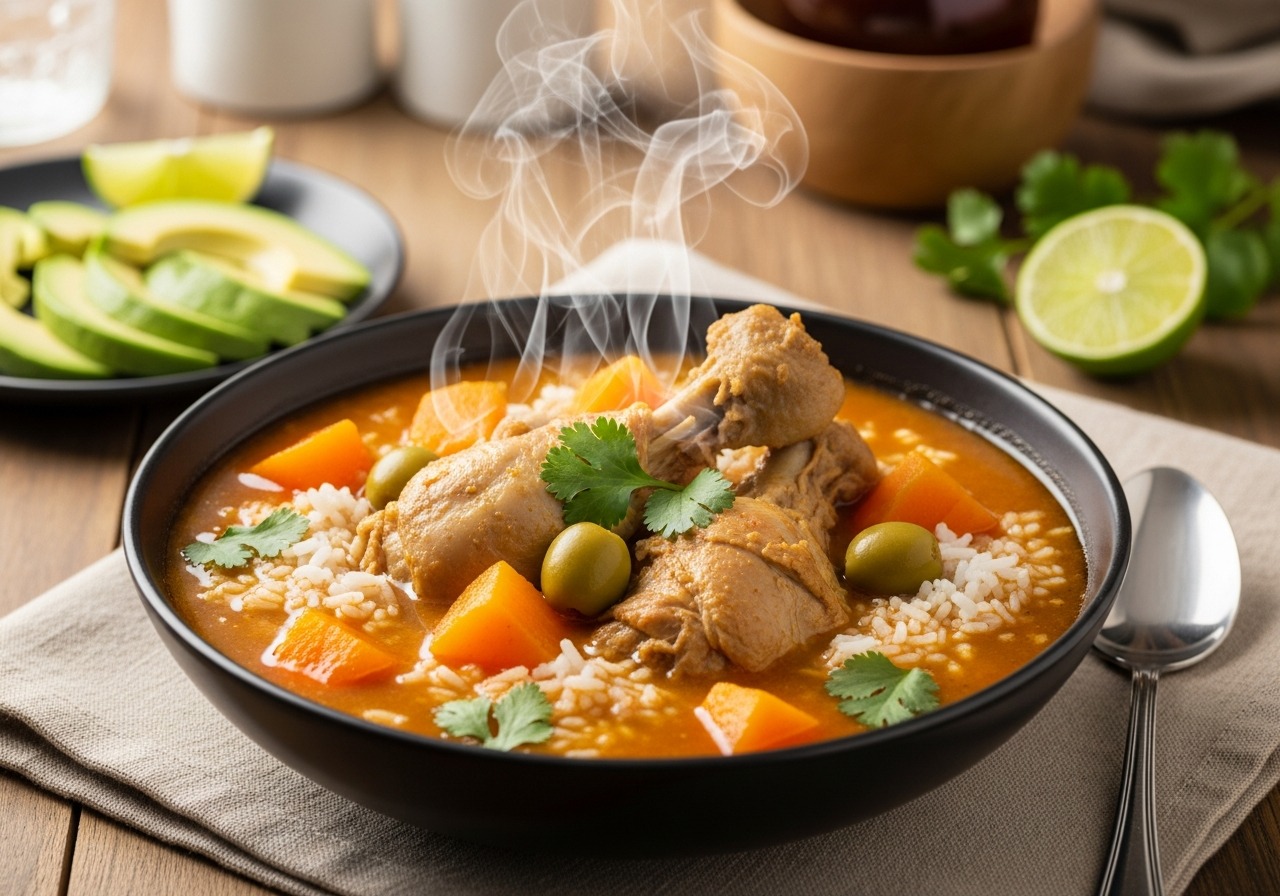
Stir in frozen peas if using. Cook 2 more minutes. Taste and adjust salt. Kill the heat and let it sit covered for 5 minutes — the rice absorbs a little more liquid and the flavors settle.
Ladle into deep bowls. Garnish with chopped cilantro. Serve with a lime wedge and, if you want to do it properly, slices of ripe avocado on the side.
Pro Tips
- Get the broth ratio right. 8 cups broth : 1 cup rice. Less and it turns into arroz con pollo. More and it's chicken soup.
- Brown the chicken. The color on the chicken skin = the color in the broth. Don't skip.
- Rinse the rice. Starch is the enemy of a clean-tasting asopao.
- Stir gently and occasionally. Over-stirring breaks the rice and makes the soup muddy. Under-stirring burns the bottom.
- Let it rest. The 5-minute rest at the end is when the magic happens.
- It thickens as it sits. Day-2 asopao is almost a rice stew. That's normal. Loosen with a splash of broth when reheating.
- Olives and capers in, don't skip. Even if you're nervous — they disappear into the background flavor and the dish isn't right without them.
Variations
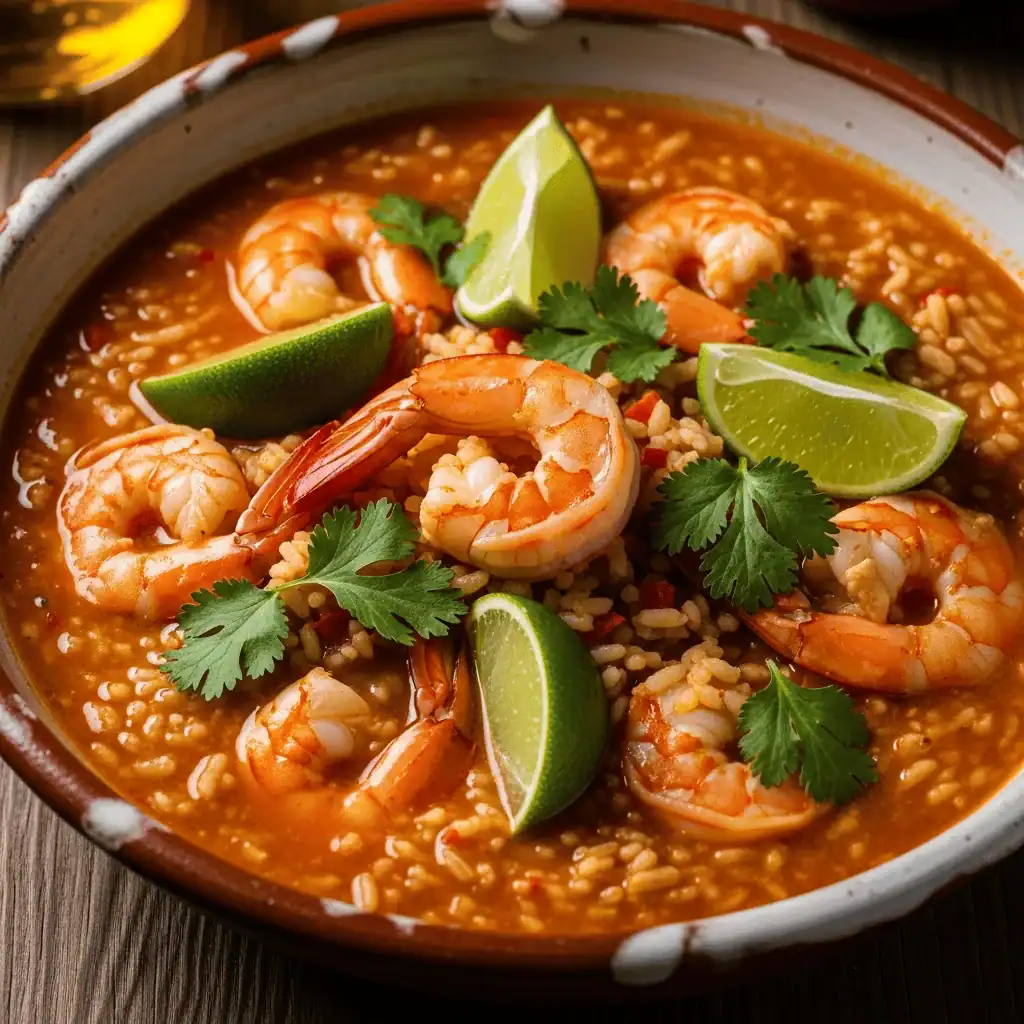
- Asopao de mariscos — swap chicken for shrimp, scallops, and chunks of white fish. Add seafood at the last 5 minutes of simmering.
- Asopao de pollo con coco — replace ½ cup of broth with coconut milk for a richer, slightly sweet variation.
- Asopao de pollo con gandules — add a can of pigeon peas with the broth.
- Spicy version — add 1 habanero (whole, pricked, removed before serving) or a teaspoon of red pepper flakes.
What to Serve With It
- Sliced avocado
- A simple green salad
- Warm crusty bread
- Lime wedges
- Maybe a cold beer
Asopao is a full meal. You don't need anything else but you can dress it up.
Storage
- Fridge: 4 days in an airtight container. The rice will soak up broth overnight — it's no longer soupy but still delicious.
- Reheat: low heat on the stovetop with a splash of broth or water to loosen it back up.
- Freezer: up to 2 months. The rice texture suffers slightly on thaw but it's still good. Cool completely before freezing.
FAQ
What's the difference between asopao and arroz con pollo?
Arroz con pollo is a rice dish with chicken — most of the liquid is absorbed by the rice. Asopao is a soup with rice — you eat it with a spoon, in a bowl, with broth covering everything. Same ingredients, different ratios.
Can I use boneless chicken?
You can but the broth will be thinner. If you use boneless thighs, add a good-quality chicken broth (not water). Cooking time drops to about 18 minutes.
Why is my rice still hard?
Rice wasn't fully submerged, or it was sitting on the bottom out of the liquid. Stir gently and make sure everything is swimming. If the top rice is undercooked but the liquid is low, add 1 cup of broth and cook 5 more minutes.
Can I make it in an Instant Pot?
Yes. Sauté mode for the browning and sofrito. Add 6 cups broth instead of 8 (pressure cooker loses less liquid), pressure cook high 10 minutes, natural release 10 minutes. Stir in peas at the end.
Is it the same as Puerto Rican asopao?
Close cousins. PR asopao often uses a bit more tomato, sometimes red sofrito, and sometimes includes gandules. The Dominican version is more broth-forward and uses green sofrito.
Make it on a rainy Tuesday. Make it on a random Sunday. Make it because you can and because now you know how.
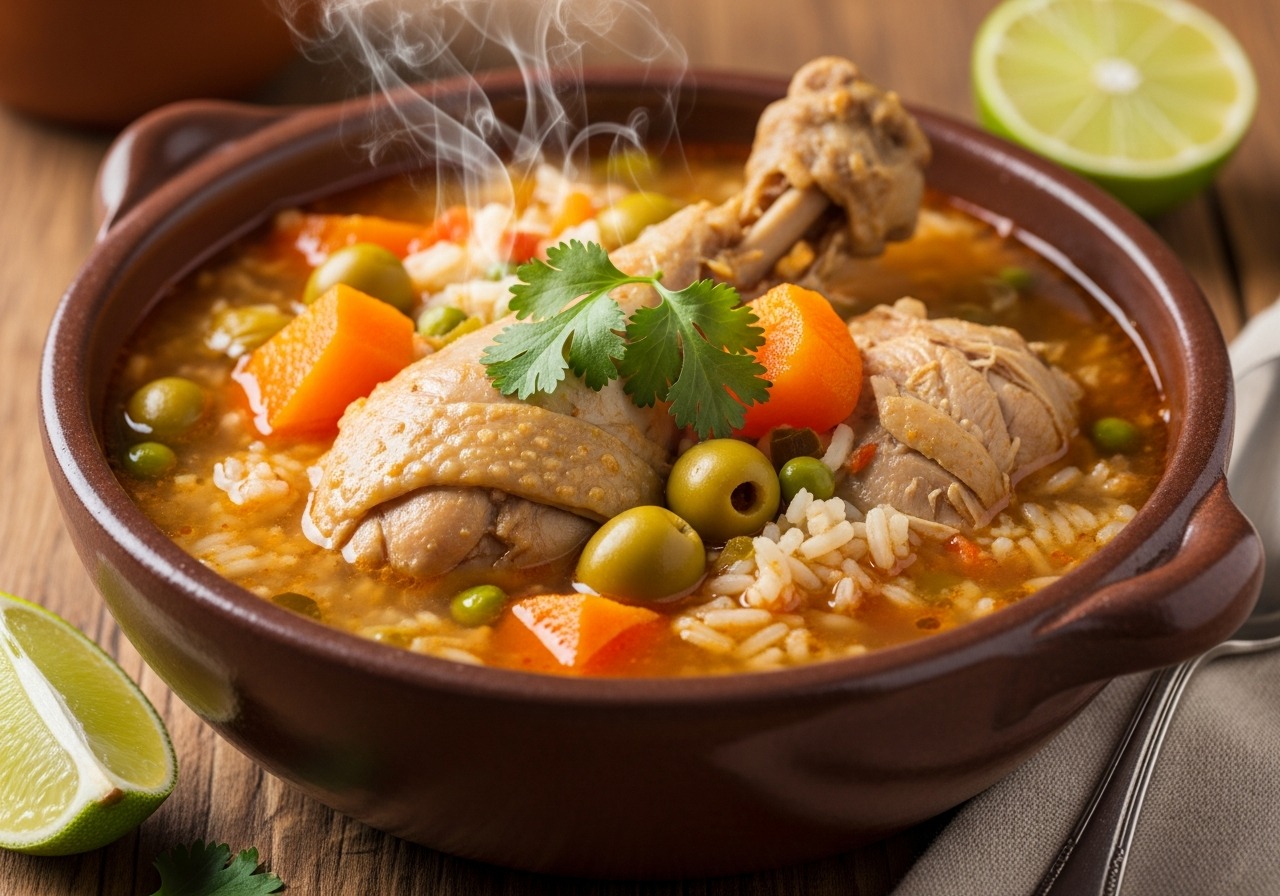
Asopao de Pollo Dominicano
Ingredients
Method
- Season the chicken: in a bowl, toss the chicken pieces with adobo and lime juice. Let marinate 15 minutes at room temperature (or up to overnight in the fridge).

- Heat olive oil in a large heavy pot or Dutch oven over medium-high heat. Add chicken pieces skin-side down if skin on, and brown 3-4 minutes per side until golden. Remove chicken to a plate, leaving the fat in the pot.
- In the same pot, add diced onion, cubanelle pepper, and garlic. Sauté 2 minutes until softened. Stir in sofrito, tomato paste, and sazón and cook 1 minute until the color deepens.
- Add the rinsed rice and toast 1 minute, stirring to coat every grain in the sofrito-oil mixture.
- Return the chicken to the pot. Pour in 8 cups of chicken broth, oregano, and salt. Add diced auyama, olives, and capers. Stir once and bring to a boil.
- Reduce heat to medium-low, cover partially (leave a crack for steam), and simmer 25 minutes, stirring occasionally to keep the rice from sticking. The rice should be tender, the chicken falling off the bone, and the broth thick but still soupy.
- Add frozen peas if using and stir. Cook 2 more minutes. Taste and adjust salt. Turn off heat and let sit covered 5 minutes — the rice absorbs a little more broth and the soup thickens. Serve hot in deep bowls, garnished with chopped cilantro and a lime wedge.
Nutrition
Notes
Tried this recipe?
Let us know how it was!Kitchen Tools Used in This Recipe
- 🔗 Dutch Oven
- 🔗 Chef Knife
As an Amazon Associate I earn from qualifying purchases.


Leave a Reply