
Chicharrón de pollo is the Dominican fried chicken that ruins all other fried chicken for you. Small pieces of marinated chicken, dredged in seasoned flour, dropped into hot oil in a caldero, and fried until the crust shatters when you bite into it. It's not American fried chicken. It's not Korean fried chicken. It's something that tastes only like the Dominican Republic — sharp with lime, loud with garlic, and so crispy the whole kitchen goes quiet for the first few bites.
Growing up between Santo Domingo and New York, this was the dish that signaled Friday night. My tía would come over, pull out her dented aluminum caldero, and start chopping chicken into pieces barely bigger than a dominó tile. The marinade was already waiting in a bowl — lime, garlic mashed in a pilón, oregano, sazón, a splash of Worcestershire because that's what Dominicans do. Two hours later (or overnight if she was thinking ahead), the dredge came out, the oil hit 350, and the whole building knew what was for dinner.
This is the stovetop caldero version. Traditional. The way it's done at pica pollo spots, at chimi trucks parked on the Malecón, at cookouts in Washington Heights backyards. I have an air fryer version on the site for weeknights, but this is the real one. This is how it tastes when you do it right.
If you are building a mixed-protein spread, pair the chicharrón with these juicy oven baked pork chops for an oven-baked option on the same table.
Why You'll Love This Chicharrón de Pollo Recipe
- Crispy like nothing else: Small pieces mean maximum surface area for the dredge to cling to. Every bite is crust.
- Dominican adobo, not American breading: Lime, oregano, sazón, garlic — the flavor is unmistakable the second it hits your tongue.
- Make-ahead marinade: The chicken needs 2 hours minimum (overnight is better), which means you can prep in the morning and fry at dinner.
- Party food that feeds a crowd: Double the recipe, fry in batches, pile it on a platter with tostones and lime. Nothing disappears faster.
- The pica pollo experience at home: If you grew up eating this on Saturday afternoons at the corner spot, this is that exact taste.
What Is Chicharrón de Pollo?
Chicharrón de pollo is Dominican fried chicken — but don't let the translation fool you. The word "chicharrón" normally refers to crispy fried pork rinds, and that's the whole point of the name. The chicken is cut into small pieces and fried until the exterior is as crackly and shattering as pork chicharrón. Every piece is about 1.5 inches on a side. Every piece has a craggy, golden, crunchy crust. Every piece gets squeezed with lime before it hits your mouth.
The dish lives at pica pollo spots — hole-in-the-wall fried chicken counters that exist on every other block in Santo Domingo, Santiago, and every Dominican neighborhood in the U.S. You order a media libra or a libra, it comes in a paper bag with tostones or yuca frita, and you eat it standing up. Pica pollo is basically the Dominican national snack. The version at home — which is this recipe — is a little less greasy, a little more seasoned, and made with the kind of love you don't get at a takeout counter.
What makes it different from American fried chicken? Size, marinade, and seasoning. American fried chicken uses full bone-in pieces — drumsticks, thighs, breasts — and typically a buttermilk brine. Dominican chicharrón de pollo uses boneless thighs (or wings/drumettes) cut small, marinated in lime and citrus with garlic and oregano. The crust is thinner and crispier. The flavor is sharper. You can eat ten pieces in a sitting without feeling weighed down, which is dangerous.
Ingredients You'll Need
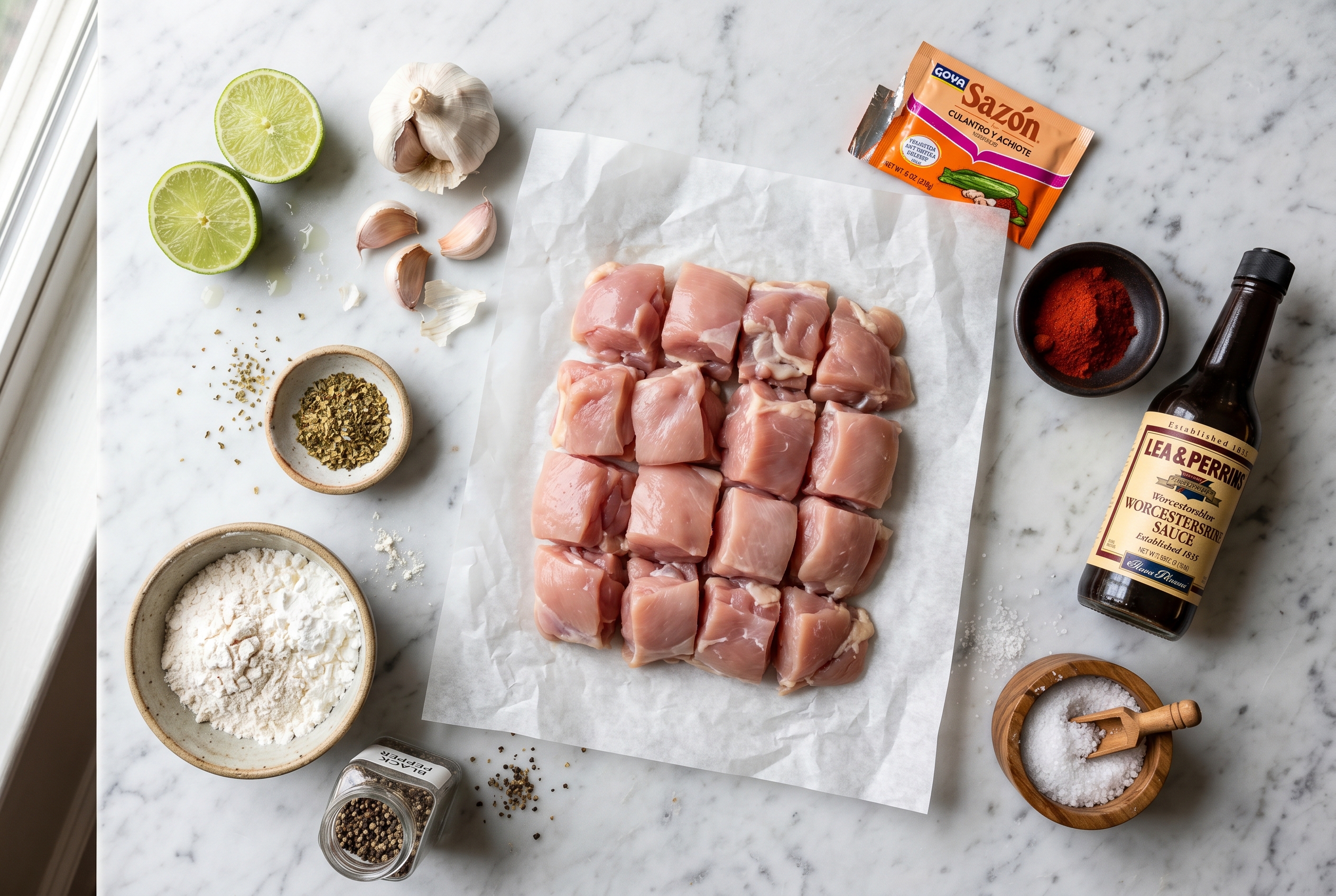
For the chicken and marinade:
- 2 lb boneless skinless chicken thighs, cut into 1.5-inch pieces (or bone-in wings/drumettes)
- 3 tablespoon fresh lime juice (about 2 limes)
- 2 tablespoon Worcestershire sauce
- 6 cloves garlic, mashed to a paste
- 1 tablespoon dried Dominican oregano
- 2 teaspoon salt
- 1 tablespoon sazón (con culantro y achiote)
- 1 teaspoon black pepper
- 1 teaspoon paprika
For the dredge:
- 1 cup all-purpose flour
- 2 tablespoon cornstarch
- 1 teaspoon salt
- 1 teaspoon garlic powder
- ½ teaspoon black pepper
- 1 teaspoon sazón
For frying:
- Vegetable or corn oil, enough for 2 inches in a caldero or deep pot
- Extra lime wedges and flaky salt, for serving
Equipment: A heavy caldero (Dominican aluminum pot) or Dutch oven, a good candy/fry thermometer, a wire rack set over a sheet pan, a sharp chef's knife for cutting the chicken, and a pilón (mortar) if you have one.
6 Things That Make Dominican Chicharrón de Pollo Different
- Small pieces, not whole cuts: Pieces are cut to about 1.5 inches. Way more crispy surface per bite than a whole drumstick.
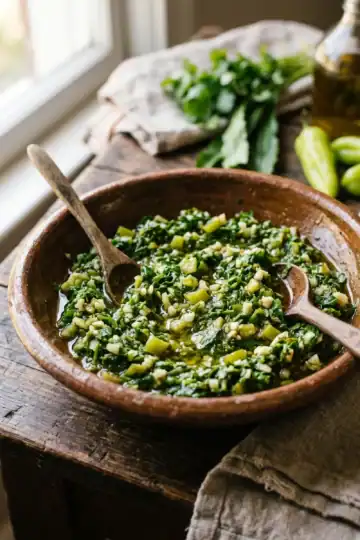
- Lime-forward marinade: Fresh lime juice (never bottled) is the backbone — just like in wasakaka sauce.
- Sazón in both marinade and dredge: That culantro-and-achiote flavor goes all the way through, top to bottom.
- Cornstarch in the flour: The classic Dominican trick for extra-shattering crust. Don't skip it.
- Fried in a caldero on the stove: Heavy aluminum holds heat better than anything else. Same pot Dominicans use for arroz blanco.
- Served with tostones, not fries: Pair it with tostones or yuca frita and a splash of wasakaka.
Step-by-Step Instructions
Step 1 — Cut and Marinate the Chicken
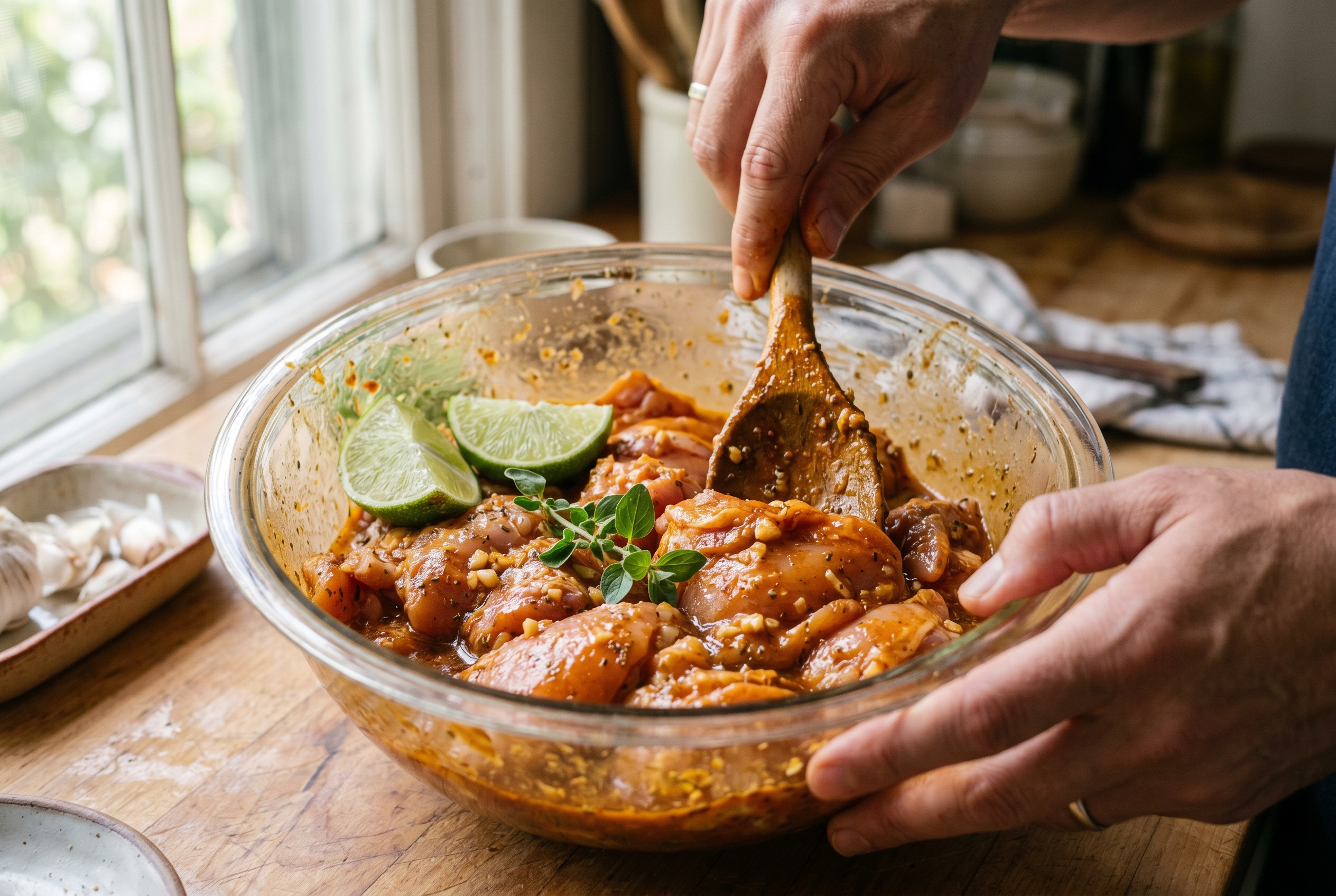
Pat the chicken thighs dry with paper towels, then cut into 1.5-inch pieces. Put them in a large bowl. Add the lime juice, Worcestershire, mashed garlic, oregano, salt, sazón, pepper, and paprika. Mix with your hands until every piece is coated. Cover and refrigerate for 2 hours minimum — overnight is better. This is where the flavor gets set. Don't rush this step.
Step 2 — Heat the Oil in the Caldero
Pour 2 inches of vegetable or corn oil into a caldero or Dutch oven. Set over medium-high heat and bring it to 350°F. Use a thermometer — this is non-negotiable. Too cold and the crust gets greasy. Too hot and the outside burns before the chicken cooks through. 350°F is the number. Check it. Trust the numbers, not your instincts.
Step 3 — Make the Dredge
While the oil heats, whisk the flour, cornstarch, salt, garlic powder, pepper, and sazón together in a wide bowl. Cornstarch is what makes the crust shatter instead of bend — make sure it's fully mixed in.
Step 4 — Drain and Dredge
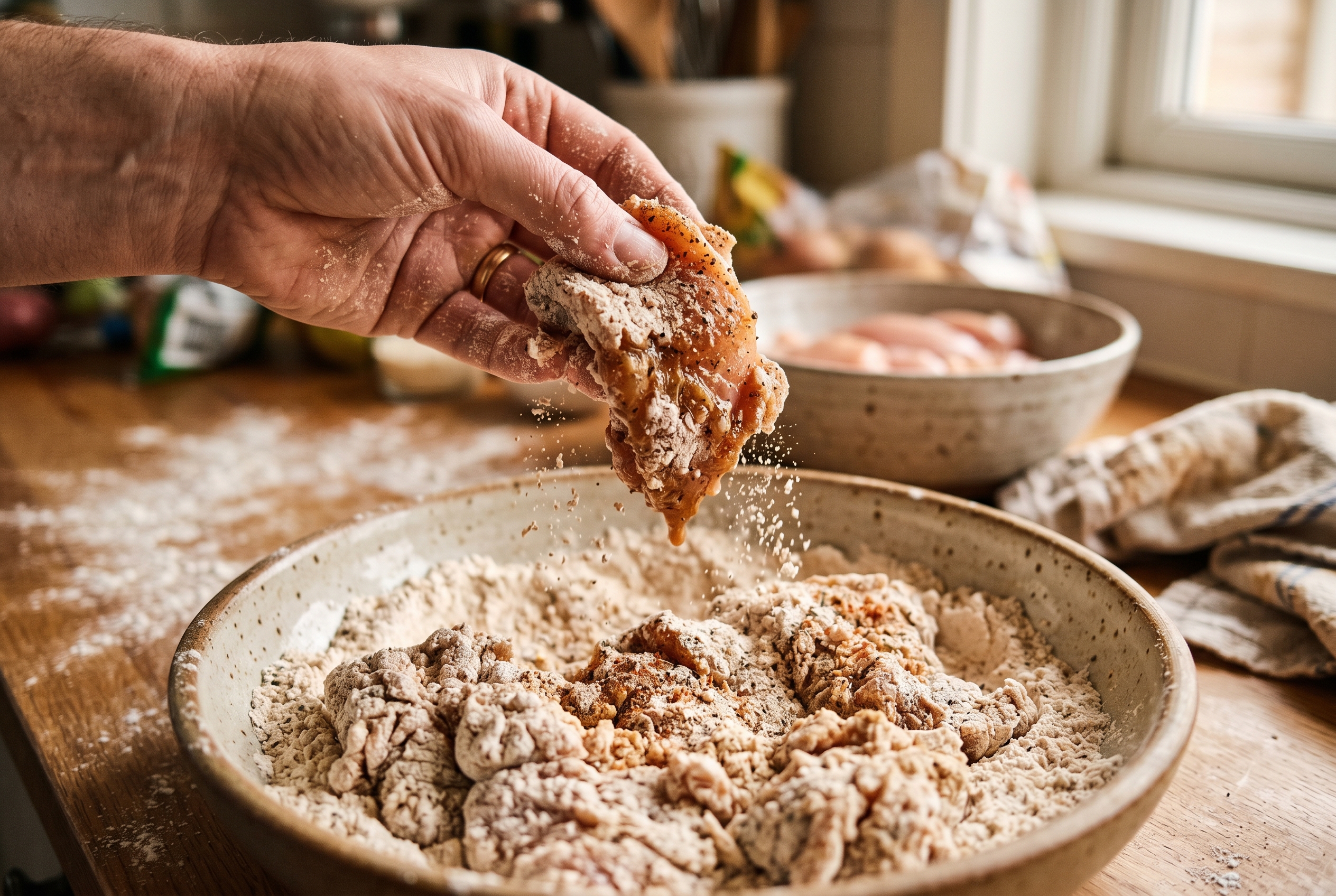
Take the chicken out of the fridge. Drain off excess marinade — the chicken should be wet but not swimming. Working in batches, toss the chicken pieces in the seasoned flour, pressing gently so the dredge grabs onto every craggy bit. Shake off the excess. Wet dredge = soggy chicken. Excess dry flour = burnt flour bits in your oil. Balance is everything.
Step 5 — Fry in Batches
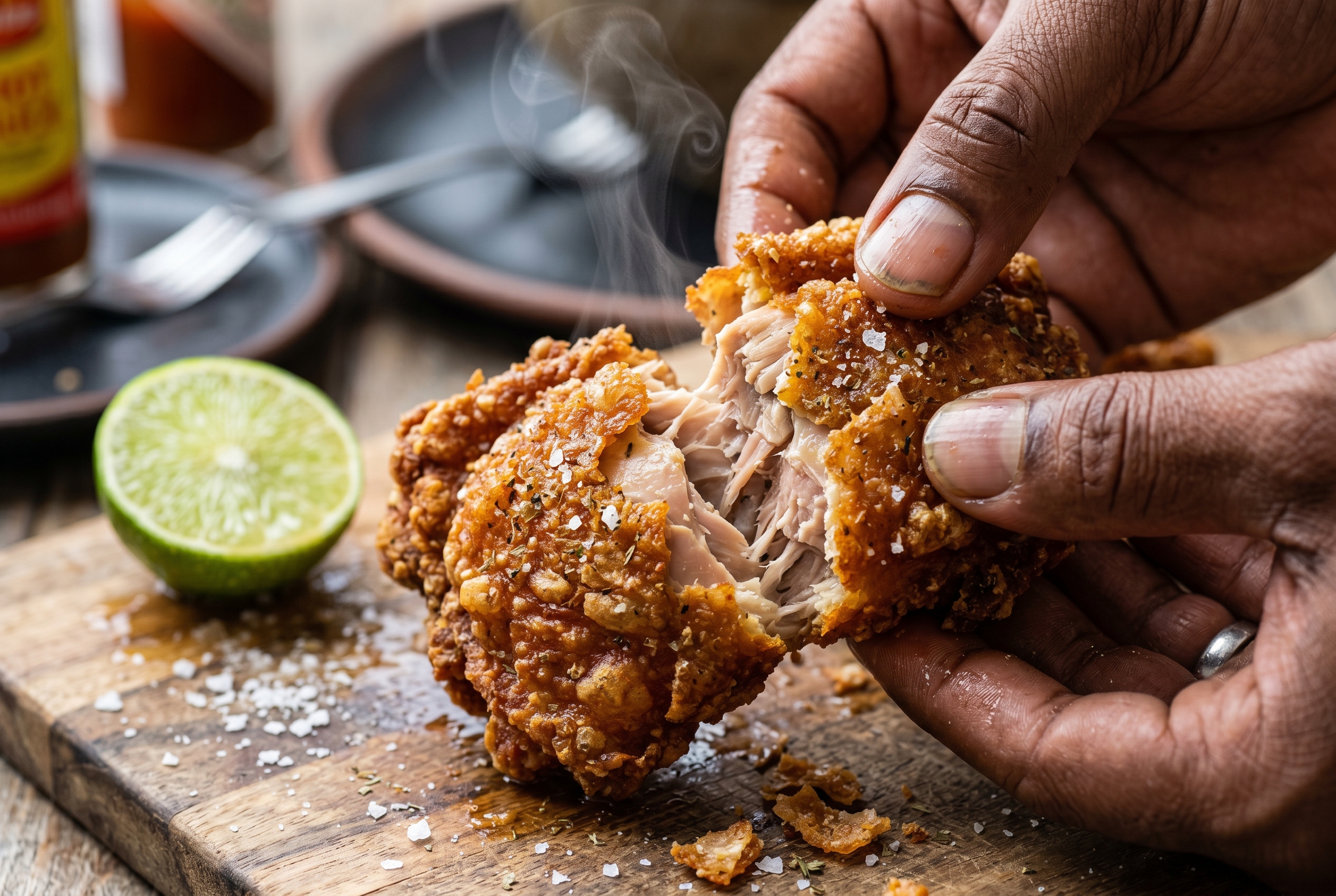
Lower the dredged chicken into the hot oil — don't crowd the pot. Fry in batches of 10-12 pieces, giving each piece room. Fry for 6-8 minutes, turning once, until deeply golden and crispy and the internal temperature reads 165°F. The color you're looking for is a dark amber gold, not pale yellow. Let the crust develop — resist the urge to flip constantly.
Step 6 — Drain, Salt, and Serve
Transfer the chicken to a wire rack set over a sheet pan — not paper towels. Paper towels steam the bottom and kill the crispy you just worked so hard for. Sprinkle with a pinch of flaky salt the second it comes out of the oil, while the surface is still slick — that's when salt sticks. Let rest 2 minutes. Pile it on a plate with lime wedges, tostones, and a small bowl of wasakaka on the side. Eat immediately.
Pro Tips for Perfect Chicharrón de Pollo
- Use a thermometer, always: 350°F is the temp. When you add cold chicken, the oil drops — adjust the heat to maintain 340-350°F during frying. Guessing is how you end up with raw centers and burnt crust.
- Drain on a rack, not paper towels: Air needs to circulate around the chicken or it steams itself soggy. This is the single biggest crispy-killer home cooks make.
- Salt right out of the oil: The surface is still slick with frying oil for about 30 seconds after it comes out. That's the window where flaky salt sticks and dissolves slightly. After that window, it falls off.
- Marinate overnight if you can: 2 hours is the minimum. 12-24 hours is where it really shines. The citrus and salt penetrate deep — you'll taste it in every bite, not just on the outside.
- Small pieces = crispier chicken: If you cut them too big, they become more like regular fried chicken. Stay at 1.5 inches. Small pieces is what makes it chicharrón de pollo and not pollo frito.
Variations
Pica Pollo-Style (Wings and Drumettes)
Swap the boneless thighs for bone-in chicken wings split into flats and drumettes, plus some chicken drumettes. Same marinade, same dredge, but fry for 10-12 minutes because of the bone. This is closer to what you get at the pica pollo corner spot in D.R.
Double-Dredge for Extra Crunch
Dredge, dip back into the marinade for a second, then dredge again. You get a thicker, more craggy crust. Takes an extra 2 minutes of work and gives you Dominican fried chicken that tastes almost like it has a tempura layer.
Spicy Dominican Style
Add 1 teaspoon cayenne and 1 teaspoon smoked paprika to the dredge. A finely minced ají caballero (Dominican hot pepper) or habanero goes in the marinade. Serve with extra wasakaka on the side. Not traditional, but Dominicans in New York make it this way more and more.
What to Serve With Chicharrón de Pollo
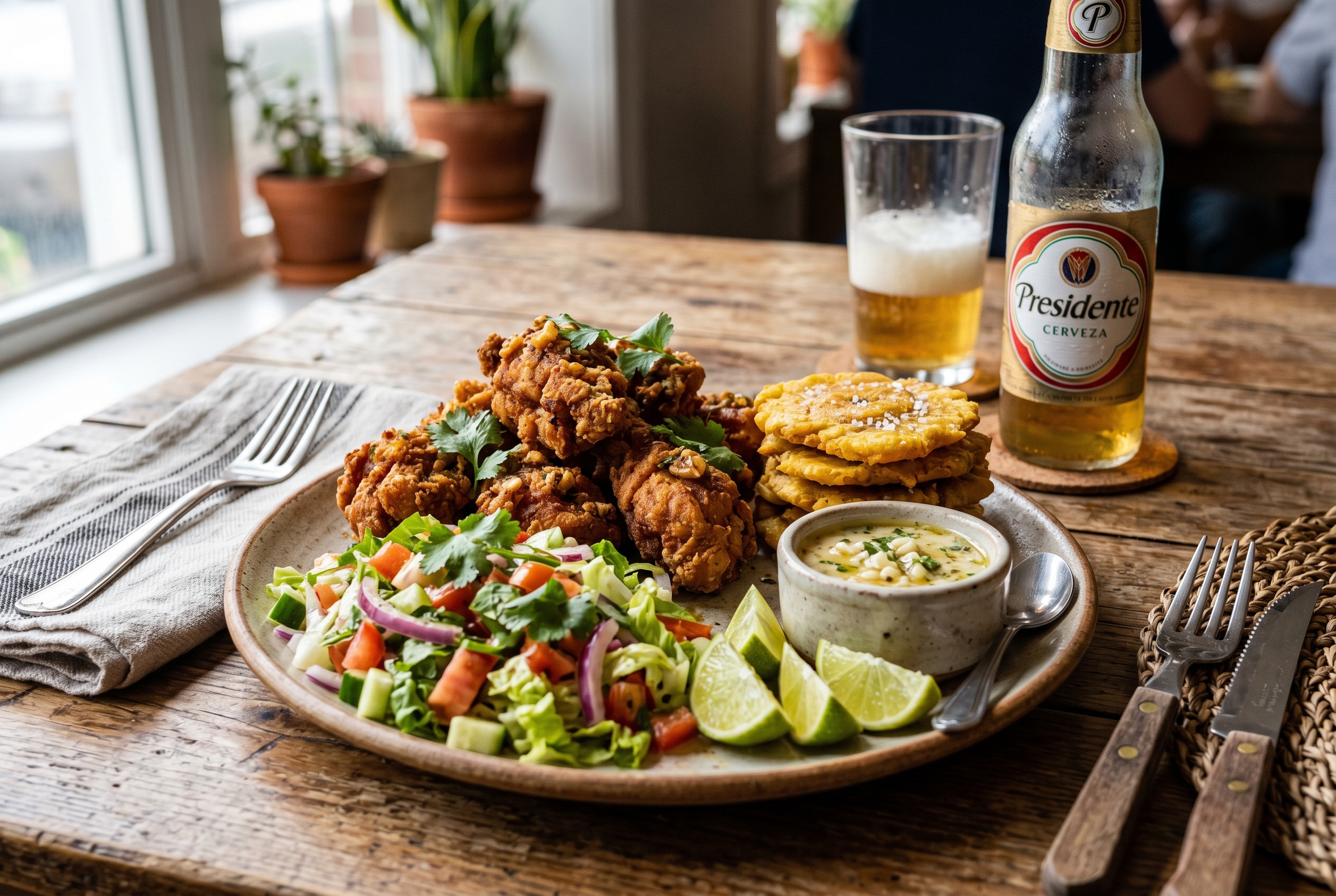
- Tostones: The classic pica pollo pairing. Crispy plantains and crispy chicken — no better combo.
- La Bandera Dominicana: Served alongside rice, beans, and a small salad for the full Sunday lunch.
- Arroz Blanco: White rice with crispy concón is the home version.
- Habichuelas Guisadas: Dominican red beans stewed with sofrito and calabaza.
- Wasakaka: Drizzle or dunk — the Dominican garlic sauce cuts through the richness.
- Mamajuana: The ultimate Dominican drink pairing for a plate of chicharrones — pour shots of the bark-and-rum herbal drink alongside the fried chicken for an authentic Dominican party spread.
You May Also Like
Frequently Asked Questions
What's the difference between chicharrón de pollo and regular fried chicken?
Chicharrón de pollo uses small pieces (1.5 inches), a citrus-forward Dominican marinade with sazón and oregano, and a cornstarch-blended flour dredge for a shattering crust. American fried chicken uses full bone-in pieces, often a buttermilk brine, and a thicker, softer crust. The Dominican version is crispier, more seasoned, and eaten as finger food.
Do I have to use chicken thighs?
Thighs are traditional because they stay juicy during high-heat frying. You can use wings or drumettes (bone-in versions are typical at pica pollo spots) or boneless breasts cut small — just reduce the fry time for breast pieces since they dry out faster. Avoid skinless breast pieces if possible; they go from juicy to sawdust in about 30 seconds.
Can I make this in an air fryer?
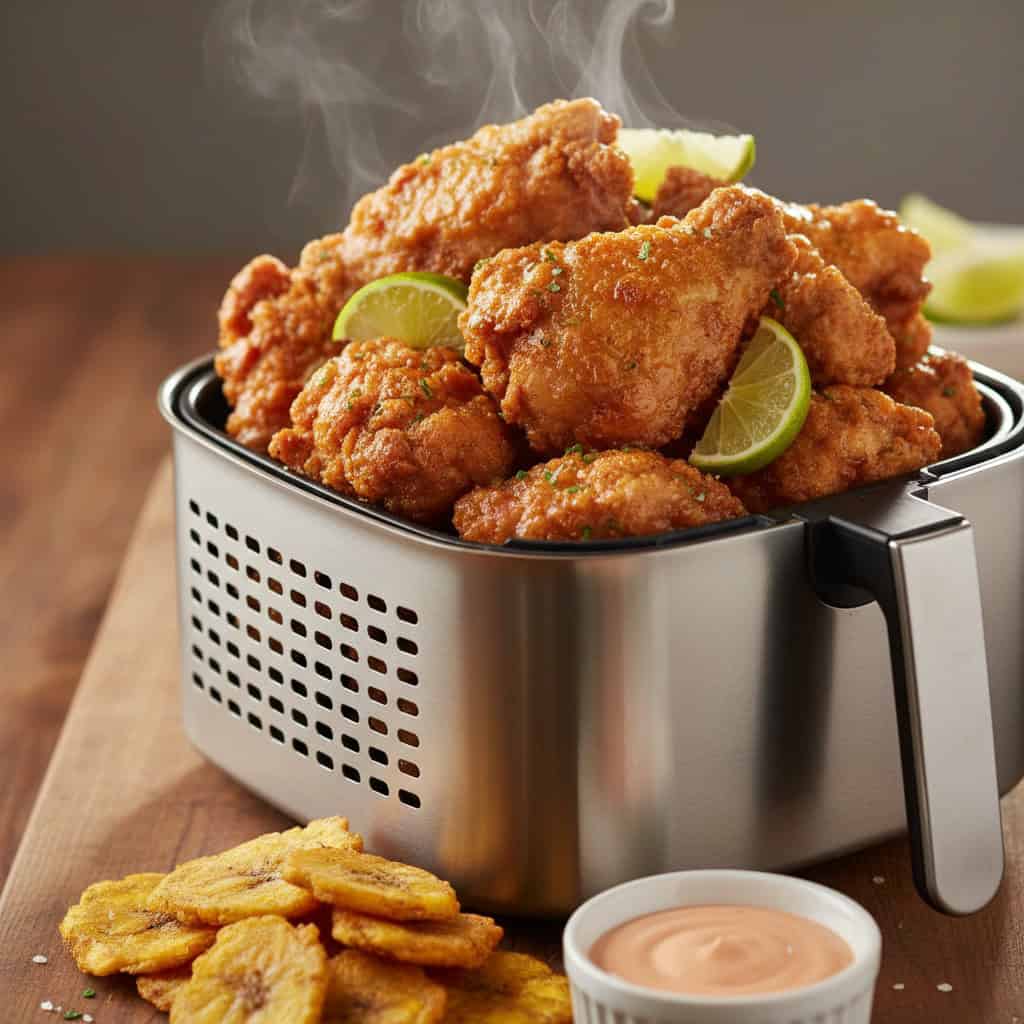
Yes — I have a separate air fryer chicharrón de pollo recipe on the site. The air fryer version is excellent for weeknights. This stovetop caldero version is the traditional one and will always be crispier and closer to what you get in D.R.
How do I know when the oil is ready?
A thermometer is the only reliable way — shoot for 350°F. If you don't have one, the wooden-spoon test works: stick the handle of a wooden spoon into the oil. If small bubbles form steadily around the handle, the oil is roughly 325-350°F. But honestly, get a thermometer. They're $10 and they make or break fried food.
Why do you add cornstarch to the flour?
Cornstarch doesn't form gluten the way wheat flour does, so it creates a crust that shatters instead of bending. Dominican home cooks, Korean fried chicken makers, and Chinese home cooks all do this — it's the secret to next-level crispy. Don't skip it.
Can I marinate for longer than overnight?
Up to 24 hours is fine. Beyond that, the lime starts breaking down the chicken texture and it can get mushy. Twelve to eighteen hours is the sweet spot — deep flavor without texture damage.
What oil should I use?
Vegetable oil, corn oil, or peanut oil. All have high smoke points and neutral flavor. Dominicans mostly use corn or soy oil at home. Don't use olive oil (wrong flavor, low smoke point) or butter (burns). Clean oil, fresh, not previously used for fish.
How do I keep the chicken crispy if I'm making a big batch?
Fry in batches and hold the finished pieces in a 200°F oven on a wire rack set over a sheet pan. The rack keeps air moving around them. Don't stack them and don't cover them. They'll stay crispy for 20-30 minutes — long enough to finish frying and get everyone to the table.
What's sazón and where do I get it?
Sazón is a Dominican/Latin seasoning blend — typically cilantro (culantro), garlic, achiote (annatto), salt, and MSG. Goya makes the most common version (sazón con culantro y achiote, orange envelope). You'll find it in the Latin aisle of any major supermarket or at a bodega. If you really can't find it, mix 1 teaspoon paprika + ¼ teaspoon turmeric + ½ teaspoon garlic powder + ½ teaspoon salt + pinch of oregano per tablespoon needed.
Can I reheat leftover chicharrón de pollo?
Yes — 375°F oven or air fryer for 5-7 minutes. Crust comes back to about 80% of original. Microwave will make it soggy; avoid. Truth is, this is best eaten the day it's made. Leftovers are still good, but they were never the main event.
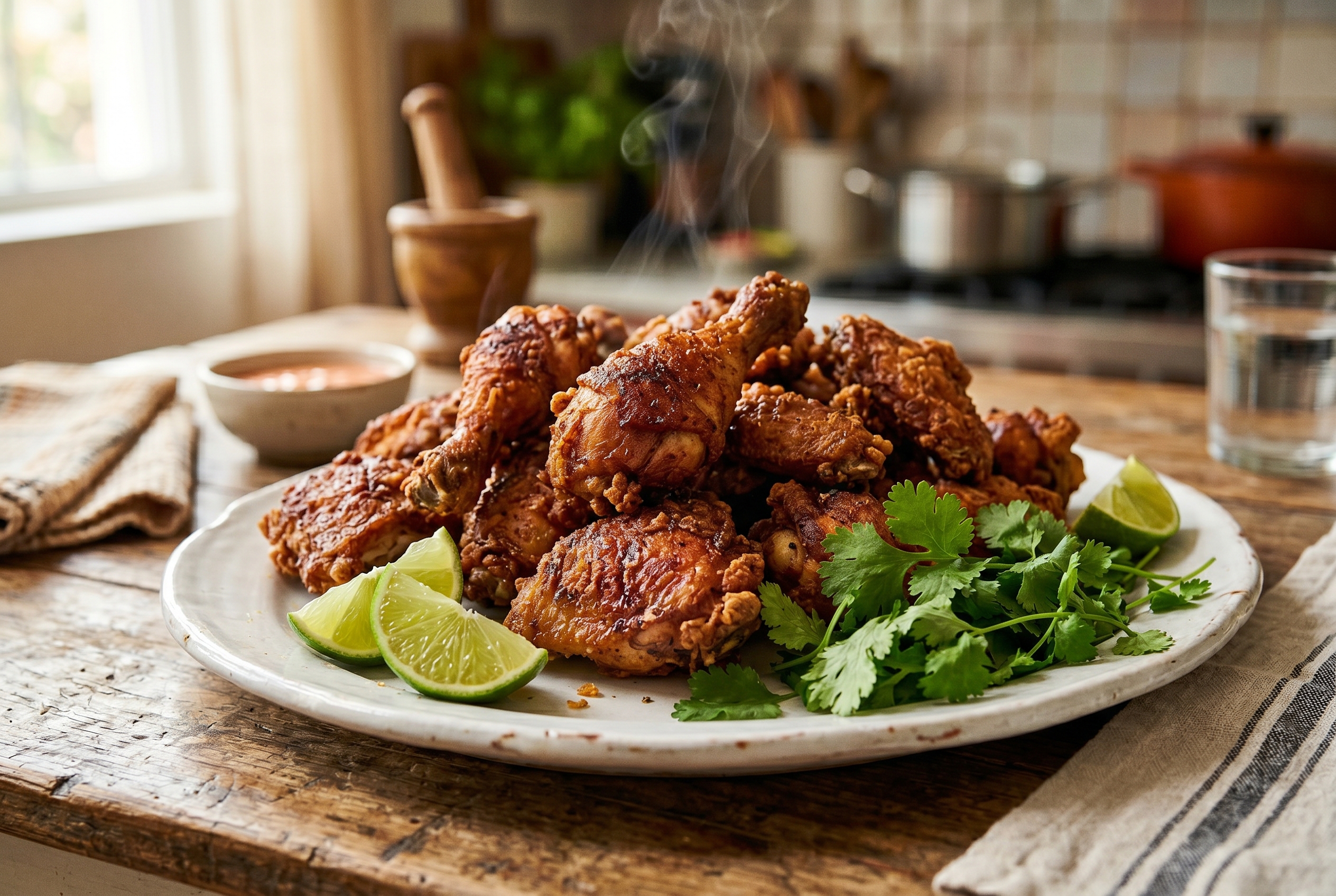
Chicharrón de Pollo (Dominican Fried Chicken)
Ingredients
Method
- Cut chicken into 1.5-inch pieces. Combine with lime juice, Worcestershire, garlic, oregano, salt, sazón, pepper, paprika. Marinate 2 hours minimum, overnight preferred.

- Heat 2 inches of oil in a caldero or Dutch oven to 350°F. Use a thermometer.
- Whisk flour, cornstarch, salt, garlic powder, pepper, and sazón in a wide bowl for the dredge.
- Drain excess marinade from chicken. Dredge in seasoned flour in batches, shaking off excess.
- Fry in batches of 10-12 pieces for 6-8 minutes until deeply golden and internal temp reads 165°F. Don't crowd.
- Transfer to wire rack. Salt immediately. Rest 2 minutes. Serve with tostones, lime wedges, and wasakaka.
Nutrition
Video
Notes
Tried this recipe?
Let us know how it was!Shop This Recipe
View on Amazon →
View on Amazon →
View on Amazon →
As an Amazon Associate I earn from qualifying purchases at no extra cost to you.
Marinate tonight. Fry tomorrow. Eat standing over the caldero like a true Dominican.
Leave a Reply