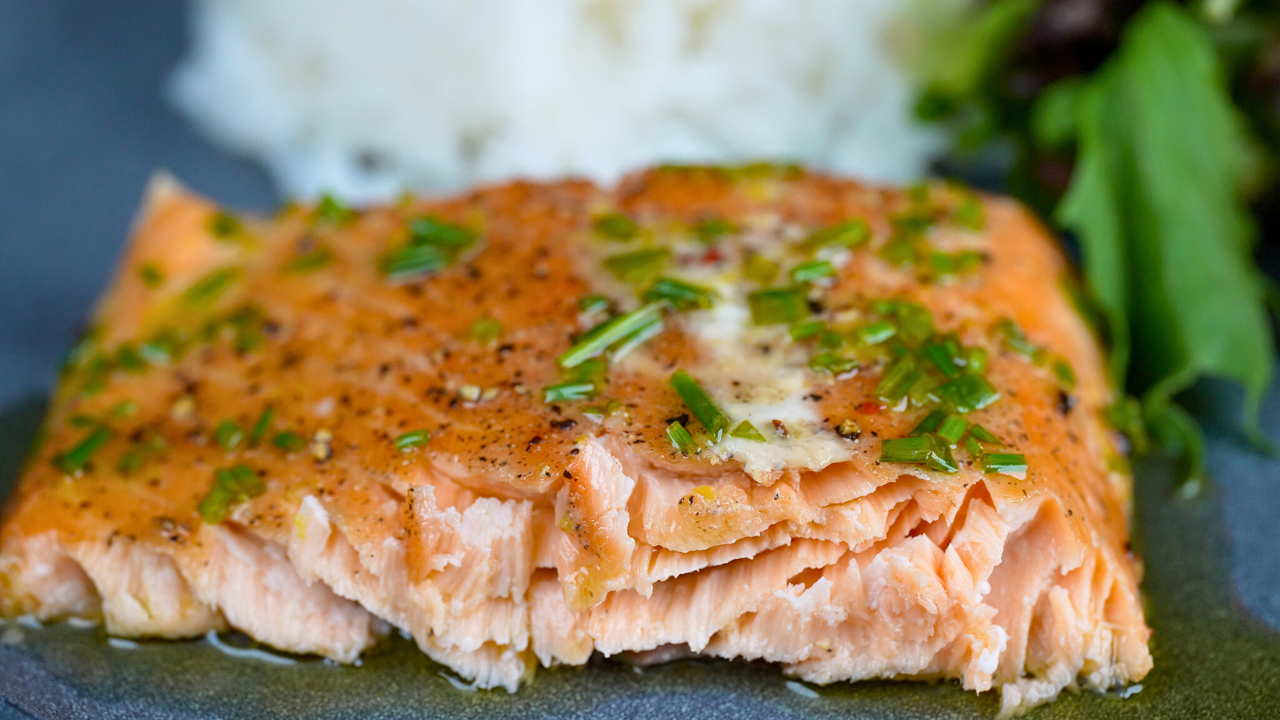
This Slow-Roasted Salmon with Chives and Lemon is light, flavorful, and comes together in no time. Perfect for a healthy weeknight dinner or when you want something a little more elegant, this recipe never disappoints. Fresh, simple, and absolutely delicious!
Did You Know?
Pro Tips
Storage & Meal Prep
Frequently Asked Questions
1. What temperature is best for slow-roasting salmon?
275°F is the ideal temperature for slow-roasting. The gentle heat cooks the salmon evenly throughout, producing an incredibly silky, almost custard-like texture that high heat cannot achieve.
2. How long does salmon take at 275°F?
About 20-30 minutes for 1-inch thick fillets. The salmon is done when it flakes easily and is just opaque in the center. A meat thermometer should read 125-130°F for the silkiest result.
3. Why slow-roast instead of using high heat?
Slow-roasting eliminates the white albumin protein that seeps out at high temperatures. The result is a more evenly cooked, incredibly tender fillet with no dry edges or raw center.
4. What type of salmon is best for slow-roasting?
Center-cut salmon fillets about 1-1.5 inches thick give the most uniform result. Wild salmon has a firmer texture while farm-raised is fattier and more forgiving.
5. Do I need to sear the salmon first?
Searing is optional but recommended for added flavor. Sear skin-side down in a hot pan for 3 minutes first, then transfer to the oven to finish gently at low temperature.
6. What is the white stuff that comes out of salmon?
That is albumin — a protein that coagulates and squeezes out when salmon is cooked at high temperatures. Slow-roasting at low heat minimizes albumin release dramatically.
7. How do I use the chive and lemon garnish?
Mix finely chopped fresh chives with lemon zest, a squeeze of lemon juice, flaky sea salt, and a drizzle of olive oil. Spoon over the salmon immediately after cooking.
8. Should I roast salmon skin-on or skin-off?
Skin-on protects the bottom of the fillet from direct heat and adds a layer of flavor. The skin peels off easily after cooking if you prefer to remove it.
9. What side dishes complement slow-roasted salmon?
Roasted asparagus, a light arugula salad, steamed green beans, lemon-herb couscous, or garlic mashed potatoes all pair beautifully with the delicate, silky fish.
10. How do I store leftover slow-roasted salmon?
Refrigerate in an airtight container for up to 2 days. Slow-roasted salmon is actually excellent served cold the next day — flake it over salads or into grain bowls.
Watch How to Make This
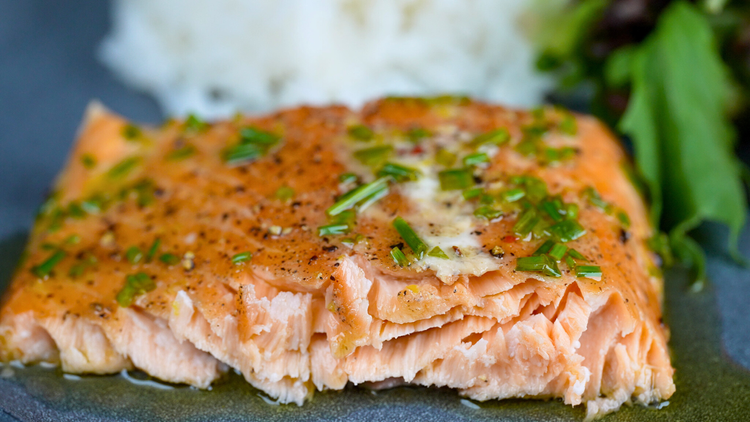
Slow-Roasted Salmon with Chives and Lemon
Ingredients
Method
- Preheat the Oven:Preheat your oven to 275°F (135°C).
- Preheat your oven to 275°F (135°C).
- Prepare the Salmon:Place the salmon fillets on a baking sheet lined with parchment paper.Drizzle the olive oil over the salmon, ensuring each fillet is well-coated.Season with salt and freshly ground black pepper to taste.Arrange the lemon slices over the top of the salmon fillets.
- Place the salmon fillets on a baking sheet lined with parchment paper.
- Drizzle the olive oil over the salmon, ensuring each fillet is well-coated.
- Season with salt and freshly ground black pepper to taste.
- Arrange the lemon slices over the top of the salmon fillets.
- Slow-Roast the Salmon:Roast the salmon in the preheated oven for about 25 minutes, or until it flakes easily with a fork and is cooked through.
- Roast the salmon in the preheated oven for about 25 minutes, or until it flakes easily with a fork and is cooked through.
- Finish and Serve:Remove the salmon from the oven and sprinkle with chopped chives and lemon zest (if using).Garnish with fresh chive sprigs for a vibrant presentation.Serve immediately, paired with your favorite sides.
- Remove the salmon from the oven and sprinkle with chopped chives and lemon zest (if using).
- Garnish with fresh chive sprigs for a vibrant presentation.
- Serve immediately, paired with your favorite sides.
Notes
Refrigerator: Store leftovers in an airtight container for up to 3-4 days.
Freezer: Freeze in a sealed container for up to 2-3 months. Thaw overnight in the fridge.
Reheat: Warm in a skillet over medium heat, in the microwave, or in a 350°F oven until heated through.
Nutrition Facts (Per Serving, Approximate)
Nutrition values are estimates and may vary based on ingredients and preparation.
Never Miss a Recipe!
Subscribe to get new recipes delivered straight to your inbox.