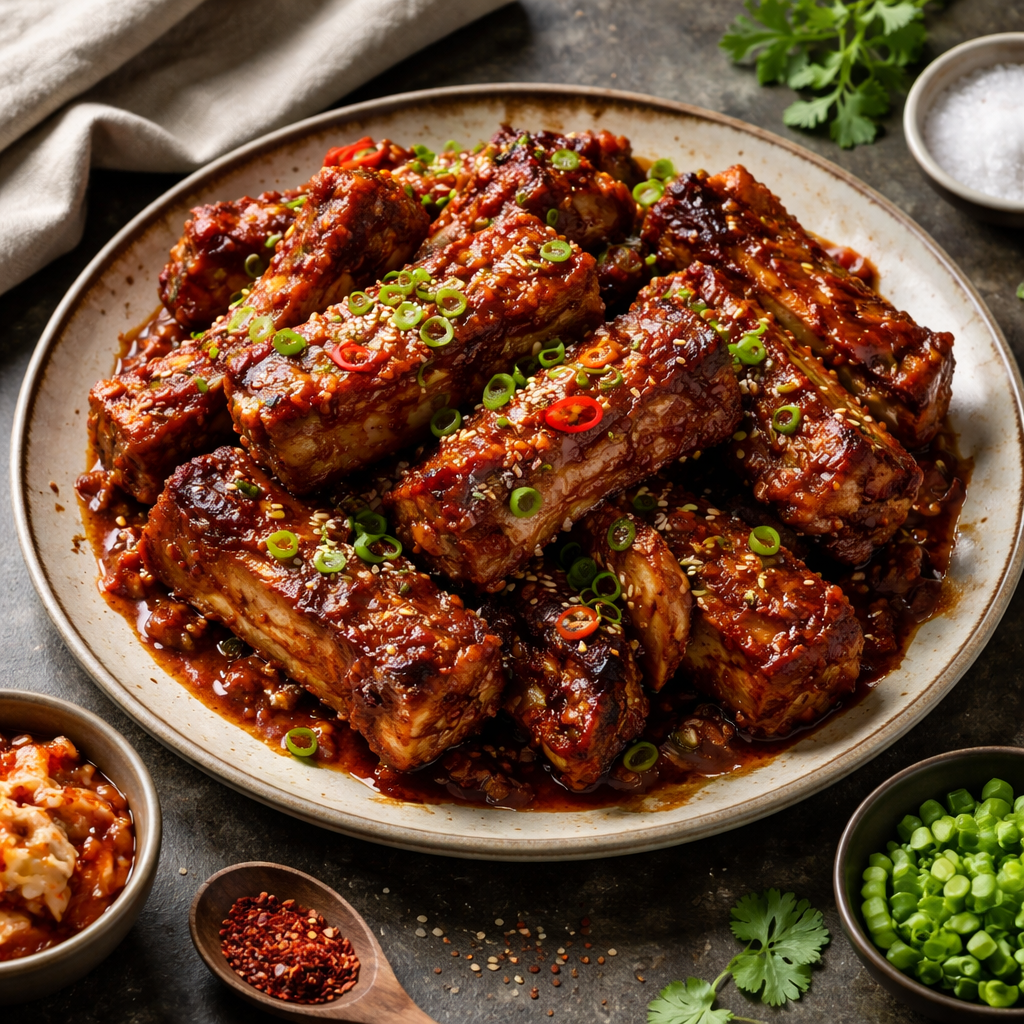
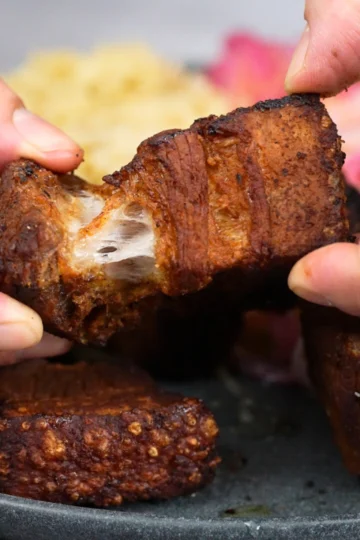
These Korean-style spicy pork ribs are fall-off-the-bone tender and coated in a fiery, slightly sweet gochujang glaze that's absolutely addictive. They're the perfect finger-licking appetizer or main course for anyone who loves bold flavors.
Did You Know?
Pro Tips
Storage & Meal Prep
What to Serve With
Steamed white rice is non-negotiable here — you need something neutral to absorb the glaze that drips off the ribs, and plain rice does that job better than anything else. For a proper Korean-inspired spread, add a small bowl of kimchi or quick-pickled cucumber on the side — the acidity cuts through the fat and resets your palate between bites. If you want to round out the meal without much extra work, my Dominican black beans make a surprisingly great cross-cultural pairing, the earthy richness of the beans playing beautifully against the sweet heat of the gochujang glaze.
Frequently Asked Questions
Gochujang is a fermented Korean red chili paste made from red peppers, soybeans, salt, and rice. It is thick, deeply savory, spicy, and slightly sweet all at once. Find it in the international aisle of most major grocery stores, at any Asian grocery store, or online. Brands like Chung Jung One and Haechandle are widely available and reliable.
Q: How spicy are these Korean pork ribs?
With ½ cup gochujang and ⅓ cup Sriracha this recipe is genuinely spicy. For a milder version reduce the Sriracha to 2 tablespoons and increase the brown sugar to 3 tablespoons to balance. For extra heat add a teaspoon of gochugaru (Korean chili flakes) to the glaze.
Q: Can I make these ribs without gochujang?
You can substitute a mix of sriracha and miso paste in equal parts to approximate the fermented heat, but it won’t be the same. Gochujang has a depth from fermentation that no other chili paste replicates. If you can find it even online it is worth getting the real thing.
Q: What cut of ribs works best for this recipe?
Baby back ribs cook faster and are leaner with a milder pork flavor. Spare ribs are larger fattier and more flavorful but need an extra 30 to 45 minutes in the oven. St. Louis style spare ribs are trimmed for more even cooking and are an excellent choice. This recipe works with all three — just adjust oven time accordingly.
Q: How do I know when the ribs are done?
After 2 hours wrapped in foil at 275°F the meat should have pulled back from the bone tips by about ¼ inch and feel tender when pierced with a fork. If you pick up the rack with tongs from the center it should bend and nearly crack. Internal temperature should read at least 190°F for fall-off-the-bone tenderness.
Q: Can I make these Korean ribs ahead of time?
Yes. Complete the foil-wrapped oven stage up to 2 days ahead and refrigerate the ribs in the foil. When ready to serve bring them to room temperature for 30 minutes then broil with the reserved glaze for 8 to 10 minutes. The flavor actually deepens overnight.
Q: Can I cook these Korean pork ribs on the grill?
Yes. Grill over indirect heat at 275°F with the lid closed for 2 to 2.5 hours wrapped in foil, then unwrap and move to direct high heat for 5 to 8 minutes basting with reserved glaze until caramelized and charred at the edges. Grilling adds a smoky dimension that works beautifully with the gochujang.
Q: Can I use pork shoulder or belly instead of ribs?
Both work well with this glaze. Pork belly should be sliced into 1-inch strips and roasted at 300°F for 90 minutes then broiled. Pork shoulder should be cut into 3-inch chunks, cooked the same way, and is excellent shredded over rice. Adjust cook times and use a thermometer — internal temp should reach at least 195°F for shoulder.
Q: How do I store and reheat leftover Korean pork ribs?
Refrigerate in an airtight container for up to 4 days. Reheat in a 350°F oven for 10 minutes covered loosely with foil to prevent the glaze from burning. Brush with a little extra glaze before reheating to refresh the coating. The ribs actually taste better the next day as the glaze soaks deeper into the meat.
Q: What does Korean BBQ taste like compared to American BBQ?
American BBQ relies on smoke, dry rubs, and low slow cooking with sweet tangy sauces that are vinegar or tomato based. Korean BBQ is built on fermented, umami-rich marinades — gochujang, soy, sesame, garlic — that caramelize into a sticky lacquer rather than a sauce. The heat in Korean BBQ comes from chili paste not pepper, giving it a deep slow burn rather than a sharp spike.
Watch How to Make This
Ingredients
Method
- Remove the thin white membrane from the underside of the ribs.
- Preheat oven to 275F.
- Mix the gochujang, ketchup, Sriracha, crushed garlic, minced green onions, brown sugar, rice vinegar, sesame oil, soy sauce, and kosher salt together in a bowl until fully combined. Reserve ⅓ cup of the glaze in a separate bowl for basting.
- Coat ribs with the sauce, wrap tightly in foil.
- Roast for 2 hours.
- Unwrap, increase oven to broil. Brush with reserved sauce.
- Broil 5-10 minutes until edges start to char. Serve immediately.
Leave a Reply