
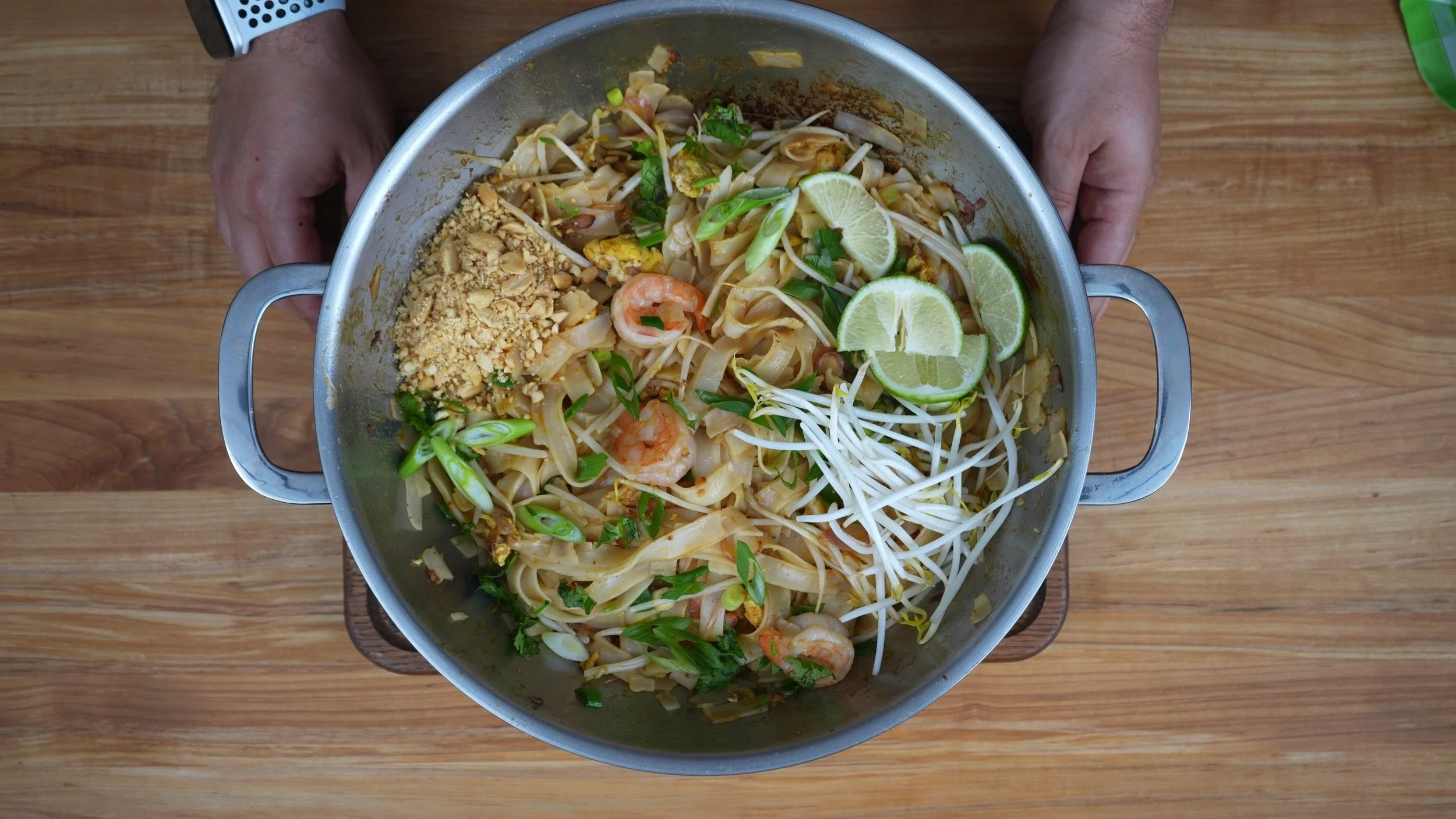
This Shrimp Pad Thai delivers authentic Thai street food flavors right in your kitchen. Chewy rice noodles, plump shrimp, and a perfect balance of sweet, sour, and savory come together in one incredible stir-fry. Find the full recipe below.
Did You Know?
Pad Thai was actually promoted by the Thai government in the 1930s as part of a nation-building campaign. The Prime Minister at the time wanted to reduce rice consumption and promote noodles, creating a national dish that would unite the country's diverse regions.
The secret to great Pad Thai is the sauce — a careful balance of tamarind paste, fish sauce, and palm sugar that creates the signature sweet-sour-salty flavor profile. Street vendors in Thailand often guard their exact sauce ratios as closely kept family secrets.
Pro Tips
- Soak, don't boil the noodles — rice noodles should be soaked in room temperature water until pliable but still firm. They'll finish cooking in the wok.
- High heat is essential — use the highest heat your stove can produce to get that signature smoky wok flavor called wok hei.
- Cook in batches — don't overcrowd the wok. Cook the shrimp first, set aside, then stir-fry the noodles.
- Push and toss — push ingredients to the side of the wok to create space for the egg, then toss everything together.
- Squeeze lime at the table — fresh lime juice brightens all the flavors right before eating.
Frequently Asked Questions
What noodles do I use for Pad Thai?
Use dried flat rice noodles (also called rice sticks), about ¼ inch wide. Find them in the Asian aisle of most grocery stores.
What can I substitute for tamarind paste?
Mix equal parts lime juice and brown sugar for a quick substitute, though the flavor won't be identical.
Can I use chicken instead of shrimp?
Absolutely. Slice chicken breast thin and cook it first before adding noodles.
Why are my noodles mushy?
Over-soaking or over-cooking the noodles is the most common mistake. Soak just until pliable and cook quickly over high heat.
Is fish sauce necessary?
Yes — it provides the essential salty umami backbone. Soy sauce can substitute in a pinch but changes the flavor profile.
How do I store leftover Pad Thai?
Refrigerate in an airtight container for up to 3 days. Reheat in a hot skillet with a splash of water.
Can I make it vegetarian?
Use tofu instead of shrimp and substitute soy sauce for the fish sauce.
What is tamarind paste?
It's a tangy, slightly sweet paste made from tamarind fruit. It's the key ingredient that gives Pad Thai its distinctive sour note.
Absolutely! You can swap shrimp for tofu, chicken, or even a mix of your favorite veggies to make it vegetarian or vegan-friendly.
Watch the Full Video
Watch the video above for a complete step-by-step walkthrough of this recipe. Don't forget to subscribe to Kelvin's Kitchen on YouTube for more delicious recipes!
Full Recipe
Mastering Shrimp Pad Thai at home Recipe
Ingredients
Method
- Prepare the Pad Thai Sauce:
- Begin by dissolving tamarind paste in hot water until smooth. Strain to remove any solids.
- In a bowl, mix together tamarind concentrate, fish sauce, palm sugar, soy sauce, and chili flakes until well combined.
- Soak the Rice Noodles:
- Place dried rice noodles in a large bowl and cover with hot water. Let soak for 20-30 minutes until softened but still firm. Drain and set aside.
- Cook the Shrimp:
- Heat vegetable oil in a large skillet over medium-high heat. Add shrimp and cook for 2-3 minutes on each side until pink and opaque. Remove from skillet and set aside.
- Cook the Aromatics:
- In the same skillet, add more vegetable oil. Sauté garlic and shallots until fragrant, about 1-2 minutes.
- Scramble the Eggs:
- Push garlic and shallots to one side of the skillet. Pour beaten eggs into the empty side. Allow to partially set, then scramble until fully cooked.
- Add Noodles and Sauce:
- Add soaked rice noodles to the skillet along with the prepared Pad Thai sauce. Toss until noodles are well coated.
- Combine Ingredients:
- Add cooked shrimp back to the skillet, along with bean sprouts and green onions. Stir-fry for another 2-3 minutes until heated through.
- Transfer Pad Thai to serving plates. Sprinkle with chopped peanuts and garnish with lime wedges, fresh cilantro, and extra bean sprouts.
- Get ready to savor the flavors of Thailand with this mouthwatering Shrimp Pad Thai from Kelvin's Kitchen!
- Slow Cooker Chicken Enchiladas
- Juicy Oven Baked Pork Chops
- Creamy Mushroom Risotto
- Lobster Scampi
What to Serve With Shrimp Pad Thai
Thai spring rolls make an excellent appetizer — their light, fresh crunch is the perfect start before a rich plate of Pad Thai.
A simple cucumber salad dressed with rice vinegar, sesame oil, and a pinch of sugar provides a cool, refreshing contrast.
Thai iced tea is the classic beverage pairing — its creamy sweetness balances the tangy, savory noodles perfectly.
Leave a Reply