
This Seared Mahi Mahi with Lemon Garlic Butter Sauce is one of those recipes you'll find yourself making over and over again. It's simple, delicious, and always gets rave reviews. Whether you're a beginner or a seasoned cook, you're going to love how easy and tasty this turns out!
Did You Know?
Pro Tips
Frequently Asked Questions
1. How do I know when mahi mahi is done cooking?
Mahi mahi is done when it flakes easily with a fork and reaches 137°F internal temperature. The flesh turns from translucent to opaque white throughout.
2. Should I remove the skin before searing mahi mahi?
You can cook it either way. Skin-on protects the delicate flesh during searing and peels off easily after cooking. Skin-off gives better direct browning.
3. How do I prevent mahi mahi from sticking to the pan?
Make sure the fish is patted completely dry, the pan is very hot, and there is enough oil. Do not move the fish for 3-4 minutes — it will release naturally when seared.
4. What makes a good lemon garlic butter sauce for fish?
Melt butter, saute minced garlic until fragrant, add fresh lemon juice, white wine, and capers or parsley. Swirl until emulsified into a silky sauce.
5. Can I use a different white fish instead of mahi mahi?
Halibut, cod, sea bass, or snapper are all excellent substitutes. Choose firm-fleshed white fish that holds together well during searing.
6. What side dishes pair well with seared mahi mahi?
Roasted asparagus, garlic mashed potatoes, rice pilaf, sauteed spinach, or a light arugula salad complement the lemon butter sauce beautifully.
7. How thick should mahi mahi fillets be for searing?
Fillets about 1 to 1.5 inches thick are ideal. Thinner pieces overcook too quickly, while very thick pieces need to be finished in the oven after searing.
8. Can I grill mahi mahi instead of pan-searing?
Yes, mahi mahi is excellent on the grill. Oil the grates well and grill 4-5 minutes per side over medium-high heat. Serve the lemon garlic butter sauce on the side.
9. Is mahi mahi a sustainable fish to eat?
Mahi mahi caught by US Atlantic troll or pole-and-line fisheries is rated a sustainable choice. Check seafood guides like Monterey Bay Aquarium for your region.
10. How do I store leftover seared mahi mahi?
Refrigerate in an airtight container for up to 2 days. Reheat gently in a 300°F oven for 8-10 minutes. Leftover fish also works great cold in fish tacos or salads.
Watch How to Make This
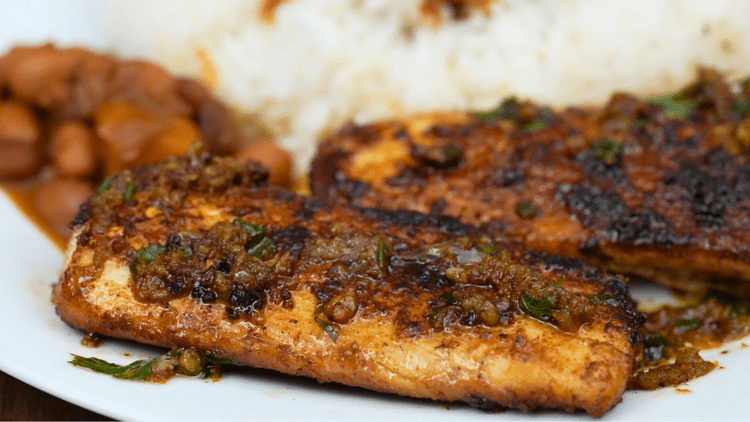
Seared Mahi Mahi with Lemon Garlic Butter Sauce
Ingredients
Method
- Pat the mahi mahi fillets dry on both sides (critical for that sear). Season both sides with salt, pepper, garlic powder, and paprika.
- Heat 2 tablespoon olive oil and 2 tablespoon butter in a large skillet over medium-high heat. Sear fillets in two batches if needed (don't overcrowd the pan). Cook each fillet for about 3–4 minutes per side, until golden, lightly crisped, and just opaque in the center (internal temp around 137°F). Remove fish and set aside on a plate loosely tented with foil.
- In the same skillet, lower the heat to medium. Add 4 tablespoon butter and let it melt. Add minced garlic and sauté 30–60 seconds until fragrant. Stir in lemon zest, lemon juice, and parsley. Let it bubble gently for 1 minute. Taste and season with a bit more salt, pepper, or chili flakes if desired.
- Place mahi mahi on plates or a platter. Spoon the lemon garlic butter sauce generously over the top. Garnish with extra parsley, a squeeze of fresh lemon, and serve immediately.
Notes
Refrigerator: Store leftovers in an airtight container for up to 3-4 days.
Freezer: Freeze in a sealed container for up to 2-3 months. Thaw overnight in the fridge.
Reheat: Warm in a skillet over medium heat, in the microwave, or in a 350°F oven until heated through.
Nutrition Facts (Per Serving, Approximate)
Nutrition values are estimates and may vary based on ingredients and preparation.
Leave a Reply