
This Sandwich Loaf Bread is hands down one of the best things you can make for lunch or dinner. Packed with flavor and so satisfying, it comes together quickly and tastes like something you'd order at your favorite restaurant!

About This Recipe
Here's what most home bakers miss about sandwich loaf bread: the secret lies in the "windowpane test" timing, but specifically for sandwich bread, you want to stop just SHORT of perfect windowpane development. I learned this from a baker in Santiago who supplied local colmados – if you develop the gluten to that classic thin, translucent membrane stage, your sandwich bread becomes too chewy and tears when you spread butter or merengue. Instead, stop when you can stretch the dough thin but it's still slightly opaque. This creates the perfect tender crumb that holds together for sandwiches but yields beautifully to your teeth. The difference is maybe 2-3 minutes less mixing, but it transforms your loaf from bakery-style artisan bread to the soft, pillowy texture that makes the perfect base for a tostada dominicana or any sandwich that needs bread that complements rather than competes with the filling.
Ingredients for Sandwich Loaf Bread
- 3 cups bread flour
- 1 packet of instant yeast
- 1.5 teaspoons fine sea salt
- 1 tablespoon granulated sugar
- ¾ cup warm water
- ½ cup whole milk
- 3 tablespoons unsalted butter — at room temperature
- 1 tablespoon vegetable oil
Substitutions & Variations
- Whole milk: substitute with coconut milk for a tropical twist that adds subtle sweetness and creates an incredibly tender crumb perfect for Caribbean-style sandwiches.
- Granulated sugar: replace with brown sugar or piloncillo for a deeper molasses flavor that pairs beautifully with Dominican sandwich fillings like pernil or pollo guisado.
- Bread flour: use all-purpose flour plus 1 tablespoon vital wheat gluten if bread flour isn't available, though the texture will be slightly less chewy and structured.
- Warm water: substitute with plantain cooking water (cooled to warm) for an authentic Dominican touch that adds subtle starch and a hint of plantain flavor to the bread.
- Unsalted butter: replace with softened coconut oil for a dairy-free version that gives the bread a light coconut aroma and keeps it moist longer in tropical climates.
- Fine sea salt: use sazón sin culantro y achiote (without cilantro) for a Dominican-style bread with subtle garlic and pepper notes that complements island sandwich meats perfectly.
How to Make Sandwich Loaf Bread
- In a large mixing bowl, whisk together the bread flour, instant yeast, fine sea salt, and granulated sugar until well combined.
- Add the warm water and whole milk to the bowl of a stand mixer fitted with the hook attachment. With the mixer running on low, gradually add in the dry ingredients. Mix until a shaggy dough forms.
- Increase the mixer speed to medium and continue to mix for 5-7 minutes, or until the dough becomes smooth and elastic.
- Add the room-temperature butter to the dough and mix until it is evenly incorporated.
- Remove the dough from the mixer bowl and shape it into a ball. Grease the bowl with vegetable oil and place the dough back in the bowl. Cover with plastic wrap and let it rise in a warm place for 1.5-2 hours, or until it doubles in size.
- Once the dough has doubled in size, punch it down to release the air. Reshape the dough into a ball and transfer it to a greased loaf pan.
- Cover the loaf pan with plastic wrap and let the dough rise again for 1 hour, or until it has puffed up.
- Preheat the oven to 350°F (177°C).
- Bake the bread for 35-40 minutes, or until it is golden brown on the outside.
- Remove the bread from the oven and let it cool on a wire rack for at least 30 minutes before slicing and serving.
What to Serve With Sandwich Loaf Bread
This bread is perfect for my Dominican-style roast pork sandwiches - the sturdy crumb holds up beautifully to juicy pernil and tangy pickled onions. The mild flavor lets the seasoned meat shine while providing that satisfying chew every great sandwich needs.
Nothing beats thick slices toasted golden and slathered with fresh avocado, a sprinkle of sea salt, and a drizzle of good olive oil. The creamy richness of ripe avocado contrasts beautifully with the bread's slightly dense texture, creating a simple but incredibly satisfying combination.
For breakfast, I love serving warm slices alongside café con leche and fresh tropical fruit like mango or papaya. The bread's subtle sweetness pairs perfectly with strong Dominican coffee, while the fruit adds bright acidity that wakes up your palate.
Frequently Asked Questions
1. What flour produces the best sandwich bread?
Bread flour gives the ideal structure and chew thanks to its higher protein content. All-purpose flour makes a softer, more tender loaf that is still excellent for sandwiches.
2. What makes homemade sandwich bread soft?
Milk, butter, and a small amount of sugar enrich the dough. The tangzhong method (cooking a portion of the flour with water into a paste first) produces the softest bread possible.
3. How long does sandwich bread dough need to rise?
First rise: 1-1.5 hours until doubled. After shaping into a loaf pan, the second rise takes 45-60 minutes until the dough crowns about 1 inch above the pan rim.
4. What size loaf pan should I use?
A standard 9x5-inch loaf pan is ideal for a full-sized sandwich loaf. An 8.5x4.5-inch pan works for a slightly taller, domed loaf. Grease well to prevent sticking.
5. How do I shape dough into a loaf?
Pat the dough into a rectangle the width of your pan, roll it up tightly from the short side, pinch the seam closed, and place seam-side down in the greased pan.
6. What temperature and time for baking sandwich bread?
350 degrees for 30-35 minutes until the top is golden brown and the internal temperature reaches 190-200 degrees. The bread should sound hollow when tapped on the bottom.
7. Why did my bread collapse after baking?
It was likely over-proofed (rose too long before baking) which weakened the gluten structure. The dough should spring back slowly when poked — if the indent stays, it is over-proofed.
8. Should I brush the top with butter?
Brushing with melted butter immediately after baking gives a soft, golden crust. For a crispier crust, brush with an egg wash before baking instead.
9. How do I get even, thin sandwich slices?
Let the bread cool completely (at least 1 hour) before slicing. Use a long serrated bread knife with a gentle sawing motion. Warm bread compresses and tears when cut.
10. How do I store homemade sandwich bread?
Store in a bread bag or wrapped in a kitchen towel at room temperature for 3-4 days. Slice and freeze for up to 3 months — toast directly from frozen for the freshest taste.
Sandwich Loaf Bread Video
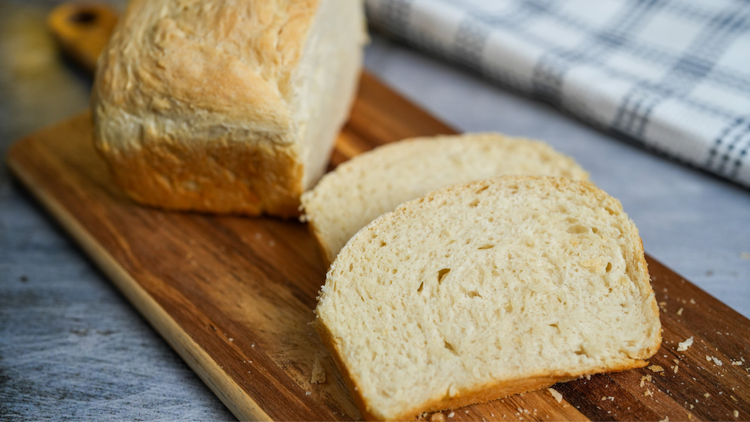
Sandwich Loaf Bread
Ingredients
Method
- In a large mixing bowl, whisk together the bread flour, instant yeast, fine sea salt, and granulated sugar until well combined.
- Add the warm water and whole milk to the bowl of a stand mixer fitted with the hook attachment. With the mixer running on low, gradually add in the dry ingredients. Mix until a shaggy dough forms.
- Increase the mixer speed to medium and continue to mix for 5-7 minutes, or until the dough becomes smooth and elastic.
- Add the room-temperature butter to the dough and mix until it is evenly incorporated.
- Remove the dough from the mixer bowl and shape it into a ball. Grease the bowl with vegetable oil and place the dough back in the bowl. Cover with plastic wrap and let it rise in a warm place for 1.5-2 hours, or until it doubles in size.
- Once the dough has doubled in size, punch it down to release the air. Reshape the dough into a ball and transfer it to a greased loaf pan.
- Cover the loaf pan with plastic wrap and let the dough rise again for 1 hour, or until it has puffed up.
- Preheat the oven to 350°F (177°C).
- Bake the bread for 35-40 minutes, or until it is golden brown on the outside.
- Remove the bread from the oven and let it cool on a wire rack for at least 30 minutes before slicing and serving.
Nutrition
Notes
Use bread flour with exactly 12.5-13% protein content because sandwich loaf needs enough structure to slice cleanly without crumbling, but higher protein creates that chewy texture that fights against spreads and delicate fillings. Shape your loaf by rolling the dough into a tight cylinder, then letting it rest 10 minutes before final shaping – this relaxes the gluten just enough to prevent the characteristic dome top that makes even slicing impossible. After hundreds of loaves, I've learned to bake until the internal temperature hits exactly 200°F, not the typical 190°F, because sandwich bread needs that extra moisture driven out to prevent gumminess when cooled and sliced. Cool the loaf on its side for the first hour, rotating every 15 minutes – this prevents the bottom crust from steaming and creating that soggy layer that makes your bread compress when you slice it.
Tried this recipe?
Let us know how it was!Filed Under



Leave a Reply