
This Reverse Seared Steak is tender, savory, and full of bold flavors. It's the kind of recipe that makes any dinner feel special without requiring hours in the kitchen. Simple ingredients, amazing results — let's get cooking!
Did You Know?
Pro Tips
Frequently Asked Questions
1. What is the reverse sear method for steak?
The reverse sear cooks the steak low and slow in the oven first (to your target internal temperature), then finishes with a blazing hot sear in a cast iron skillet for the crust.
2. Why is reverse searing better than traditional searing?
It produces the most even doneness edge-to-edge with no gray overcooked band. Traditional sear-first creates a gradient from well-done edges to a rare center.
3. What temperature should the oven be for reverse sear?
225-275 degrees. The low, gentle heat slowly brings the steak to temperature without overcooking the exterior. This phase takes 30-45 minutes depending on thickness.
4. What internal temperature should I pull the steak from the oven?
Pull at 10-15 degrees below your target. For medium-rare (130 final), pull at 115-120. The final sear adds the remaining degrees in about 60-90 seconds per side.
5. What cut of steak works best for reverse sear?
Thick steaks (1.5 inches or more) benefit most — ribeye, NY strip, porterhouse, or filet mignon. Thin steaks cook too quickly in the oven to use this method effectively.
6. How long does the final sear take?
60-90 seconds per side in a screaming hot cast iron skillet with oil. The surface should be completely dry — pat with paper towels before searing for the best crust.
7. Do I need to rest the steak after reverse searing?
The steak rested during the oven phase, so a long rest after searing is less critical. A brief 5-minute rest is sufficient — the internal temperature is already stable.
8. Should I use a wire rack in the oven?
Yes — placing the steak on a wire rack over a sheet pan allows air to circulate around the entire steak for the most even cooking. Without a rack, the bottom overcooks.
9. What oil should I use for the final sear?
Avocado oil or another high smoke-point oil. The pan should be smoking hot. Add butter, garlic, and thyme during the last 30 seconds and baste for extra flavor.
10. Can I reverse sear on a grill?
Yes — set up a two-zone fire with indirect heat on one side. Cook the steak on the cool side first, then sear directly over the hot coals for the final crust.
Watch How to Make This
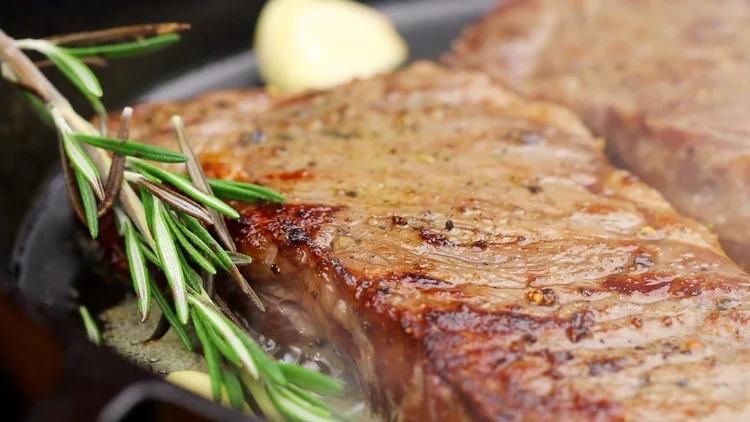
Reverse Seared Steak
Ingredients
Method
- Preheat oven to 250 degrees F (120 degrees C). Season steaks generously on all sides with kosher salt and freshly ground black pepper.
- Place steaks on a wire rack over a baking sheet. Bake for 25 minutes, or until internal temperature reaches 120-125 degrees F (49-52 degrees C) for medium-rare. Adjust time according to your preferred level of doneness.
- Heat canola oil in a stainless steel or cast-iron skillet over high heat until smoking. Sear the first side of the steak for 30 seconds, then flip.
- Immediately add butter, thyme, rosemary, and garlic to the pan. Tilt the pan slightly and baste the steak continuously with melted butter for 30-45 seconds.
- Use a thermometer or the finger test for doneness: Rare 120-125 degrees F, Medium-Rare 130-135 degrees F, Medium 140-145 degrees F, Well-Done 160 degrees F and above.
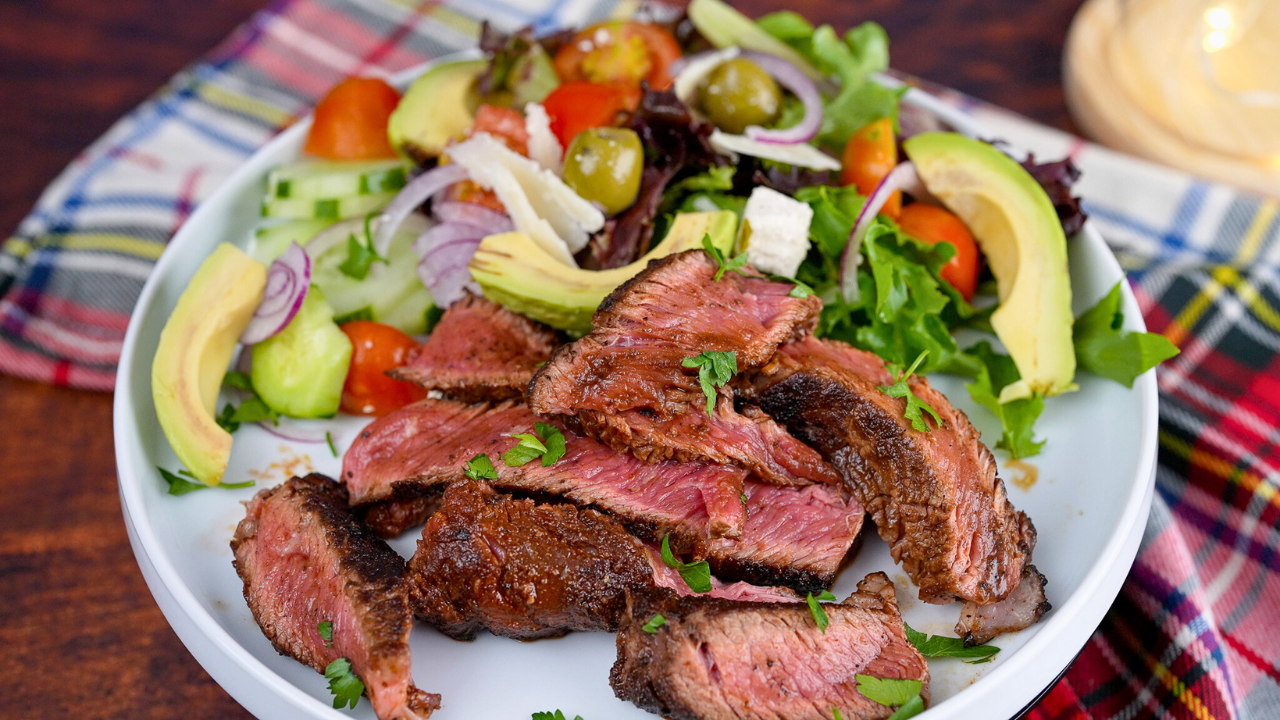
- Let the steak rest for 5-10 minutes before slicing. This allows the juices to redistribute throughout the meat. Slice against the grain and serve.
Notes
Refrigerator: Store leftovers in an airtight container for up to 3-4 days.
Freezer: Freeze in a sealed container for up to 2-3 months. Thaw overnight in the fridge.
Reheat: Warm in a skillet over medium heat, in the microwave, or in a 350°F oven until heated through.
Nutrition Facts (Per Serving, Approximate)
Nutrition values are estimates and may vary based on ingredients and preparation.
Leave a Reply