
These Easy No-Bake Easter Peanut Butter Eggs are the ultimate homemade Easter treat — creamy peanut butter filling dipped in smooth chocolate, shaped like little eggs, and ready with zero baking required. Whether you're making Easter baskets, hosting a holiday gathering, or just craving something indulgent, this recipe is simple enough for beginners and impressive enough for everyone else.

About This Recipe
Peanut butter cups were invented by H.B. Reese in 1928 — he was a former dairy farmer who worked for Milton Hershey and used Hershey's chocolate for his own candy. The egg-shaped version became one of the best-selling seasonal candies in the United States, with Reese's Peanut Butter Eggs outselling the original cup version every Easter. But here's the thing that gets me fired up about making these at home: homemade versions like this one use way more peanut butter filling and less sugar than the commercial version, which most people agree tastes significantly better. It's like comparing a good home-cooked meal to fast food — there's just no competition.
What makes this recipe truly special is the ratio and technique. We're talking about a creamy peanut butter center that's rich enough to make you close your eyes and do a little happy dance, wrapped in smooth chocolate that has just the right snap when you bite into it. The secret weapon here is adding that tablespoon of coconut oil to the chocolate — it creates this silky coating that hardens beautifully without being too thick or waxy. And by using real butter in the filling instead of shortcuts, you get this luxurious texture that melts perfectly on your tongue. Trust me, once you nail this technique, you'll never want store-bought again.
Growing up Dominican-American, Easter wasn't complete without some kind of chocolate treat, even though we were more about the tres golpes and family gatherings than hunting for eggs. But these peanut butter eggs have become my bridge between cultures — they satisfy that American Easter candy craving while giving me the joy of making something from scratch with my own hands, just like my abuela taught me to do with everything in the kitchen. There's something deeply satisfying about shaping each egg by hand and watching that chocolate coating set perfectly. Plus, making a big batch means I can share them with neighbors and friends, which is very much in the Dominican spirit of always having extra food to spread the love.
Ingredients for Easy No-Bake Easter Peanut Butter
- 1 cup creamy peanut butter
- ½ cup unsalted butter — softened
- 1 teaspoon vanilla extract
- 3 cups powdered sugar — sifted
- 2 cups semi-sweet chocolate chips
- 1 tablespoon coconut oil
Substitutions & Variations
- Creamy peanut butter: Replace with cashew butter or almond butter for a milder, more refined flavor that pairs beautifully with the chocolate coating.
- Semi-sweet chocolate chips: Use dark chocolate (70% cacao) mixed with a pinch of cinnamon and cayenne pepper for a spiced Caribbean-inspired coating with deeper complexity.
- Vanilla extract: Substitute with rum extract or actual dark rum (½ teaspoon) to give these eggs a distinctly Caribbean flavor profile.
- Coconut oil: Replace with melted butter or add 2 tablespoons of coconut flakes along with the oil to enhance the tropical coconut flavor throughout the chocolate.
- Powdered sugar: Reduce to 2 cups and add ½ cup finely ground toasted coconut for a texture variation that brings island vibes to each bite.
- Traditional egg shape: Roll mixture into small balls and coat with toasted sesame seeds or chopped toasted almonds instead of chocolate for a variation similar to Dominican dulce de ajonjolí.
How to Make Easy No-Bake Easter Peanut Butter
- Beat peanut butter, softened butter, and vanilla extract together until smooth and creamy.
- Add sifted powdered sugar and mix on low until fully combined. Scrape down the bowl and mix again until uniform.
- Using an ice cream scoop or tablespoon, portion the mixture onto a parchment-lined baking sheet.
- Shape each portion into an oval egg shape by hand. Place in the freezer for at least 60 minutes until completely firm.
- Melt chocolate chips and coconut oil together using a double boiler or microwave at 50% power in 30-second intervals, stirring between each interval until smooth. Let cool slightly.
- Place each chilled egg on a fork and dip into the melted chocolate, or spoon chocolate over the top. Tap to remove excess and smooth with a spatula.
- Transfer back to the parchment-lined baking sheet. Add sprinkles before chocolate sets if desired.
- Refrigerate until chocolate is fully set, about 30 minutes. Serve cold.
What to Serve With Easy No-Bake Easter Peanut Butter
These rich, creamy eggs pair beautifully with a strong cup of Dominican café con leche or bold espresso. The bitter coffee cuts through the sweetness perfectly, just like my abuela taught me—always balance your dulces with something robust to cleanse the palate between bites.
For texture contrast, serve alongside fresh berries or sliced strawberries that add bright acidity. The tartness of the fruit balances the dense peanut butter filling, while the juicy pop creates an exciting contrast against the smooth, no-bake texture of these treats.
My tres leches cake makes an elegant companion dessert when you're entertaining—both are make-ahead friendly and the milk-soaked sponge provides a lighter counterpoint. Together, they create a dessert spread that feels both nostalgic and impressive, perfect for family gatherings or special occasions.
Frequently Asked Questions
1. What is in the peanut butter egg filling?
Peanut butter, butter, powdered sugar, and vanilla mixed together until smooth. The result is a sweet, creamy, cookie-dough-like filling that tastes like a Reese's egg but better.
2. How do I shape the eggs?
Roll tablespoons of the chilled filling into oval egg shapes by hand. Refrigerate on a parchment-lined tray for 30 minutes until firm before dipping in chocolate.
3. What chocolate is best for coating?
Semi-sweet or milk chocolate chips melted with a teaspoon of coconut oil or shortening creates a smooth, shiny coating that sets firmly. Tempered chocolate gives the most professional finish.
4. How do I dip the eggs in chocolate?
Use a fork to lower each chilled egg into the melted chocolate. Lift, let excess drip off, and place on parchment. Work quickly — the cold filling sets the chocolate coating fast.
5. Why does my chocolate coating look dull?
Chocolate that is overheated or not tempered properly sets with a matte, streaky appearance. Add a teaspoon of coconut oil for a shinier finish, or properly temper the chocolate.
6. Should I use creamy or crunchy peanut butter?
Creamy peanut butter gives a smoother filling that is easier to shape. Crunchy adds a nice textural contrast. Both taste great — it is purely a personal preference.
7. How far ahead can I make peanut butter eggs?
Make up to 2 weeks ahead and store in the refrigerator. They also freeze for up to 3 months. These are perfect make-ahead Easter treats.
8. Can I add other flavors to the filling?
Graham cracker crumbs mixed into the filling add a cookie-like crunch. Rice Krispies, mini chocolate chips, or a touch of maple extract are other fun variations.
9. How do I store peanut butter eggs?
Refrigerate in an airtight container with parchment between layers for up to 2 weeks. The filling is butter-based and softens at room temperature, so keep them cold.
10. How many eggs does one batch make?
A standard recipe makes about 24-30 eggs depending on size. Use a small cookie scoop for consistent portions. They make excellent homemade Easter gifts in cellophane bags.
Easy No-Bake Easter Peanut Butter Video
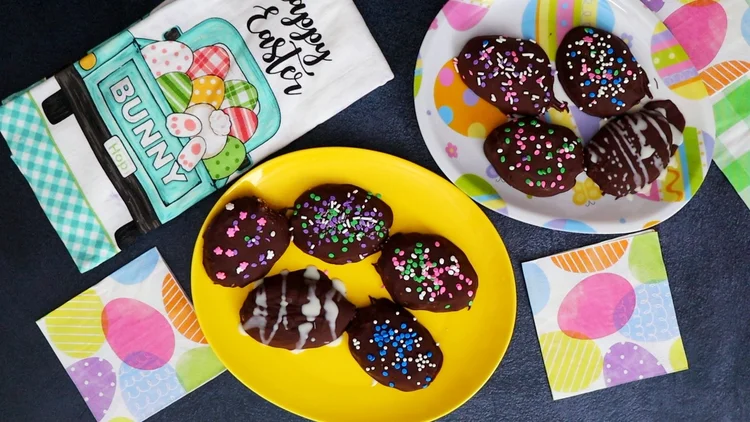
Easy No-Bake Easter Peanut Butter Eggs
Ingredients
Method
- Beat peanut butter, softened butter, and vanilla extract together until smooth and creamy.
- Add sifted powdered sugar and mix on low until fully combined. Scrape down the bowl and mix again until uniform.
- Using an ice cream scoop or tablespoon, portion the mixture onto a parchment-lined baking sheet.
- Shape each portion into an oval egg shape by hand. Place in the freezer for at least 60 minutes until completely firm.
- Melt chocolate chips and coconut oil together using a double boiler or microwave at 50% power in 30-second intervals, stirring between each interval until smooth. Let cool slightly.
- Place each chilled egg on a fork and dip into the melted chocolate, or spoon chocolate over the top. Tap to remove excess and smooth with a spatula.
- Transfer back to the parchment-lined baking sheet. Add sprinkles before chocolate sets if desired.
- Refrigerate until chocolate is fully set, about 30 minutes. Serve cold.
Nutrition
Video
Notes
Choose natural peanut butter with visible oil separation because that oil becomes crucial for binding - the separated oils distribute more evenly through the mixture than pre-mixed versions, creating silkier eggs that hold their shape better. Chill your hands in ice water for 30 seconds before shaping each egg because peanut butter mixtures get sticky fast, and cold hands prevent the mixture from melting and losing that perfect moldable consistency. After years of making these, I learned to slightly under-mix the powdered sugar - leaving tiny pockets creates a more interesting texture that mimics real chocolate eggs, plus it prevents the mixture from becoming too dense. Dip your chocolate coating spoon in warm oil between each egg because this Dominican trick ensures the chocolate stays glossy and thin, preventing thick, clunky shells that crack when you bite them. Storage & Meal Prep:
Store finished peanut butter eggs in an airtight container in the refrigerator for up to 2 weeks, with parchment paper between layers to prevent sticking. The filling is butter-based and softens at room temperature, so keep them cold until just before serving. For longer storage: freeze in a single layer on a parchment-lined tray, then transfer to a freezer bag. They keep frozen for up to 3 months — thaw in the refrigerator overnight. For make-ahead prep: the uncoated peanut butter filling can be shaped and frozen up to a month ahead, then dipped in chocolate the day before serving.
Tried this recipe?
Let us know how it was!Filed Under
Leave a Reply