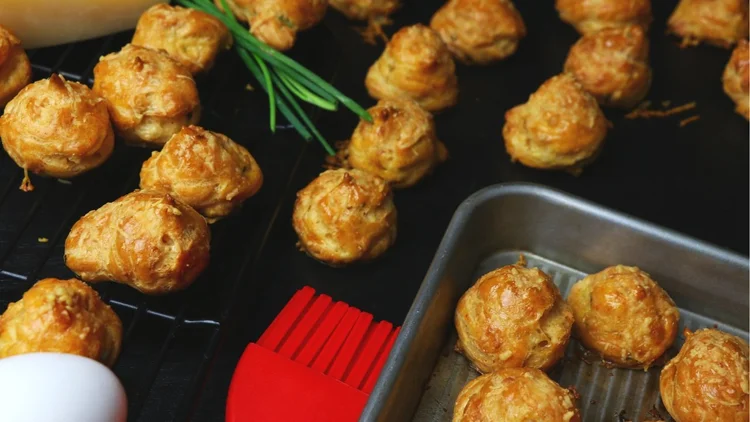
This Gougeres French Cheese Puffs is one of those recipes you'll find yourself making over and over again. It's simple, delicious, and always gets rave reviews. Whether you're a beginner or a seasoned cook, you're going to love how easy and tasty this turns out!
About This Recipe
Here's something that'll blow your mind about gougères: that magical puff you get isn't just from steam - it's actually powered by the eggs' lecithin acting as an emulsifier. When you beat whole eggs into that hot choux paste, the lecithin creates microscopic air pockets that expand in the oven, while the proteins set to hold that airy structure. But here's the kicker - Gruyère cheese contains natural glutamates that enhance this process. Those same compounds that make the cheese taste so nutty and complex actually help stabilize the protein matrix as it bakes, giving you a sturdier puff that won't collapse as easily. That's why gougères made with aged Gruyère stay crispy longer than those made with younger cheeses or basic Swiss. I learned this after wondering why my abuela's cheese fritters never held their shape like French gougères - it's all about that aged cheese chemistry working with the egg proteins.
Ingredients for Gougeres French Cheese Puffs
1 cup of water
1 cup all-purpose (plain flour)
3 pinches of salt
3 teaspoon Cayenne pepper
3.5 oz -100g salted butter
5 whole eggs (1 for optional eggwash)
¾ cup - 50g Gruyere cheese — grated
½ cup - 30g Parmesan Cheese — grated
1 small bunch of fresh chives
How to Make Gougeres French Cheese Puffs
Preheat your oven to 400°F – 200°C.
Place water and butter in a deep saucepan and bring to a boil in order for the butter to be melted by the time the water boils. Add salt and Cayenne pepper.
Add the flour, and mix well using a wooden spoon.
Return to low heat and continue mixing until the mixture becomes smooth and does not stick to the sides. This takes approx 2 to 3 minutes. Turn off the heat and leave to cool a few minutes.
Break the eggs in a container or bowl to avoid any eggshells and add to the mixture one at a time, as you mix vigorously with a wooden spoon or similar. Keep repeating this process until all 4 eggs are well incorporated into the mixture. (Note: You could also transfer to an electric mixer and use the beater attachment on medium speed.)
Chop the chives and ensure your two kinds of cheese are grated. Add to mixture and mix well. Set aside.
Grease a large sheet pan (shallow tray) with oil, and wipe off any excess with a cloth or paper towel. You just want a thin film of oil.
Using a plain pastry tube or nozzle approx half-inch, place in a piping bag and fill with mixture.
Pipe directly on your sheet pan as per choux shape (see video). Dip your finger in water and push down any spiky bits sticking out, repeat for each item.
As an option for a glossier finish, break an egg into a bowl, beat and using a pastry brush, lightly brush the tops of the choux. Sprinkle grated Parmesan cheese on each one.
Place in a preheated oven at 400°F – 200°C for approx 25 minutes. Keep cooking until they reach your desired color. A nice golden brown is best. Sprinkle a few chopped chives when serving.
What to Serve With Gougeres French Cheese Puffs
These delicate cheese puffs shine alongside a crisp glass of Champagne or Cava – the bubbles cleanse your palate between bites while the acidity cuts through the rich, buttery pastry. For a non-alcoholic option, try sparkling apple cider with a splash of lemon juice.
My Dominican Pollo Guisado pairs beautifully with gougères because the tender, saucy chicken creates amazing contrast against these airy puffs. The warm spices in the stew complement the nutty Gruyère, and you can even use the gougères to soak up that incredible sofrito-based sauce.
A simple arugula salad dressed with Dijon vinaigrette and toasted walnuts provides the perfect peppery bite to balance these rich cheese puffs. The sharp mustard echoes the tang of aged cheese while the bitter greens refresh your palate after each indulgent bite.
Frequently Asked Questions
1. What are gougeres?
Gougeres are French cheese puffs made from choux pastry dough mixed with Gruyere cheese. They puff up into light, airy, hollow pastries with a crispy shell and cheesy interior.
2. What is choux pastry?
Choux is a cooked dough made by heating butter, water, and flour together, then beating in eggs. Steam during baking puffs it into hollow shells — the same dough used for eclairs and profiteroles.
3. What cheese is traditional for gougeres?
Gruyere is the classic French choice for its nutty, complex flavor and excellent melting quality. Comte, Emmental, or sharp cheddar are good substitutes.
4. Why did my gougeres not puff up?
The oven was not hot enough, the dough was too wet, or the eggs were not fully incorporated. Start at 425 degrees, make sure the dough is thick before adding eggs, and beat eggs in one at a time.
5. What temperature and time for gougeres?
Start at 425 degrees for 10 minutes to create maximum puff, then reduce to 375 degrees for 15-20 more minutes until golden and crispy. Do not open the oven during the first 15 minutes.
6. How do I pipe gougeres?
Use a round piping tip to pipe 1-inch mounds onto a parchment-lined sheet, leaving 2 inches between each. A zip-top bag with the corner cut works if you do not have a piping bag.
7. Why must I not open the oven while baking?
Opening the oven releases the steam that inflates the choux pastry. The sudden temperature drop causes the puffs to collapse before the structure has set.
8. How do I add the eggs to choux dough?
Beat eggs in one at a time into the cooled flour mixture, mixing vigorously between each addition. The dough should be thick, glossy, and fall slowly from a spatula in a V-shape.
9. What do I serve gougeres with?
Serve warm as a cocktail party appetizer with wine. In France, they are traditionally served with Burgundy wine. They also make an elegant accompaniment to soup or salad.
10. Can I freeze unbaked gougeres?
Yes — pipe onto a sheet pan, freeze until solid, then transfer to bags. Bake from frozen at 425 degrees adding 3-5 extra minutes. Fresh-baked cheese puffs for last-minute entertaining.
Place water and butter in a deep saucepan and bring to a boil in order for the butter to be melted by the time the water boils. Add salt and Cayenne pepper.
Add the flour, and mix well using a wooden spoon.
Return to low heat and continue mixing until the mixture becomes smooth and does not stick to the sides. This takes approx 2 to 3 minutes. Turn off the heat and leave to cool a few minutes.
Break the eggs in a container or bowl to avoid any eggshells and add to the mixture one at a time, as you mix vigorously with a wooden spoon or similar. Keep repeating this process until all 4 eggs are well incorporated into the mixture. (Note: You could also transfer to an electric mixer and use the beater attachment on medium speed.)
Chop the chives and ensure your two kinds of cheese are grated. Add to mixture and mix well. Set aside.
Grease a large sheet pan (shallow tray) with oil, and wipe off any excess with a cloth or paper towel. You just want a thin film of oil.
Using a plain pastry tube or nozzle approx half-inch, place in a piping bag and fill with mixture.
Pipe directly on your sheet pan as per choux shape (see video). Dip your finger in water and push down any spiky bits sticking out, repeat for each item.
As an option for a glossier finish, break an egg into a bowl, beat and using a pastry brush, lightly brush the tops of the choux. Sprinkle grated Parmesan cheese on each one.
Place in a preheated oven at 400°F – 200°C for approx 25 minutes. Keep cooking until they reach your desired color. A nice golden brown is best. Sprinkle a few chopped chives when serving.
Pro Tips: Choose Gruyère aged at least 12 months because younger cheese has higher moisture content that creates steam pockets, leading to soggy, collapsed puffs instead of the crispy shells you want.Add the eggs one at a time and beat until the paste pulls away from the bowl sides in a smooth ribbon - this ensures proper gluten development for structure while keeping the mixture light enough to puff.Bake at 425°F for exactly 15 minutes, then reduce to 375°F without opening the door because that initial high heat creates the steam for puffing, while the lower temperature sets the structure without burning.After years of making these, I pipe them slightly smaller than you think - about 1.5 inches - because they double in size and larger ones often have raw centers while smaller ones cook through perfectly.


Leave a Reply