
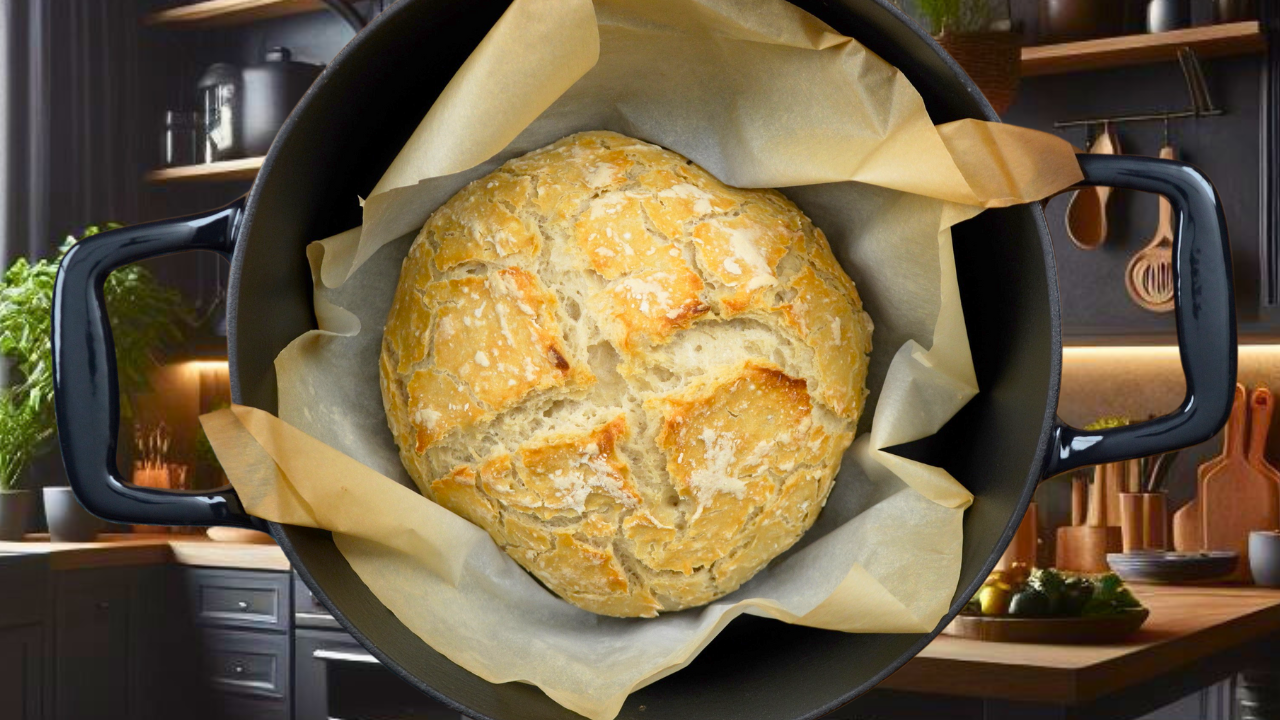
This Easy Dutch Oven Bread Recipe is one of those recipes you'll find yourself making over and over again. It's simple, delicious, and always gets rave reviews. Whether you're a beginner or a seasoned cook, you're going to love how easy and tasty this turns out!

About This Recipe
Here's something that blew my mind when I first learned it: the steam trapped inside your Dutch oven doesn't just create that gorgeous crust — it actually triggers enzymatic activity that increases the bread's B-vitamin content by up to 15%. This happens because the moist heat activates naturally occurring enzymes in the flour that convert starches into more bioavailable nutrients. What's really wild is that this process peaks at exactly the temperature range your Dutch oven maintains during the first 30 minutes of baking. This is why Dutch oven bread isn't just easier than traditional methods — it's literally more nutritious than bread baked in regular pans. The confined steam environment mimics the stone ovens our abuelas used back in DR, where the thick walls created similar conditions. Those weren't just making better-tasting bread; they were accidentally creating more nutrient-dense loaves.
Ingredients for Easy Dutch Oven Bread
- 3 cups all-purpose flour
- 1 ½ teaspoons salt
- 1 packet instant yeast — about 2 ¼ teaspoons
- 1 ½ cups warm water — about 110°F or 45°C
Substitutions & Variations
- All-purpose flour: Replace 1 cup with whole wheat flour or add 2 tablespoons of cornmeal for a Caribbean-style bread with more texture and a subtle corn flavor reminiscent of Dominican arepa.
- Instant yeast: Use 1 ¾ teaspoons active dry yeast dissolved in the warm water for 5 minutes until foamy, which will give you the same rise but requires the extra proofing step.
- Warm water: Substitute with coconut water for a subtle tropical sweetness that pairs beautifully with Caribbean meals and adds a hint of island flavor to your bread.
- Plain dough: Fold in 2 tablespoons of sofrito (Dominican cooking base) and 1 teaspoon of oregano during the mixing stage to create a savory Caribbean herb bread perfect for mopping up stews.
- Salt: Replace half the salt with garlic powder and add 1 teaspoon of dried thyme to create a fragrant herb bread that complements jerk chicken and other spiced Caribbean dishes.
- Basic recipe: Add 2 tablespoons of grated queso fresco and 1 diced jalapeño for a Dominican-inspired cheese bread with a gentle heat that's perfect alongside sancocho or other hearty stews.
How to Make Easy Dutch Oven Bread
- In a large mixing bowl, combine the all-purpose flour, salt, and instant yeast.
- Gradually add the warm water to the dry ingredients, stirring until a shaggy dough forms.
- Cover the bowl with plastic wrap or a clean kitchen towel and let it sit at room temperature for about 3 hours, allowing the dough to rise and develop flavor.
- After 3 hours, transfer the dough onto a lightly floured surface and gently shape it into a ball.
- Place the dough on a piece of parchment paper and cover it with a kitchen towel. Let it rise for an additional 1-2 hours, or until doubled in size.
- Meanwhile, preheat your oven to 450°F (230°C) and place a Dutch oven with its lid inside to preheat as well.
- Once the dough has doubled in size, carefully remove the preheated Dutch oven from the oven.
- Using the parchment paper, carefully lower the dough into the hot Dutch oven.
- Cover the Dutch oven with its lid and bake for 30 minutes.
- After 30 minutes, remove the lid and bake for an additional 15-20 minutes, or until the bread is golden brown and sounds hollow when tapped on the bottom.
- Remove the bread from the Dutch oven and let it cool on a wire rack before slicing.
What to Serve With Easy Dutch Oven Bread
Nothing beats tearing into warm bread with a bowl of my Dominican pollo guisado. The crusty exterior gives way to that pillowy interior, perfect for soaking up all those rich, savory juices from the stewed chicken. It's comfort food that connects me straight back to my abuela's kitchen.
For something lighter, pair thick slices with creamy avocado, a drizzle of good olive oil, and flaky sea salt. The bread's yeasty flavor provides the perfect canvas for the avocado's richness, while that crispy crust adds textural contrast. Add a squeeze of lime and you've got pure magic.
This bread transforms into the ultimate vehicle for a classic Cuban sandwich or any pressed sandwich really. The dense crumb holds up beautifully under pressure while the crust gets gorgeously golden and crispy. Trust me, once you make sandwiches with homemade bread, store-bought will never cut it again.
Frequently Asked Questions
1. Why bake bread in a Dutch oven?
The heavy, lidded Dutch oven traps steam from the dough, creating a crispy artisan crust similar to professional bakery ovens. It is the home baker's best cheat code.
2. Do I need to knead Dutch oven bread?
No — this is a no-knead recipe. The long, slow rise (12-18 hours) develops gluten structure without any kneading. Just mix, rest, and bake.
3. How long does the dough need to rise?
12-18 hours at room temperature for the first rise. The long fermentation develops complex flavors and creates the signature open crumb with large air holes.
4. What temperature should the oven and Dutch oven be?
Preheat the Dutch oven inside your oven at 450°F for 30 minutes before adding the dough. The screaming hot pot is what creates the crackling crust.
5. Can I use any type of flour?
All-purpose flour works perfectly. Bread flour gives a slightly chewier texture due to higher protein. You can also mix in whole wheat, rye, or spelt for different flavors.
6. Why is my bread dense instead of airy?
The dough may not have risen long enough, or the yeast was old. Use fresh yeast, ensure the water is lukewarm (not hot), and let it rise until it doubles and looks bubbly.
7. Do I need to score the top of the bread?
Yes — scoring with a sharp knife or razor blade allows the bread to expand in a controlled way during baking. Without scoring, it may crack unpredictably.
8. What size Dutch oven should I use?
A 5 to 7-quart Dutch oven is ideal. The bread needs room to expand but not so much space that it spreads flat. Enameled or bare cast iron both work.
9. Can I add mix-ins to Dutch oven bread?
Rosemary and sea salt, olives, sun-dried tomatoes, roasted garlic, cheese, or everything bagel seasoning on top are all excellent additions. Fold them in gently before shaping.
10. How do I store artisan bread?
Cut-side down on a cutting board or in a paper bag at room temperature for 2-3 days. Never store in plastic — it makes the crust soft and soggy. Freeze sliced for up to 3 months.
Easy Dutch Oven Bread Video
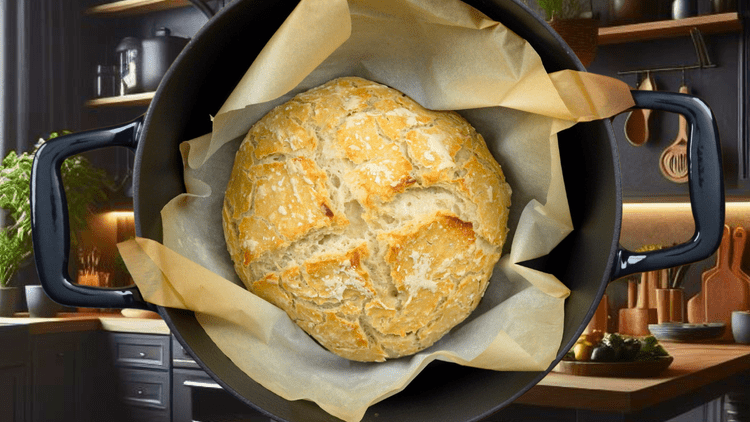
Easy Dutch Oven Bread Recipe
Ingredients
Method
- In a large mixing bowl, combine the all-purpose flour, salt, and instant yeast.
- Gradually add the warm water to the dry ingredients, stirring until a shaggy dough forms.
- Cover the bowl with plastic wrap or a clean kitchen towel and let it sit at room temperature for about 3 hours, allowing the dough to rise and develop flavor.
- After 3 hours, transfer the dough onto a lightly floured surface and gently shape it into a ball.
- Place the dough on a piece of parchment paper and cover it with a kitchen towel. Let it rise for an additional 1-2 hours, or until doubled in size.
- Meanwhile, preheat your oven to 450°F (230°C) and place a Dutch oven with its lid inside to preheat as well.
- Once the dough has doubled in size, carefully remove the preheated Dutch oven from the oven.
- Using the parchment paper, carefully lower the dough into the hot Dutch oven.
- Cover the Dutch oven with its lid and bake for 30 minutes.
- After 30 minutes, remove the lid and bake for an additional 15-20 minutes, or until the bread is golden brown and sounds hollow when tapped on the bottom.
- Remove the bread from the Dutch oven and let it cool on a wire rack before slicing.
Nutrition
Notes
Use bread flour instead of all-purpose because the higher protein content (12-14%) creates stronger gluten networks that trap steam more effectively, giving you those perfect air pockets and chewy texture that makes Dutch oven bread special. After making this hundreds of times, I've learned to knock on the bottom of the finished loaf — it should sound completely hollow, not just hollow-ish, because Dutch ovens retain so much heat that underbaked bread will continue cooking and become gummy. Choose a Dutch oven that's exactly 5-6 quarts because smaller pots restrict the dough's rise while larger ones don't concentrate steam properly, leaving you with dense bread instead of that perfect open crumb structure. Skip the parchment paper and dust your pot with semolina flour instead — it creates tiny steam pockets between the dough and cast iron that prevent sticking while adding a subtle nutty flavor that reminds me of the cornmeal our neighbors used in DR.
Tried this recipe?
Let us know how it was!Filed Under



Leave a Reply