
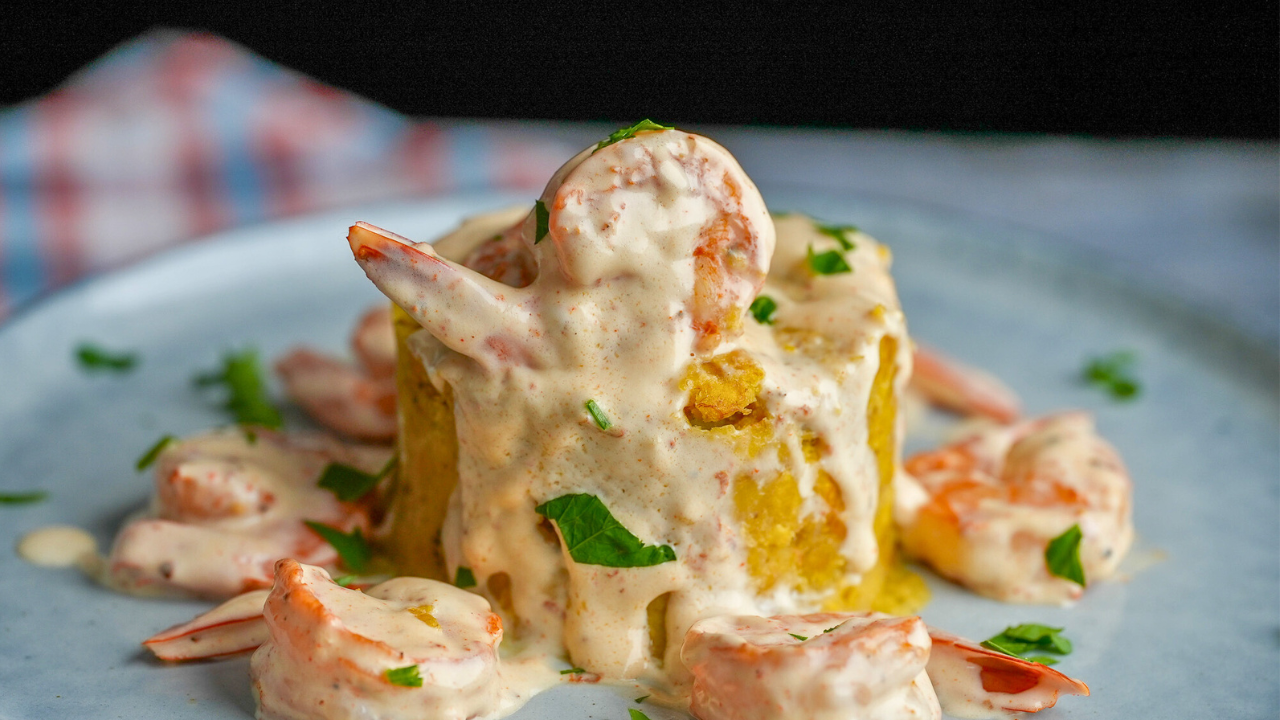
This Mofongo Savory Garlic Shrimp Mofongo is light, flavorful, and comes together in no time. Perfect for a healthy weeknight dinner or when you want something a little more elegant, this recipe never disappoints. Fresh, simple, and absolutely delicious!
About This Recipe
Here's something most people don't realize about mofongo con camarones: in the Dominican Republic, the way you season your pilón (wooden mortar) actually changes the flavor profile of every mofongo you make afterward. Families guard their pilónes like heirlooms because the wood absorbs garlic oils, sofrito, and chicharrón fat over decades of use. My abuela's pilón from Santiago had this deep, almost smoky undertone that made her mofongo taste different from my tía's in Santo Domingo - even using identical ingredients. The regional difference goes deeper too: coastal families like mine add a splash of the shrimp cooking liquid directly into the mashing process, while mountain families keep it drier. This liquid integration isn't just about flavor - it helps the plantain hold together better when you're forming those classic mofongo craters for the shrimp. When you're making this at home, don't drain your shrimp completely dry. Save some of that garlicky cooking liquid - it's liquid gold for your mofongo.
Ingredients for Mofongo Savory Garlic Shrimp Mofongo
- 1 pound shrimp — peeled and deveined (tails left on)
- ¼ teaspoon paprika
- ½ teaspoon kosher salt
- ¼ teaspoon freshly ground black pepper
- 3 green plantains
- 1 tablespoon olive oil
- canola oil — for frying
- 2 tablespoons butter
- 4 cloves garlic — minced
- ½ cup hot chicken stock
- 1 cup garlic Alfredo sauce
- fresh parsley — chopped, for garnish
How to Make Mofongo Savory Garlic Shrimp Mofongo
- Pat dry the shrimp with paper towels. In a bowl, season with paprika, kosher salt, and black pepper. Toss to coat evenly and set aside.
- Cut off the ends of each plantain. Make a lengthwise incision along the ridges, careful not to cut too deep. Peel the skin off and slice the plantains into one-inch pieces. Soak the slices in water to prevent browning.
- Heat 1 tablespoon of olive oil in a large skillet over medium-high heat. Cook the seasoned shrimp for about 2 minutes per side until pink and opaque. Remove from skillet and set aside.
- In a frying pan, heat enough canola oil to cover the plantains. Fry the plantain pieces in batches until golden brown, flipping occasionally. Drain on paper towels.
- In a mortar or Pilon, mash the fried plantains with butter, salt, pepper, minced garlic, and hot chicken stock. Continue mashing and adding ingredients until well combined and smooth.
- Use a food mold or small bowl to shape the mofongo. Press it into the mold and then invert it onto a plate.
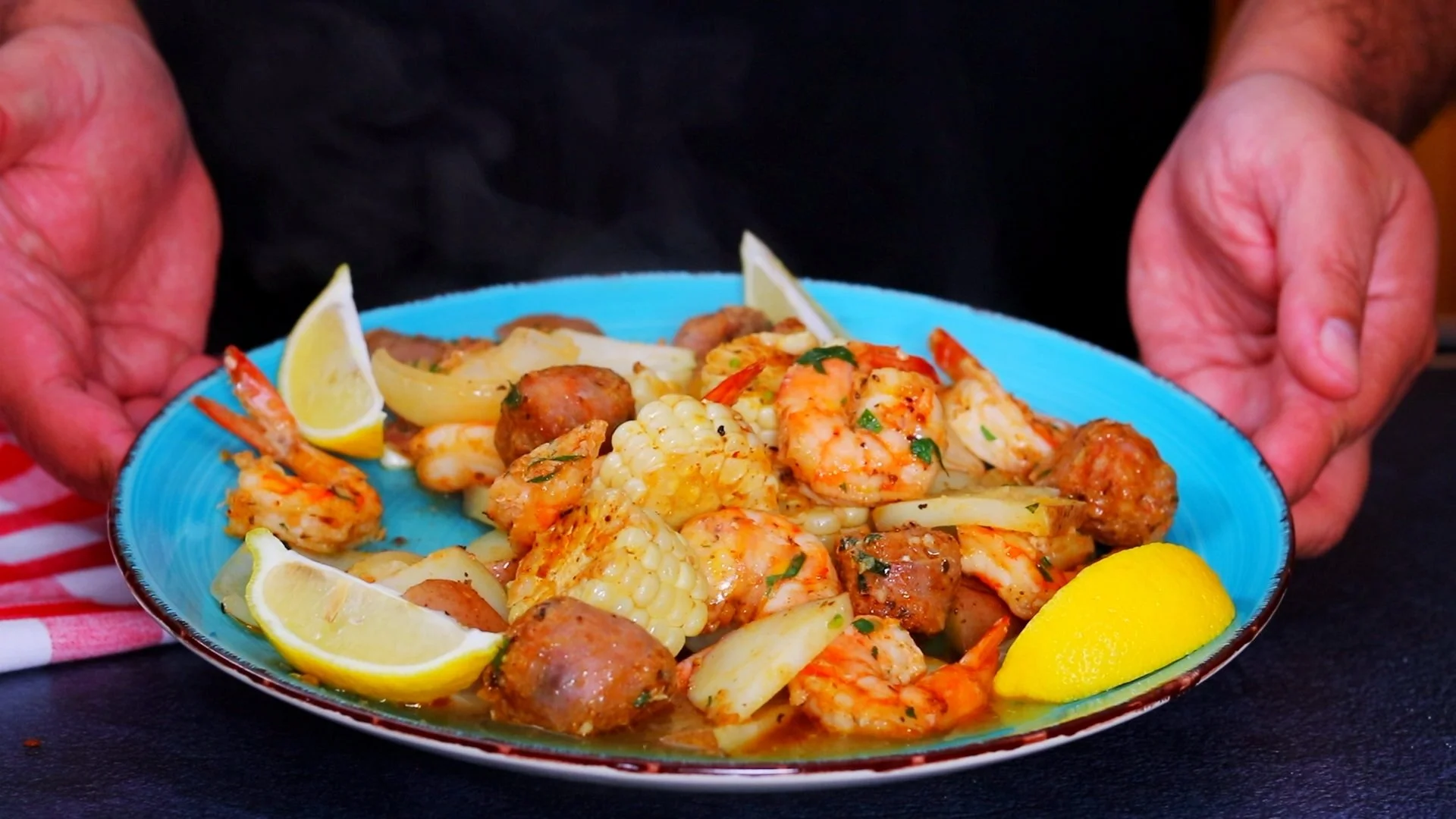
- In the same skillet used for the shrimp, heat the garlic Alfredo sauce over medium heat until it simmers. Add the shrimp back into the skillet and coat them with the sauce.
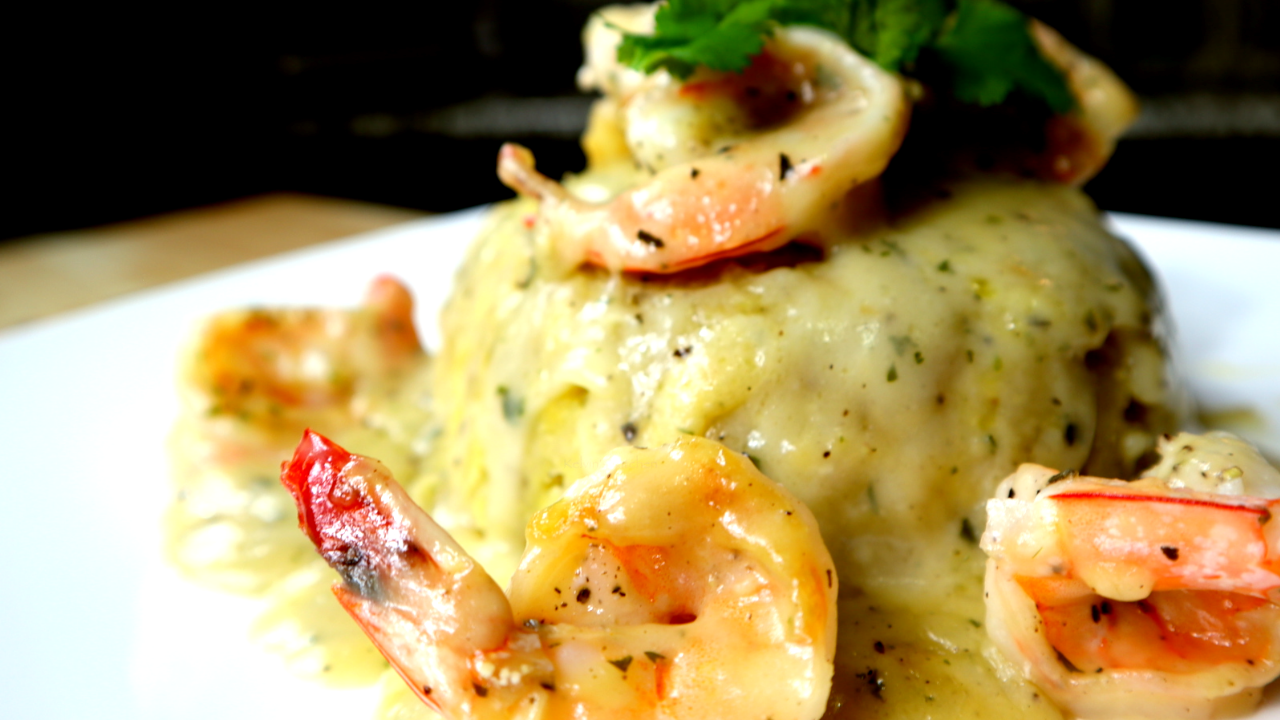
- Place the shrimp over the mofongo and drizzle with the garlic Alfredo sauce. Garnish with chopped fresh parsley.
- Serve the Garlic Shrimp Mofongo warm, as the plantains can harden if left to sit.
What to Serve With Mofongo Savory Garlic Shrimp Mofongo
A crisp Dominican ensalada verde with tomatoes, avocado, and red onion cuts through mofongo's rich garlicky flavors beautifully. The fresh lime vinaigrette and cool vegetables provide the perfect contrast to those savory, fried plantains and succulent shrimp.
My mamajuana-braised short ribs make an incredible companion to this dish, turning it into a feast worthy of any Sunday gathering. The tender, wine-braised meat pairs naturally with mofongo's bold garlic notes, creating that hearty, soul-satisfying meal Dominicans know and love.
For something lighter, try serving alongside tajadas maduros - those caramelized sweet plantains that every Caribbean kitchen perfects. The natural sweetness balances the savory punch of the garlic mofongo while keeping everything authentically tropical and satisfying.
Frequently Asked Questions
1. What is mofongo?
Mofongo is a Puerto Rican dish made by frying green plantains, then mashing them in a wooden pilon (mortar and pestle) with garlic, olive oil, and crispy pork cracklings (chicharron).
2. What are green plantains and where do I find them?
Green plantains are unripe, starchy plantains — firm with bright green skin. Find them in the produce section of most grocery stores, especially those with Latin American products.
3. What is a pilon and do I need one?
A pilon is a wooden mortar and pestle used in Puerto Rican kitchens specifically for mashing mofongo. A large regular mortar and pestle or a sturdy bowl with a muddler works as a substitute.
4. How do I fry the plantains for mofongo?
Peel green plantains, cut into 1-inch thick rounds, and fry at 350 degrees for 5-7 minutes until golden but not fully crispy. They need to be soft enough to mash.
5. What makes the garlic shrimp topping?
Large shrimp sauteed in generous amounts of garlic, olive oil, white wine, and a squeeze of lime. The garlicky shrimp and its sauce are spooned over the mofongo dome.
6. How do I shape mofongo?
Pack the mashed plantain mixture into a small bowl or cup, press firmly, then invert onto a plate to create the signature dome shape. Spoon the shrimp and sauce over top.
7. Can I skip the chicharron (pork cracklings)?
Chicharron adds the traditional salty, porky flavor, but you can substitute crispy bacon bits or make a vegetarian version with just garlic and olive oil.
8. Why does my mofongo taste bitter?
Green plantains can be bitter if undercooked. Fry them long enough until golden — the heat converts the starches and removes the raw, bitter taste.
9. What other toppings work besides garlic shrimp?
Braised oxtail, chicken broth (caldo), stewed chicken, fried pork, or a creamy garlic sauce are all traditional mofongo toppings found across Puerto Rican restaurants.
10. Can I make mofongo ahead of time?
Mofongo is best fresh — the texture changes as it cools and becomes dense and hard. Fry and prep the garlic butter shrimp ahead, but mash and shape the mofongo right before serving.
Mofongo Savory Garlic Shrimp Mofongo Video
Mofongo Savory Garlic Shrimp Mofongo
Ingredients
Method
- Pat dry the shrimp with paper towels. In a bowl, season with paprika, kosher salt, and black pepper. Toss to coat evenly and set aside.
- Cut off the ends of each plantain. Make a lengthwise incision along the ridges, careful not to cut too deep. Peel the skin off and slice the plantains into one-inch pieces. Soak the slices in water to prevent browning.
- Heat 1 tablespoon of olive oil in a large skillet over medium-high heat. Cook the seasoned shrimp for about 2 minutes per side until pink and opaque. Remove from skillet and set aside.
- In a frying pan, heat enough canola oil to cover the plantains. Fry the plantain pieces in batches until golden brown, flipping occasionally. Drain on paper towels.
- In a mortar or Pilon, mash the fried plantains with butter, salt, pepper, minced garlic, and hot chicken stock. Continue mashing and adding ingredients until well combined and smooth.
- Use a food mold or small bowl to shape the mofongo. Press it into the mold and then invert it onto a plate.
- In the same skillet used for the shrimp, heat the garlic Alfredo sauce over medium heat until it simmers. Add the shrimp back into the skillet and coat them with the sauce.
- Place the shrimp over the mofongo and drizzle with the garlic Alfredo sauce. Garnish with chopped fresh parsley.
- Serve the Garlic Shrimp Mofongo warm, as the plantains can harden if left to sit.
Nutrition
Notes
Choose plantains that are yellow with significant black spots but still firm to the touch - they should give slightly but not feel mushy. This sweetness level perfectly balances the salty chicharrón and garlic while still holding structure when mashed. Fry your plantains in the same oil you'll cook the shrimp in, but do the plantains first. The starchy plantain oil creates better browning on the shrimp and adds another layer of flavor connection between the components. When mashing in your pilón or mortar, work in small batches and use a twisting motion rather than straight pounding - this creates the proper texture without turning your plantains into purée, maintaining those rustic chunks Dominicans expect. Add the shrimp to your mofongo while both components are still hot, then immediately drizzle the reserved garlic-shrimp oil over everything. The heat helps the flavors marry and creates steam that makes each bite more aromatic.
Leave a Reply