
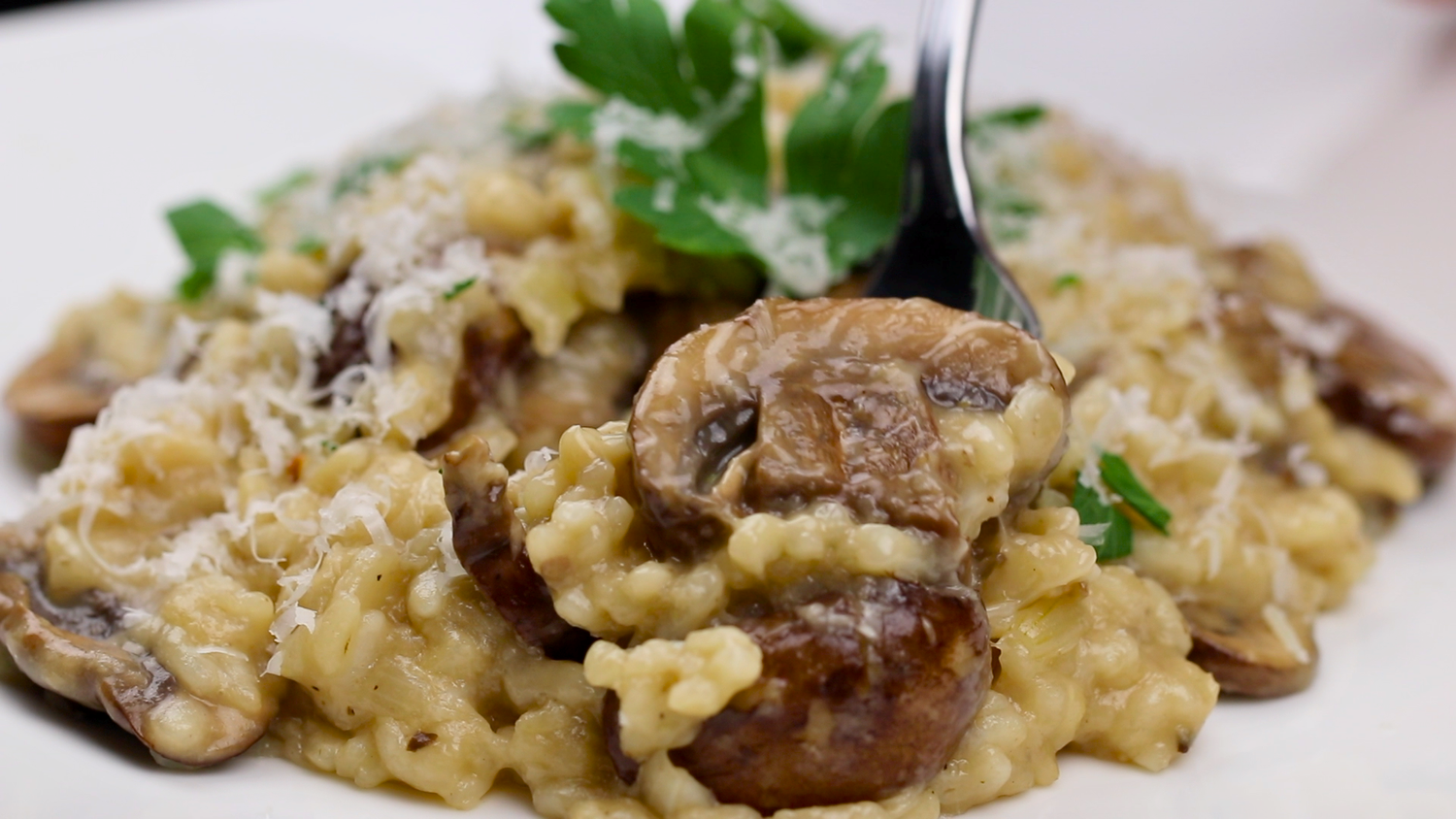
This Creamy Mushroom Risotto Recipe is one of those recipes you'll find yourself making over and over again. It's simple, delicious, and always gets rave reviews. Whether you're a beginner or a seasoned cook, you're going to love how easy and tasty this turns out!

About This Recipe
Here's something that blew my mind when I first learned it: risotto wasn't always the creamy dish we know today. Before the 18th century, Italian risotto was actually served much drier, almost like a pilaf. The creamy, all'onda (flowing like lava) texture we associate with perfect risotto only became the standard after French culinary influence hit Northern Italy during Napoleon's campaigns. French chefs brought their cream-based sauce techniques, which Italian cooks adapted to their rice dishes. This is why the stirring technique is so crucial — you're not just cooking rice, you're literally creating a natural cream sauce by coaxing the starch out of each grain. When I make this mushroom version, I think about those Italian nonnas who perfected this delicate balance between al dente rice and silk-smooth creaminess. That's why I never rush the process — you're participating in centuries of culinary evolution with every gentle stir.
Ingredients for Creamy Mushroom Risotto
- 1 pound cremini mushrooms — thinly sliced
- ½ cup shallots — diced
- 6 cups low-sodium chicken broth
- Splash of extra-virgin olive oil
- Salt and black pepper to taste
- 1 ½ cups Arborio rice
- Splash of dry white wine
- 4 tablespoons unsalted butter
- ⅓ cup freshly grated Parmesan cheese
- Fresh parsley and Parmigiano-Reggiano — for garnish
Substitutions & Variations
- Cremini mushrooms: Use a mix of shiitake and oyster mushrooms, or substitute with diced calabaza (Caribbean pumpkin) for a tropical twist that adds natural sweetness and vibrant color to the risotto.
- Arborio rice: Substitute with bomba rice or even medium-grain white rice, though you'll need to adjust cooking time and liquid amounts as these varieties absorb liquid differently than traditional risotto rice.
- Dry white wine: Replace with coconut water or a splash of rum for a Caribbean variation that adds subtle tropical notes without overpowering the mushroom flavors.
- Chicken broth: Use vegetable broth mixed with a tablespoon of sofrito for a Dominican-inspired base that brings depth with cilantro, peppers, and garlic flavors.
- Parmesan cheese: Substitute with aged queso de freír (Dominican frying cheese) or sharp cheddar, which melts beautifully and adds a different but equally rich umami profile.
- Shallots: Replace with finely diced red onion mixed with minced garlic and a small amount of ají dulce (sweet Caribbean peppers) for a more pronounced Caribbean flavor base.
How to Make Creamy Mushroom Risotto
- Heat the chicken broth in a saucepan over medium-low heat.
- In a large pot over medium heat, add a splash of extra-virgin olive oil and sauté the mushrooms until tender. Season with salt and black pepper, then set aside.
- In the same pot, add two tablespoons of extra-virgin olive oil and sauté the shallots for about two minutes.
- Add the Arborio rice to the pot and toast it for three to four minutes until golden brown.
- Pour in a splash of dry white wine and let it evaporate.
- Gradually add the simmering chicken broth, about half a cup at a time, stirring constantly until the rice absorbs all the liquid. This process should take about 30 minutes.
- Once all the chicken broth has been added and absorbed, return the sautéed mushrooms to the pot.
- Stir in the unsalted butter and freshly grated Parmesan cheese until the risotto is creamy and well-combined.
- Adjust the seasoning with salt and pepper to taste.
- Serve the risotto in individual dishes and garnish with fresh herbs and a sprinkle of Parmesan cheese.
What to Serve With Creamy Mushroom Risotto
This creamy risotto becomes absolutely magical when paired with my garlic herb roasted chicken - the bright herbs cut through the richness while the chicken's crispy skin adds textural contrast. The mushroom earthiness complements the herb crust beautifully, creating a restaurant-quality dinner at home.
For something lighter, serve alongside a simple arugula salad dressed with lemon vinaigrette and shaved parmesan. The peppery arugula and bright acidity balance the risotto's creaminess perfectly, while the parmesan ties both dishes together without overwhelming your palate.
Pan-seared salmon with a squeeze of fresh lime brings out the mushrooms' umami while adding healthy protein to your meal. The fish's delicate flavor won't compete with the risotto, and that citrus brightness keeps each bite feeling fresh and vibrant.
Frequently Asked Questions
1. What type of rice is best for risotto?
Arborio rice is the most accessible and produces excellent creamy risotto. Carnaroli is considered the gold standard by Italian chefs — it holds its shape better and releases more starch.
2. Why do I need to add broth gradually?
Adding warm broth one ladle at a time and stirring between additions coaxes starch from the rice gradually, creating risotto's signature creamy texture without any cream.
3. What mushrooms work best for mushroom risotto?
A mix of cremini, shiitake, and oyster mushrooms gives the best depth of flavor. Dried porcini rehydrated in warm water adds intense, earthy umami to the broth.
4. Do I really need to stir risotto constantly?
Frequent stirring is important but not truly constant. Stir every minute or so after each ladle of broth. The agitation is what releases starch and creates creaminess.
5. What temperature should the broth be?
Keep the broth warm in a separate saucepan on low heat. Cold broth shocks the rice and slows cooking, resulting in unevenly cooked, less creamy risotto.
6. Should I wash the rice before making risotto?
Never rinse arborio or carnaroli rice for risotto. The surface starch is essential for creating the creamy texture. Rinsing removes it and defeats the purpose.
7. What is the mantecatura step?
Mantecatura is the final step where you vigorously stir in cold butter and Parmesan off the heat. This emulsifies the fat into the starch, creating ultra-creamy, glossy risotto.
8. How do I know when risotto is done?
Risotto should flow like lava when you tilt the pan — not too thick, not too soupy. The rice should be tender with a slight bite in the center (al dente).
9. What wine should I use in risotto?
A dry white wine like Pinot Grigio or Sauvignon Blanc. Add it after toasting the rice and stir until fully absorbed before adding the first ladle of broth.
10. Can I make risotto ahead of time?
Cook risotto to 80% done, spread on a sheet pan to cool quickly, and refrigerate. To serve, reheat in a pan with extra broth and finish with butter and Parmesan.
Creamy Mushroom Risotto Video
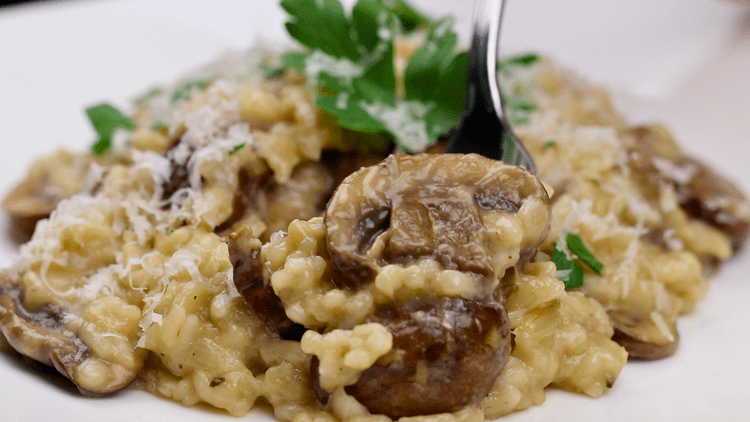
Creamy Mushroom Risotto Recipe
Ingredients
Method
- Heat the chicken broth in a saucepan over medium-low heat.
- In a large pot over medium heat, add a splash of extra-virgin olive oil and sauté the mushrooms until tender. Season with salt and black pepper, then set aside.
- In the same pot, add two tablespoons of extra-virgin olive oil and sauté the shallots for about two minutes.
- Add the Arborio rice to the pot and toast it for three to four minutes until golden brown.
- Pour in a splash of dry white wine and let it evaporate.
- Gradually add the simmering chicken broth, about half a cup at a time, stirring constantly until the rice absorbs all the liquid. This process should take about 30 minutes.
- Once all the chicken broth has been added and absorbed, return the sautéed mushrooms to the pot.
- Stir in the unsalted butter and freshly grated Parmesan cheese until the risotto is creamy and well-combined.
- Adjust the seasoning with salt and pepper to taste.
- Serve the risotto in individual dishes and garnish with fresh herbs and a sprinkle of Parmesan cheese.
Nutrition
Notes
Never wash your Arborio rice before cooking — this removes the surface starch that creates risotto's signature creaminess. I learned this the hard way after making watery risotto for months until an Italian friend corrected me. Choose mixed mushrooms over single varieties because different types release moisture at different rates. Shiitake adds earthiness, cremini provides body, and oyster mushrooms contribute delicate texture — this layered release creates deeper flavor complexity. Keep your stock at a bare simmer in a separate pot throughout cooking. Adding cold stock drops the rice temperature and stops the starch extraction process, forcing you to wait for the temperature to recover between additions. Stop stirring 30 seconds before you think the risotto is done, then vigorously stir in cold butter off the heat. This sudden temperature shock creates the glossiest, most luxurious texture by rapidly emulsifying the starches. Storage & Meal Prep:
Store any leftover risotto in an airtight container in the refrigerator for up to 3 days. Reheat gently on the stove, adding a splash of broth if needed to revive the creaminess. Risotto tends to lose its creamy texture when frozen, but it can still be reheated.
Tried this recipe?
Let us know how it was!Filed Under



Leave a Reply