
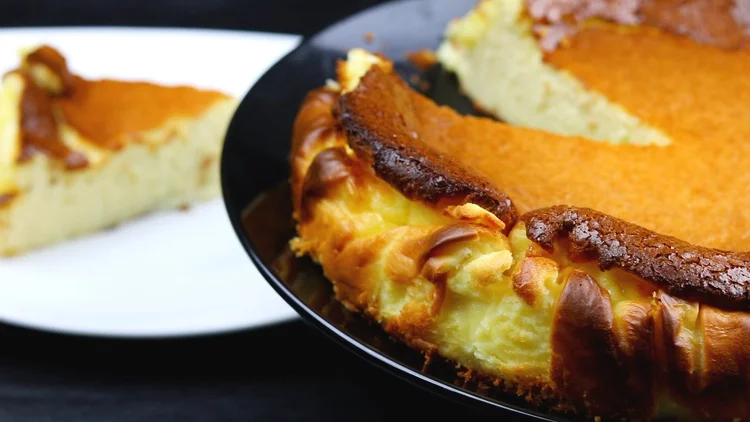
This Burnt Cheesecake The Easiest Cheesecake Ever is an absolute crowd-pleaser and so much easier to make than you'd think. Rich, indulgent, and perfectly sweet, it's the kind of treat that disappears fast. Get ready for everyone to ask you for the recipe!

About This Recipe
Burnt cheesecake, or 'tarta quemada,' became wildly popular in Latin America after Spanish chef Santiago Rivera's version went viral, but here's what most people don't know: the 'burnt' top isn't actually burnt at all. It's a controlled Maillard reaction that happens when the proteins and sugars in cream cheese caramelize at exactly 425-450°F. In the Dominican Republic, many families now make their own version during Christmas celebrations, often adding a touch of vanilla or rum - but the key difference from New York-style cheesecake is that we intentionally want those dark, caramelized spots on top. They create a slightly bitter contrast that balances the rich sweetness below. The beauty of this technique is that what looks like a 'mistake' to traditional bakers is actually the goal. When you see those deep golden-brown patches forming, you're not overcooking - you're creating layers of flavor that transform simple cream cheese into something complex and sophisticated. That's why this version works so well for home cooks who've been intimidated by perfect, crack-free cheesecakes.
Ingredients for Burnt Cheesecake The Easiest Cheesecake
- 24 oz cream cheese
- 1 cup of sugar
- 6 eggs
- ½ teaspoon fine sea salt
- 1 ¾ cups heavy cream
- 1 teaspoon vanilla extract
- ¼ cup all-purpose flour
Substitutions & Variations
- Heavy cream: Replace with coconut cream for a tropical twist that adds subtle coconut flavor and creates an even richer, silkier texture.
- Vanilla extract: Substitute with rum extract or dark Caribbean rum to give the cheesecake a distinctly island flavor that pairs beautifully with the burnt top.
- All-purpose flour: Use cornstarch instead (reduce to 3 tablespoons) for a gluten-free version that creates an incredibly smooth, custard-like consistency.
- Sugar: Replace half the sugar with brown sugar or turbinado sugar for deeper caramel notes that complement the burnt top and add Dominican flair.
- Cream cheese: Mix in 8 oz of mascarpone cheese (reducing cream cheese to 16 oz) for an ultra-creamy Italian-style variation with a lighter texture.
- Plain cheesecake: Fold in ½ cup dulce de leche or cajeta during mixing for a Latin-inspired caramel cheesecake that's popular throughout the Caribbean.
How to Make Burnt Cheesecake The Easiest Cheesecake
- Preheat oven to 400 degrees F (200 degrees C). Grease a 9-inch cake pan and line it with parchment paper. Press the paper against the bottom and sides of the pan to shape it into the pan.
- In a stand mixer, beat cream cheese on low speed. Gradually add sugar and continue mixing until smooth.
- Add eggs one at a time, mixing well after each addition. Stir in salt and vanilla extract.
- Gradually add heavy cream while still mixing.
- Sift in the flour and continue mixing until everything is evenly incorporated. Make sure to scrape the bottom of the bowl.
- Pour mixture into prepared pan and place on a baking sheet.
- Bake for about 1 hour or until the cheesecake is a dark brown color.
- Allow the cheesecake to cool to room temperature, then refrigerate for at least an hour.
- Release the cake pan and transfer the cheesecake to a plate.
- Serve at room temperature and enjoy!
- Pumpkin Gingersnap Cheesecake
- No Bake Cheesecake
- Bundt Chocolate Cake
What to Serve With Burnt Cheesecake The Easiest Cheesecake
The creamy richness of this burnt cheesecake pairs beautifully with fresh tropical fruit like mango slices or passion fruit pulp. The bright acidity cuts right through that dense, caramelized top while adding a Caribbean touch that feels natural and refreshing.
My Dominican café con leche makes an absolutely perfect companion to this dessert – the bitter coffee notes balance the sweet creaminess while the warm spices echo those beautiful burnt flavors on top. It's like having your own little café moment at home.
For something unexpected, try serving thin slices alongside a small glass of aged rum or even a light moscato. The alcohol's warmth complements the caramelized notes while cleansing your palate between bites of this incredibly rich cheesecake.
Frequently Asked Questions
1. What is burnt Basque cheesecake?
A crustless cheesecake baked at extremely high heat until the top is deeply caramelized and almost burnt. Inside, it is impossibly creamy with a custard-like center. It originated in San Sebastian, Spain.
2. Why bake cheesecake at such a high temperature?
The extreme heat (400-425 degrees) caramelizes the sugars on top into a dark, bitter-sweet crust while the interior stays underdone and custardy. This contrast is the entire point.
3. Is the burnt top supposed to taste bitter?
The caramelization adds a pleasant, complex bitterness similar to creme brulee. It is not burnt in a bad way — it is deeply caramelized, creating a flavor that balances the sweet, creamy interior.
4. Why does this have no crust?
Basque cheesecake intentionally omits the traditional crust. The parchment paper-lined pan creates a rustic, crinkled exterior. The focus is entirely on the creamy, caramelized filling.
5. What is the ideal texture inside?
The center should be jiggly, custardy, and almost like a pudding. Only the outer ring should be fully set. Overbaking loses the magic — the wobbly center is the signature.
6. What temperature and time for burnt cheesecake?
425 degrees for 25-30 minutes. The top should be deeply browned (almost black in spots) and the center should jiggle dramatically when shaken. It sets further as it cools.
7. Do I need a water bath?
No — this is what makes it the easiest cheesecake ever. No water bath, no slow baking, no gradual cooling. Just high heat and a short bake time. It is nearly foolproof.
8. Should the cream cheese be at room temperature?
Yes — softened cream cheese is essential for a smooth batter with no lumps. Let it sit at room temperature for at least 1 hour, or microwave in 15-second intervals until soft.
9. How long should it cool before serving?
Cool to room temperature (about 2 hours), then refrigerate for at least 4 hours or overnight. The interior firms into a creamy, sliceable texture as it chills.
10. How do I store burnt Basque cheesecake?
Refrigerate covered for up to 5 days — it actually tastes better after a day or two as the flavors develop. Bring to room temperature for 30 minutes before serving for the creamiest texture.
Burnt Cheesecake The Easiest Cheesecake Video
Burnt Cheesecake The Easiest Cheesecake Ever
Ingredients
Method
- Preheat oven to 400 degrees F (200 degrees C). Grease a 9-inch cake pan and line it with parchment paper. Press the paper against the bottom and sides of the pan to shape it into the pan.
- In a stand mixer, beat cream cheese on low speed. Gradually add sugar and continue mixing until smooth.
- Add eggs one at a time, mixing well after each addition. Stir in salt and vanilla extract.
- Gradually add heavy cream while still mixing.
- Sift in the flour and continue mixing until everything is evenly incorporated. Make sure to scrape the bottom of the bowl.
- Pour mixture into prepared pan and place on a baking sheet.
- Bake for about 1 hour or until the cheesecake is a dark brown color.
- Allow the cheesecake to cool to room temperature, then refrigerate for at least an hour.
- Release the cake pan and transfer the cheesecake to a plate.
- Serve at room temperature and enjoy!
- No Bake Cheesecake
Nutrition
Notes
Use full-fat cream cheese at room temperature, but don't overbeat it. I learned this after making dozens - overbeaten cream cheese incorporates too much air, causing cracks that compete with your intentional 'burnt' top for attention. Skip the water bath completely. Unlike traditional cheesecake, burnt cheesecake needs direct heat to create those beautiful caramelized spots on top. The dry heat is what gives you that signature golden-brown color and deeper flavor. Look for cream cheese with the highest fat content you can find - avoid light or whipped versions because they have stabilizers that prevent proper caramelization. The fat is essential for achieving that perfect burnt appearance. Don't rotate the pan during baking. Let one side get more color than the other - this creates the rustic, homemade look that makes burnt cheesecake so appealing and authentic-looking rather than perfectly uniform.
Tried this recipe?
Let us know how it was!Filed Under
Leave a Reply