
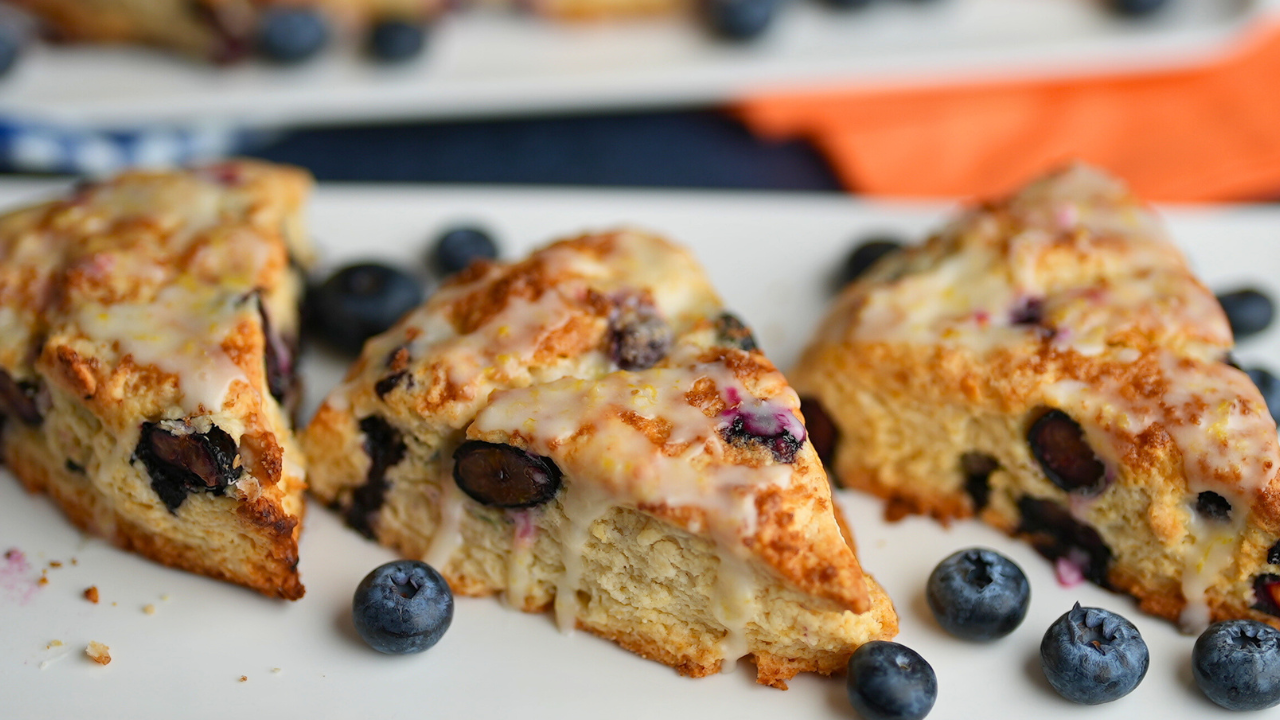
This Blueberry Scones is one of those recipes you'll find yourself making over and over again. It's simple, delicious, and always gets rave reviews. Whether you're a beginner or a seasoned cook, you're going to love how easy and tasty this turns out!

About This Recipe
Here's something that changed how I make blueberry scones: fresh blueberries contain natural enzymes called pectinases that actually break down gluten strands when they sit in dough too long. This is why your scones can turn out dense and gummy if you overmix or let the dough rest after adding berries. But here's the genius part - those same enzymes create incredible pockets of jammy sweetness when the berries burst during baking. The key is working quickly once berries hit the dough, getting them in the oven within 10 minutes max. I learned this the hard way after countless dense scones in my early days. Now I actually use this enzyme action to my advantage - I'll lightly crush about a quarter of my blueberries before folding them in, giving me both whole berries and those perfect jammy streaks. It's why homemade blueberry scones have that complex texture you can't get from a mix.
Ingredients for Blueberry Scones
- For Scones:
- 2 cups all-purpose flour
- 3 tablespoon granulated sugar
- 1 tablespoon baking powder
- ½ teaspoon fine sea salt
- ½ cup cold unsalted butter, diced
- 1 large egg, cold, lightly beaten
- ½ cup cold heavy whipping cream, plus 2 tablespoon to brush the tops
- 1 teaspoon vanilla extract
- 1 cup blueberries
- 1 tablespoon coarse/raw sugar (or granulated sugar)
- For Lemon Glaze:
- ⅔ cup powdered sugar
- Zest from 1 lemon
- 1 tablespoon fresh lemon juice (adjust for desired consistency)
Substitutions & Variations
- Blueberries: Substitute with diced mango, passion fruit pulp, or frozen coconut flakes for a tropical Caribbean twist that brings bright island flavors to these British-inspired treats.
- Heavy whipping cream: Replace with canned coconut milk (thick part only) to create richer, more decadent scones with a subtle coconut flavor that pairs beautifully with tropical fruits.
- Vanilla extract: Use rum extract or a tablespoon of dark Caribbean rum instead to add that signature island spirit flavor that's beloved in Dominican desserts.
- Lemon zest and juice: Swap for lime zest and juice, or even better, use naranja agria (sour orange) if available for an authentic Dominican citrus glaze that's more complex and aromatic.
- All-purpose flour: Replace up to ½ cup with finely ground plantain flour or cassava flour to add subtle earthy sweetness and create a unique Caribbean fusion scone.
- Fresh blueberries: Try dried cranberries soaked in rum, or fresh guava paste cut into small cubes for a distinctly Dominican flavor that melts slightly during baking.
How to Make Blueberry Scones
- For Scones:
- Preheat oven to 400°F and line a baking sheet with parchment paper.
- In a bowl, whisk together flour, sugar, baking powder, and salt. Add the diced butter and cut into pea-sized crumbs.
- Gently fold in blueberries. Refrigerate while preparing liquid ingredients.
- In a small bowl, whisk cream, egg, and vanilla. Pour into the flour mixture, and fold until moistened. Do not over-mix.
- Transfer dough to a work surface, shape into a 1-inch thick, 7-inch wide disk. Cut into 8 wedges.
- Place scones on the baking sheet, brush with cream and sprinkle with coarse sugar. Refrigerate for 15 minutes.
- Bake for 20-23 minutes until golden brown. Cool on a rack.
- For Lemon Glaze:
- In a bowl, combine powdered sugar, lemon zest, and lemon juice. Adjust consistency with more sugar or lemon juice.
- Once the scones are cooled, drizzle with lemon glaze.
- Enjoy your delicious Blueberry Scones with Lemon Glaze!
- Corn Bread
- Oklahoma Onion Burger
- Honey Glazed Salmon Bites
- Marble Cake
What to Serve With Blueberry Scones
These tender blueberry scones are absolutely perfect with a steaming cup of café con leche, the way my abuela taught me to make it. The rich, creamy coffee balances the scone's sweetness beautifully, while the warm spices complement those burst-in-your-mouth blueberries.
For something special, try spreading these warm scones with my homemade guava butter - it's like bringing a little piece of the Caribbean to your breakfast table. The tropical guava adds a bright, floral sweetness that plays so well against the buttery, crumbly texture of the scones.
Nothing beats the classic combination of fresh scones with clotted cream and a dollop of strawberry preserves for an elegant afternoon treat. The tangy cream cuts through the richness while the preserves add another layer of fruity sweetness that makes every bite feel like pure indulgence.
Frequently Asked Questions
1. Why do my scones come out flat instead of tall?
The butter was too warm, or the dough was overworked. Use very cold butter cut into small cubes and handle the dough as little as possible. Cold dough = tall, flaky scones.
2. Should I use fresh or frozen blueberries?
Frozen blueberries are actually preferred — they do not bleed purple juice into the dough like fresh ones. Add them frozen and handle gently to keep them whole.
3. What is the secret to flaky scones?
Cold butter is the key. Cut frozen butter into the flour, leaving pea-sized chunks. These chunks create steam pockets during baking that make the scones tender and flaky.
4. What liquid should I use — cream or buttermilk?
Heavy cream makes richer, more tender scones. Buttermilk creates a lighter, tangier scone with a more biscuit-like texture. Both are excellent.
5. How do I shape scones without a cutter?
Pat the dough into a 1-inch thick circle and cut into 8 wedges with a knife. Wedge-shaped scones are actually more traditional than round ones in many bakeries.
6. What temperature should I bake scones at?
400-425°F for 14-18 minutes until golden brown on top and a toothpick comes out clean. High heat helps the butter create steam for maximum flakiness.
7. Should I add a glaze to blueberry scones?
A simple lemon glaze (powdered sugar + lemon juice) drizzled over cooled scones adds sweetness and a beautiful presentation. Vanilla glaze is another popular option.
8. Can I make scone dough ahead of time?
Yes — shape the scones, freeze on a baking sheet until solid, then store in a freezer bag for up to 2 months. Bake from frozen, adding 3-5 extra minutes.
9. Why should I not overwork scone dough?
Overworking develops gluten, which makes scones tough and dense. Mix until the flour is just incorporated — visible streaks of flour and lumpy texture are perfectly fine.
10. What should I serve with blueberry scones?
Clotted cream and lemon curd for an English-style tea service, or simply with butter and jam. They are perfect alongside coffee, tea, or as part of a brunch spread.
Blueberry Scones Video
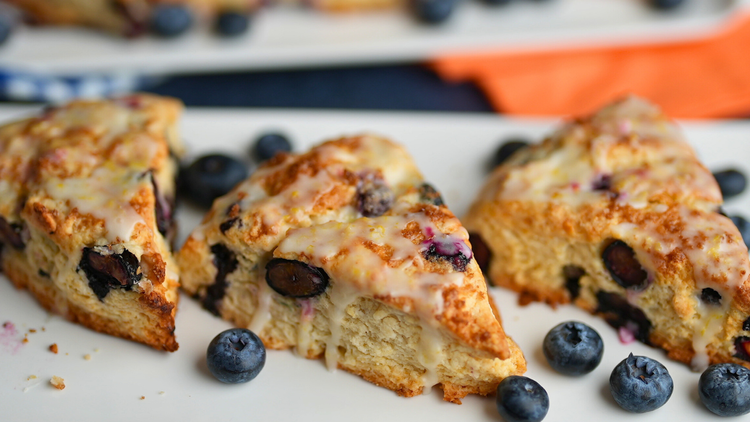
Blueberry Scones
Ingredients
Method
- For Scones:
- Preheat oven to 400°F and line a baking sheet with parchment paper.
- In a bowl, whisk together flour, sugar, baking powder, and salt. Add the diced butter and cut into pea-sized crumbs.
- Gently fold in blueberries. Refrigerate while preparing liquid ingredients.
- In a small bowl, whisk cream, egg, and vanilla. Pour into the flour mixture, and fold until moistened. Do not over-mix.
- Transfer dough to a work surface, shape into a 1-inch thick, 7-inch wide disk. Cut into 8 wedges.
- Place scones on the baking sheet, brush with cream and sprinkle with coarse sugar. Refrigerate for 15 minutes.
- Bake for 20-23 minutes until golden brown. Cool on a rack.
- For Lemon Glaze:
- In a bowl, combine powdered sugar, lemon zest, and lemon juice. Adjust consistency with more sugar or lemon juice.
- Once the scones are cooled, drizzle with lemon glaze.
- Enjoy your delicious Blueberry Scones with Lemon Glaze!
Nutrition
Notes
Choose wild blueberries over cultivated ones when possible because their thicker skins won't burst as easily during mixing, preventing purple streaks throughout your dough while still giving you those perfect jammy pockets when they bake. After years of making these, I toss my blueberries in a tablespoon of the flour mixture before folding them in because the flour coating prevents them from sinking to the bottom and creates better distribution throughout each scone. Keep your butter ice-cold and grate it directly into the flour using a box grater because this creates perfect butter flakes that steam during baking, giving you those coveted flaky layers instead of dense, cake-like texture. Pat your dough into a rectangle and cut straight down with a sharp knife rather than twisting a round cutter because twisting seals the edges and prevents the scones from rising properly, leaving you with lopsided, poorly risen results.
Tried this recipe?
Let us know how it was!Filed Under


Leave a Reply