
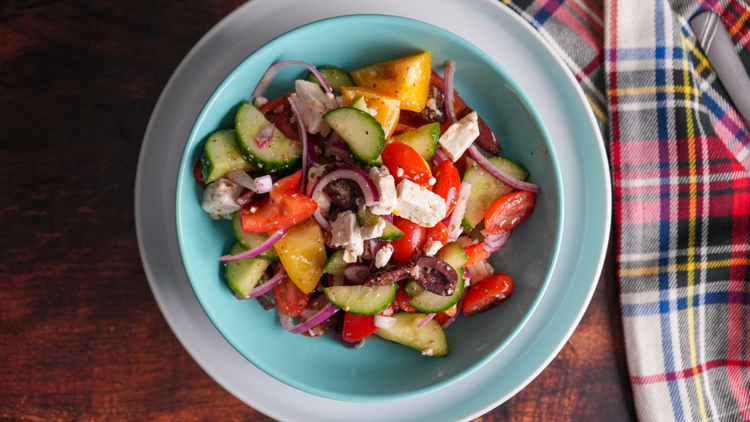
This My Easy Greek Salad Recipe is fresh, crunchy, and loaded with flavor. It's the perfect side dish for any meal or hearty enough to enjoy on its own. The combination of ingredients and dressing makes every bite absolutely irresistible!
About This Recipe
Here's something that'll blow your mind: the combination of tomatoes and olive oil in Greek salad actually creates a nutritional powerhouse that's greater than the sum of its parts. The lycopene in tomatoes – that red pigment responsible for their color – increases in bioavailability by up to 300% when paired with the healthy fats in extra virgin olive oil. But here's the kicker most people don't know: this absorption boost only happens when the tomatoes are at room temperature, not cold from the fridge. That's why traditional Greek villages always serve their horiatiki at ambient temperature. When I make this salad, I pull my tomatoes out at least 30 minutes before assembling, and I'm generous with that olive oil – usually twice what recipes call for. You're not just making the salad taste better, you're literally unlocking more of those cancer-fighting antioxidants that make this dish so nutritionally dense. It's Mediterranean wisdom backed by modern science.
Ingredients for My Easy Greek Salad
- 1 pint of grape tomatoes, halved
- 1 English cucumber, cut into bite-sized pieces
- 1 red bell pepper, cut into bite-sized pieces
- 1 yellow bell pepper, cut into bite-sized pieces
- ½ medium-sized red onion, thinly sliced
- 8 ounces of feta cheese, diced
- ½ cup of Kalamata olives, sliced
- Freshly ground black pepper, to taste
- For the dressing:
- ½ cup of good-quality olive oil
- ¼ cup of red wine vinegar
- Juice of 1 lemon
- 2 cloves of garlic, minced
- 1 teaspoon of dried oregano
- ½ teaspoon of Dijon mustard
- 1 teaspoon of kosher salt
How to Make My Easy Greek Salad
- Prepare the Vegetables:
- Start by halving the grape tomatoes and placing them in a large mixing bowl.
- Cut the English cucumber into bite-sized pieces and add them to the mixing bowl.
- Proceed to slice the red and yellow bell peppers into similar-sized pieces, and add them to the bowl.
- Thinly slice the red onion and dice the feta cheese, incorporating them into the mixture.
- Finally, slice the Kalamata olives (also known as Greek olives) and add them to the bowl as well.
- Create the Dressing:
- In another mixing bowl, combine the olive oil, red wine vinegar, lemon juice, minced garlic, dried oregano, Dijon mustard, kosher salt, and freshly ground black pepper.
- Whisk the ingredients together vigorously until they are well combined and emulsified.
- Bring It All Together:
- Pour the homemade dressing over the salad mixture in the large bowl.
- Using salad tongs or two large spoons, gently toss the salad, ensuring that all the ingredients are evenly coated with the dressing.
- Continue tossing until the flavors meld together and the ingredients are incorporated.
- Serve and Enjoy:
- Your vibrant and delicious Greek salad is now ready to be enjoyed!
- Transfer the salad to a serving dish or individual plates.
- Sprinkle some additional freshly ground black pepper on top, if desired.
- Serve the salad as a refreshing side dish or a light lunch option.
- Buen provecho! Enjoy your homemade Greek salad, and thank you for following our recipe.
- Conclusion:
- We hope you've enjoyed creating this vibrant and flavorful Greek Salad with us. The combination of fresh vegetables, tangy feta cheese, and the zesty homemade dressing is truly a match made in culinary heaven. It's the perfect dish to satisfy your craving for a light, refreshing, and wholesome meal. Thank you for joining us, and we look forward to sharing more delicious recipes with you in the future. See you next time!
- Mexican Cactus Salad
- Creamy Potato Salad with Eggs
- Italian Pasta Salad
- Antipasto Salad Recipe
What to Serve With My Easy Greek Salad
This Greek salad shines alongside grilled lamb or chicken - the bright acidity cuts through rich meats beautifully. The herbs and olives create this Mediterranean harmony that makes every bite feel like a mini vacation to the islands.
For something closer to home, try it with my Dominican-style grilled fish. The cooling cucumber and tomatoes balance perfectly against bold Caribbean seasonings, while the feta adds a creamy richness that complements the citrus marinades we love.
Warm pita bread or focaccia makes this salad feel like a complete meal. The contrast between cool, crisp vegetables and warm, pillowy bread creates incredible texture, plus you can use the bread to scoop up all that delicious olive oil dressing.
Frequently Asked Questions
1. What vegetables are essential in a Greek salad?
Tomatoes, cucumbers, red onion, Kalamata olives, and green bell pepper are the traditional base. Every ingredient should be fresh and cut into large, rustic chunks.
2. What cheese goes on a Greek salad?
Feta cheese is the only authentic option — a large block or thick slices placed on top, not crumbled. Use real Greek feta made from sheep's milk for the most authentic flavor.
3. Does traditional Greek salad include lettuce?
Authentic Greek salad (horiatiki) does not include lettuce. It is a chunky vegetable salad with feta. Lettuce is an American addition that many Greek families consider inauthentic.
4. What dressing goes on Greek salad?
Simple extra virgin olive oil, red wine vinegar, dried oregano, salt, and pepper. Traditional Greek salad uses no creamy dressing — the feta and olive oil provide all the richness needed.
5. Should I use Kalamata or black olives?
Kalamata olives are the authentic Greek choice — they are dark purple, almond-shaped, and have a rich, fruity, slightly bitter flavor that generic black olives cannot replicate.
6. How do I keep Greek salad from getting watery?
Salt the cucumber slices separately for 10 minutes and drain. Use firm tomatoes and dress the salad just before serving. Never dress it ahead of time.
7. Can I add other ingredients to Greek salad?
Capers, artichoke hearts, pepperoncini, avocado, or grilled chicken are popular additions, though purists stick to the classic combination of tomato, cucumber, onion, olive, and feta.
8. What type of cucumber works best?
English cucumbers or Persian cucumbers have fewer seeds, thinner skin, and a crunchier texture than regular cucumbers. No peeling needed — just slice into half-moons.
9. How do I cut vegetables for Greek salad?
Cut everything into large, rustic chunks — not small dice. Thick tomato wedges, half-moon cucumber slices, and thick onion rings give the salad its characteristic hearty texture.
10. What makes a great Greek salad dressing?
High-quality extra virgin olive oil is the star. Use a 3:1 ratio of oil to red wine vinegar, plus generous dried oregano, a pinch of salt, and freshly cracked black pepper.
My Easy Greek Salad Video
My Easy Greek Salad Recipe
Ingredients
Method
- Prepare the Vegetables:
- Start by halving the grape tomatoes and placing them in a large mixing bowl.
- Cut the English cucumber into bite-sized pieces and add them to the mixing bowl.
- Proceed to slice the red and yellow bell peppers into similar-sized pieces, and add them to the bowl.
- Thinly slice the red onion and dice the feta cheese, incorporating them into the mixture.
- Finally, slice the Kalamata olives (also known as Greek olives) and add them to the bowl as well.
- Create the Dressing:
- In another mixing bowl, combine the olive oil, red wine vinegar, lemon juice, minced garlic, dried oregano, Dijon mustard, kosher salt, and freshly ground black pepper.
- Whisk the ingredients together vigorously until they are well combined and emulsified.
- Bring It All Together:
- Pour the homemade dressing over the salad mixture in the large bowl.
- Using salad tongs or two large spoons, gently toss the salad, ensuring that all the ingredients are evenly coated with the dressing.
- Continue tossing until the flavors meld together and the ingredients are incorporated.
- Serve and Enjoy:
- Your vibrant and delicious Greek salad is now ready to be enjoyed!
- Transfer the salad to a serving dish or individual plates.
- Sprinkle some additional freshly ground black pepper on top, if desired.
- Serve the salad as a refreshing side dish or a light lunch option.
- Buen provecho! Enjoy your homemade Greek salad, and thank you for following our recipe.
- Conclusion:
- We hope you've enjoyed creating this vibrant and flavorful Greek Salad with us. The combination of fresh vegetables, tangy feta cheese, and the zesty homemade dressing is truly a match made in culinary heaven. It's the perfect dish to satisfy your craving for a light, refreshing, and wholesome meal. Thank you for joining us, and we look forward to sharing more delicious recipes with you in the future. See you next time!
- Mexican Cactus Salad
- Creamy Potato Salad with Eggs
- Italian Pasta Salad
Nutrition
Notes
Always salt your cucumber slices and let them drain for 15 minutes before adding to the salad. This draws out excess water that would otherwise dilute your dressing and make the whole salad soggy within an hour. Buy your feta in blocks, never pre-crumbled. Block feta stays creamy and tangy while pre-crumbled versions are often dried out with anti-caking agents. Plus, those irregular hand-torn chunks look more authentic and hold onto the olive oil better. I learned this from making hundreds of these salads: add your olive oil first, then the vinegar. The oil coats the vegetables and prevents the acid from breaking them down too quickly, keeping everything crisp longer. Use the ripest tomatoes you can find, but if they're super juicy, cut them into larger chunks rather than thin slices. The bigger pieces hold their structure better and won't turn your beautiful salad into tomato soup. Storage & Meal Prep:
Greek salad is best enjoyed fresh, but you can store leftovers in the refrigerator for up to 2-3 days. The vegetables may become slightly softer, and the flavors may intensify over time.


Leave a Reply