
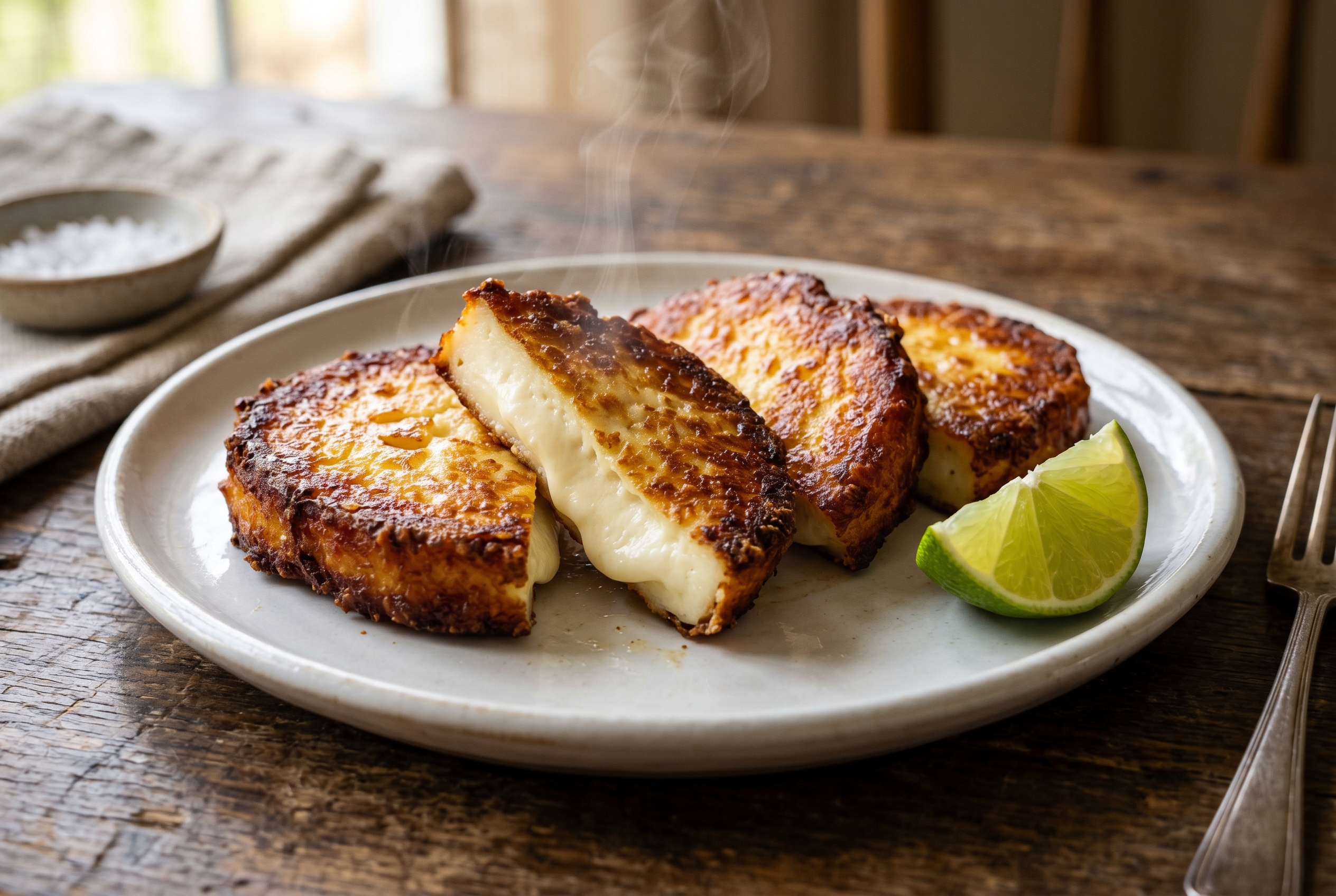
Queso frito is proof that simple food, done right, can be life-changing. Dominican frying cheese — queso de freír — sliced thick, pan-fried in a little oil until the outside is deep golden with crispy edges and the inside stays soft, salty, and squeaky. That's it. Five ingredients if you count salt and pepper (which you shouldn't, because the cheese is already salted). Eight minutes from fridge to plate.
Pronounced "KEH-so FREE-toe," it's one of the three components of los tres golpes, but in Dominican households it stands on its own as a snack, an appetizer, a late-night refrigerator raid. My cousins and I used to fight over the last slice at breakfast. My mom would cut an extra piece just to keep the peace. In Santo Domingo, you can buy queso frito as a street food — hot out of the pan, wrapped in a napkin, eaten on the walk home.
The whole dish hinges on one thing: using the right cheese. Queso de freír is a firm, salted, white cheese specifically engineered NOT to melt. Queso blanco will melt into a puddle. Mozzarella will disappear. Halloumi is the closest supermarket substitute. Today I'm walking you through every detail — how to slice it, how to dry it, what heat level to use, when to flip. Master this and you're a step closer to mastering Dominican breakfast forever.
Why You'll Love This Queso Frito Recipe
- Eight minutes, start to finish: Heat oil, slice cheese, fry, flip, done. Faster than ordering takeout.
- One ingredient does all the work: Queso de freír is pre-salted and pre-flavored. You're literally just applying heat.
- Kid-approved forever: Squeaky salty fried cheese is the most universally kid-friendly Dominican food. Watch them demolish a plate.
- Goes with everything: Mangú, eggs, avocado, tostones, salad, or eaten alone with a squeeze of lime. It never feels out of place.
- Two-skillet skill builder: Once you nail the heat and flip timing, every other pan-fried food on earth gets easier.
What Is Queso Frito?
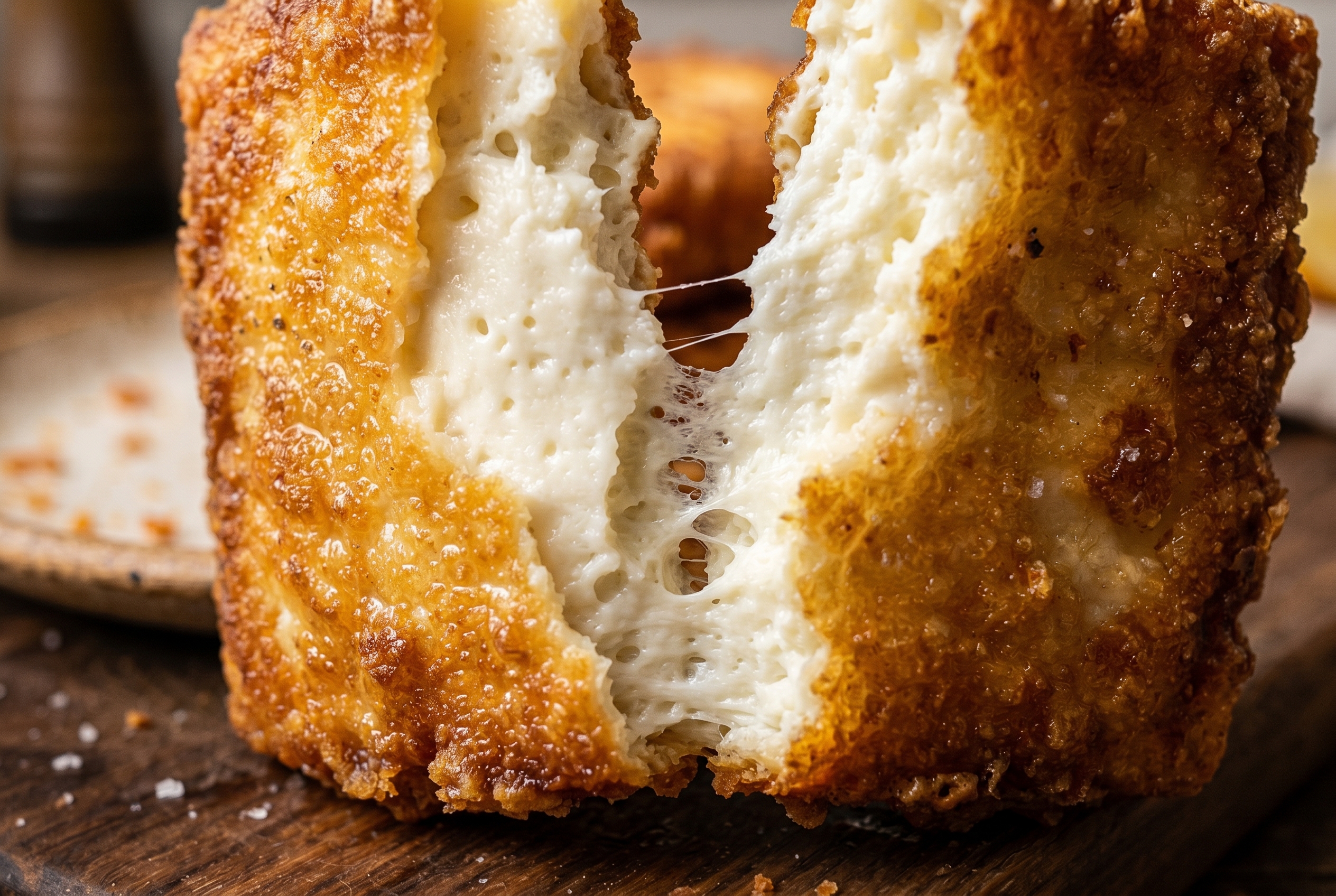
Queso frito (Spanish for "fried cheese") is a Dominican staple made by pan-frying thick slices of queso de freír — a firm, white, heavily salted cheese designed specifically to hold its shape under heat. When fried in a shallow layer of oil over medium heat, the surface develops a deep golden crust with crispy edges, while the interior stays firm but soft and squeaky when bitten into. It's usually served hot as part of los tres golpes breakfast, or on its own as a snack or appetizer.
The key to understanding queso frito is understanding the cheese itself. Queso de freír is a fresh, non-melting cheese in the same family as halloumi (Cypriot), paneer (Indian), and bryndza (Central European). These cheeses have a high casein structure that tightens under heat instead of relaxing and flowing — the opposite of mozzarella or cheddar. Dominican queso de freír has its own flavor profile: milkier than halloumi, saltier than paneer, with a firm but not rubbery texture. Brands like Tropical, La Chona, and any producer labeled "queso de freír" or "queso para freír" will do the job.
Queso frito became part of Dominican breakfast culture through a mix of Spanish colonial influence (cheese-making traditions from the Iberian peninsula) and local Caribbean adaptation (firmer, saltier cheeses that hold up in tropical heat without refrigeration). By the early 1900s, queso frito was fully integrated into Dominican home kitchens. Today it's inseparable from tres golpes, from beach-day snacking, and from every comedor in Santo Domingo where you can order it by weight and get it hot off the plancha.
Ingredients You'll Need
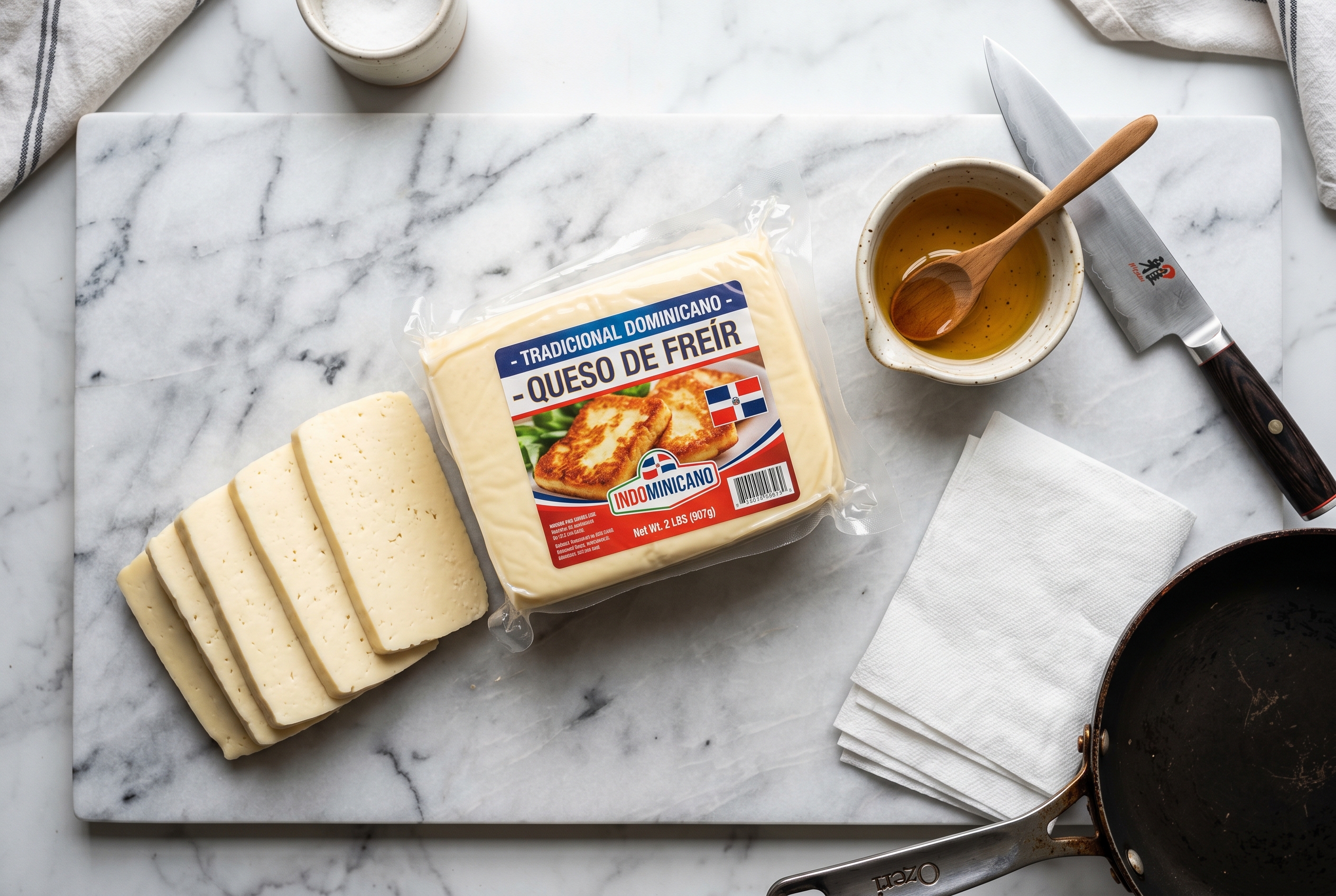
- 1 lb queso de freír (Tropical, La Chona, or any Dominican frying cheese)
- 2-3 tablespoon vegetable oil (or a neutral oil with a high smoke point)
- Paper towels (for drying and draining)
Equipment: A non-stick skillet or well-seasoned cast iron pan, a sharp knife, and tongs or a thin spatula for flipping. That's it.
No seasoning needed: Queso de freír is already well-salted from the cheese-making process. Adding salt, pepper, or other seasonings at the pan makes it too intense.
6 Keys to Perfect Dominican Queso Frito
- Use the right cheese — queso de freír: Not queso blanco (which melts), not fresh mozzarella (which melts), not Monterey Jack (which melts). The cheese must specifically say "queso de freír" or "queso para freír." If you can't find it, halloumi is the closest supermarket substitute.
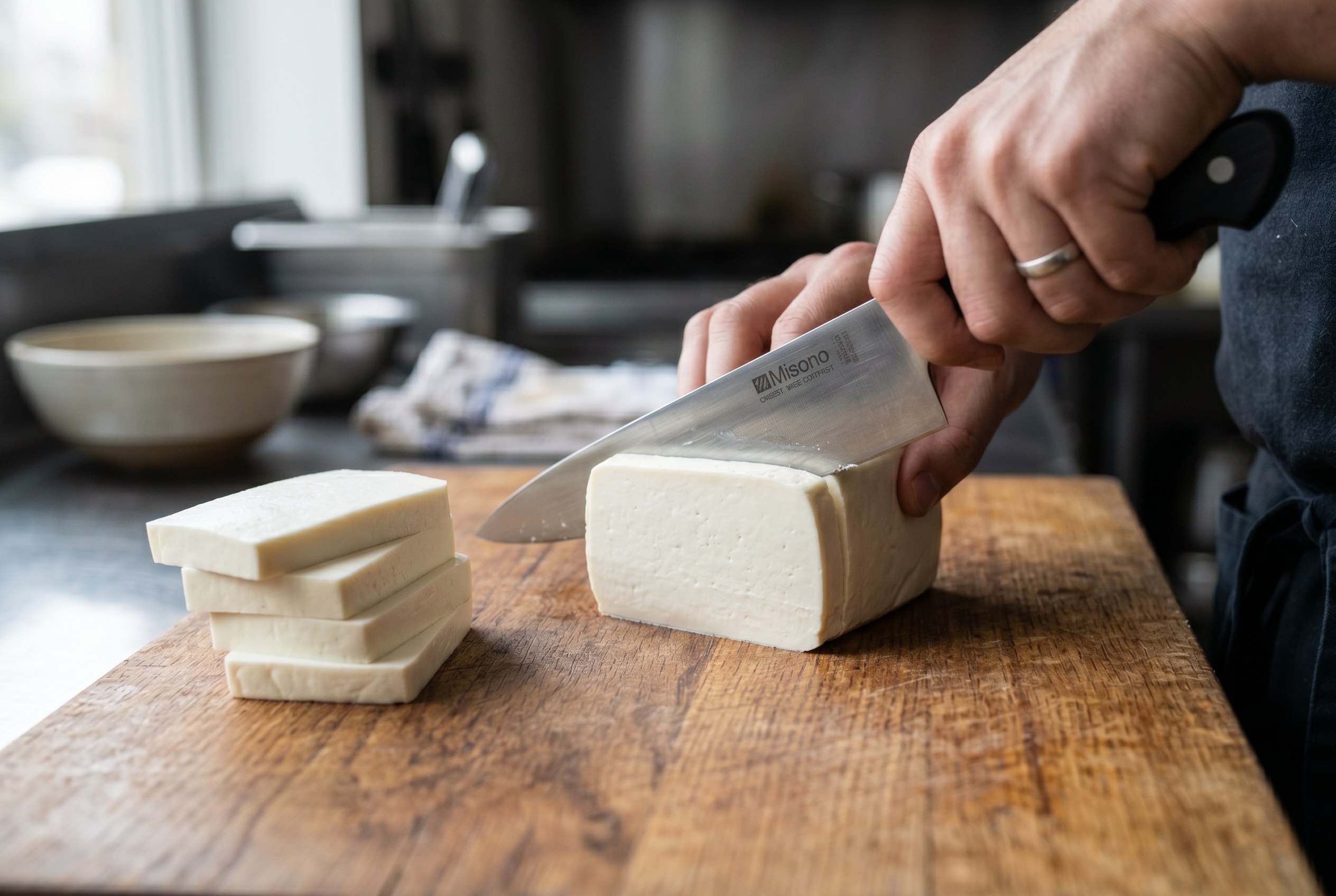
- Slice thick — ½ inch minimum: Thin slices cook through too fast, burn before they brown, and dry out. ½ inch gives you a crispy exterior and a soft squeaky interior. About 4-5 oz per slice.
- Pat dry before frying: Queso de freír holds a lot of surface moisture. Pat each slice dry with paper towels — dry cheese browns faster and doesn't steam itself in the pan.
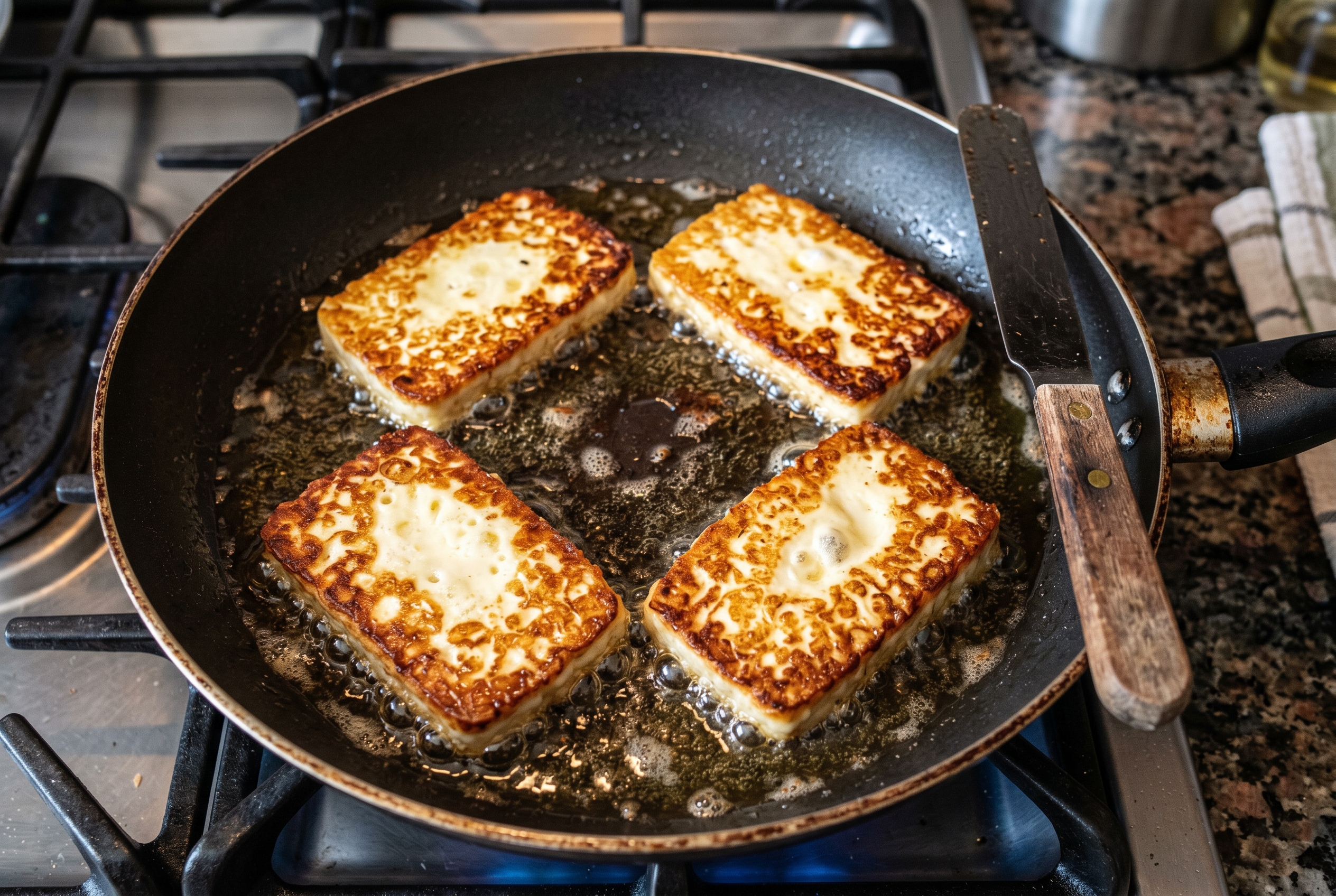
- Medium heat, not high: High heat burns the outside before the inside warms through. Medium (around 325-350°F) gives you slow, even browning and lets the interior soften.
- One flip only: Flip each slice once, when the bottom is deep golden — about 60-90 seconds in. Multiple flips break the crust and make the cheese tough.
- Serve HOT: Queso frito is one of those foods that's perfect at 30 seconds old and disappointing at 10 minutes old. Serve it immediately, preferably directly onto warm plates next to mangú or alongside tostones.
Step-by-Step Instructions
Step 1 — Slice the Cheese Thick
Unwrap the 1 lb block of queso de freír. Using a sharp knife, slice it into pieces about ½ inch thick. You should get 4-5 slices of roughly 4-5 oz each. If any slice is uneven, trim it so all slices are close to the same thickness — this keeps them all cooking at the same pace.
Step 2 — Pat the Slices Dry
Place the slices on a plate lined with paper towels. Press another paper towel gently on top to absorb surface moisture. This is a small step that makes a huge difference — dry cheese browns faster and doesn't cause the oil to spit. Let them sit 1 minute.
Step 3 — Heat the Oil
Heat 2-3 tablespoon of vegetable oil in a non-stick skillet or well-seasoned cast iron pan over medium heat. Wait until the oil shimmers but doesn't smoke — about 2 minutes. You should see small ripples on the surface when the pan is tilted. Too cool and the cheese won't crust; too hot and it burns.
Step 4 — Fry the First Side
Carefully place the cheese slices in the hot oil in a single layer — don't crowd the pan. If you have 4 slices and a small skillet, fry 2 at a time. Cook undisturbed for 60-90 seconds until the bottom is deep golden and has crispy edges. Resist the urge to peek repeatedly — lifting the cheese too early breaks the crust.
Step 5 — Flip Once and Finish
Using tongs or a thin spatula, flip each slice once — only once. Cook the second side for 60 seconds more until it matches the first side: deep golden, crispy-edged. The cheese should look slightly puffed. Do not flip again — one flip keeps the crust intact.
Step 6 — Plate and Serve Immediately
Transfer the slices to a plate — skip the paper towel here; you want to preserve the crispy surface. Serve hot, within 2 minutes. Queso frito loses its charm quickly as it cools, so don't let it sit. If serving as part of la bandera dominicana or tres golpes, time the queso frito to be the last thing you fry.
Pro Tips for Perfect Queso Frito
- Use queso de freír, period: This is the single most important thing. If the cheese melts into a puddle, you bought the wrong one. Look for "queso de freír" or "queso para freír" on the label — brands like Tropical, La Chona, Verdulandia, or any regional Dominican producer.
- Patience on the first side: Don't flip early, don't peek early. 60-90 seconds of undisturbed contact with hot oil is what builds the crust. Peeking at 20 seconds guarantees pale cheese.
- Medium heat = 325-350°F: If you have an infrared thermometer, this is the sweet spot. Without one: oil should shimmer but not smoke, and cheese should start sizzling immediately on contact without browning instantly.
- Don't flip more than once: Home cooks' biggest mistake with queso frito is flipping multiple times "to check." One flip. That's it.
- Halloumi is the best substitute: If you can't find queso de freír, halloumi is very close (slightly more rubbery texture but same no-melt behavior). Paneer also works. Queso panela works. Never substitute fresh mozzarella, queso blanco, or any other melting cheese.
Variations
Queso Frito with Oregano
Sprinkle a pinch of dried Dominican oregano on each slice right before flipping. Adds a herbaceous note without overwhelming the cheese. Especially nice when serving with tostones and wasakaka.
Queso Frito Snack Plate
Serve 2-3 slices with a wedge of lime, a small mound of pickled onions, and a side of sliced avocado. Dominican snack-plate perfection for a light lunch or afternoon pick-me-up.
Halloumi Version
If you can't find queso de freír, follow the exact same recipe with halloumi. The texture will be slightly more rubbery and springy — halloumi tends to squeak more than Dominican cheese. Squeeze of lemon at the end makes it great.
What to Serve With Queso Frito
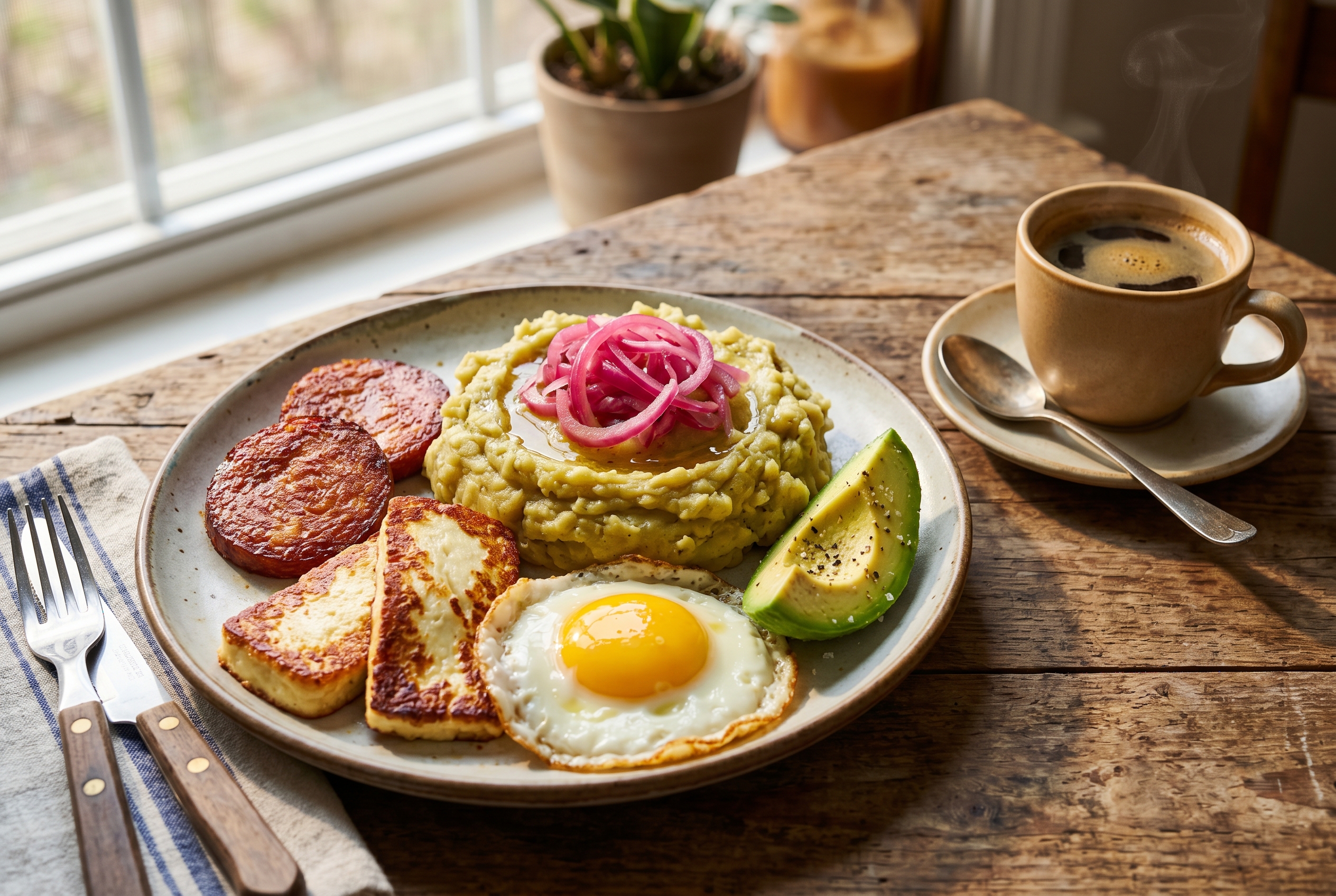
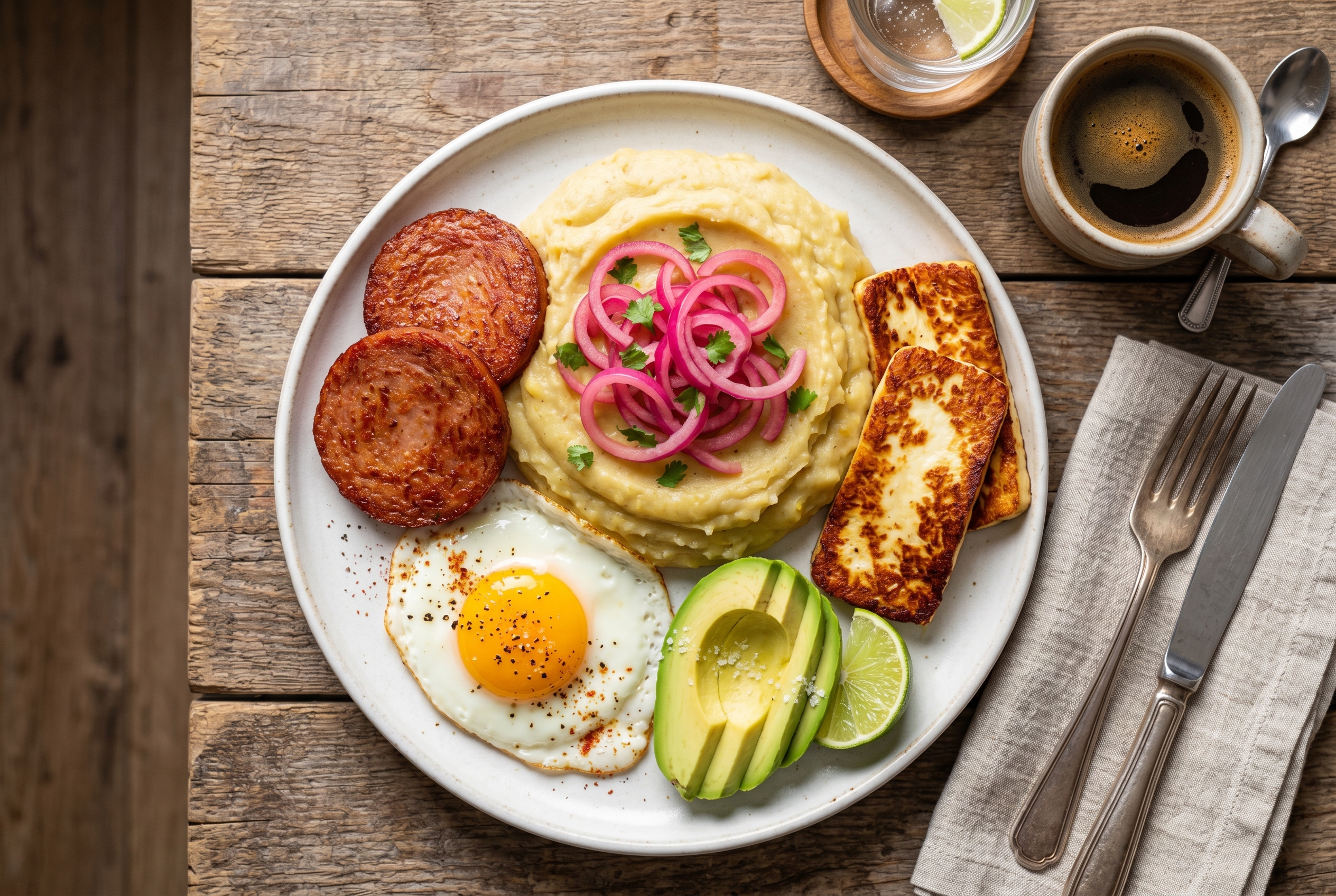
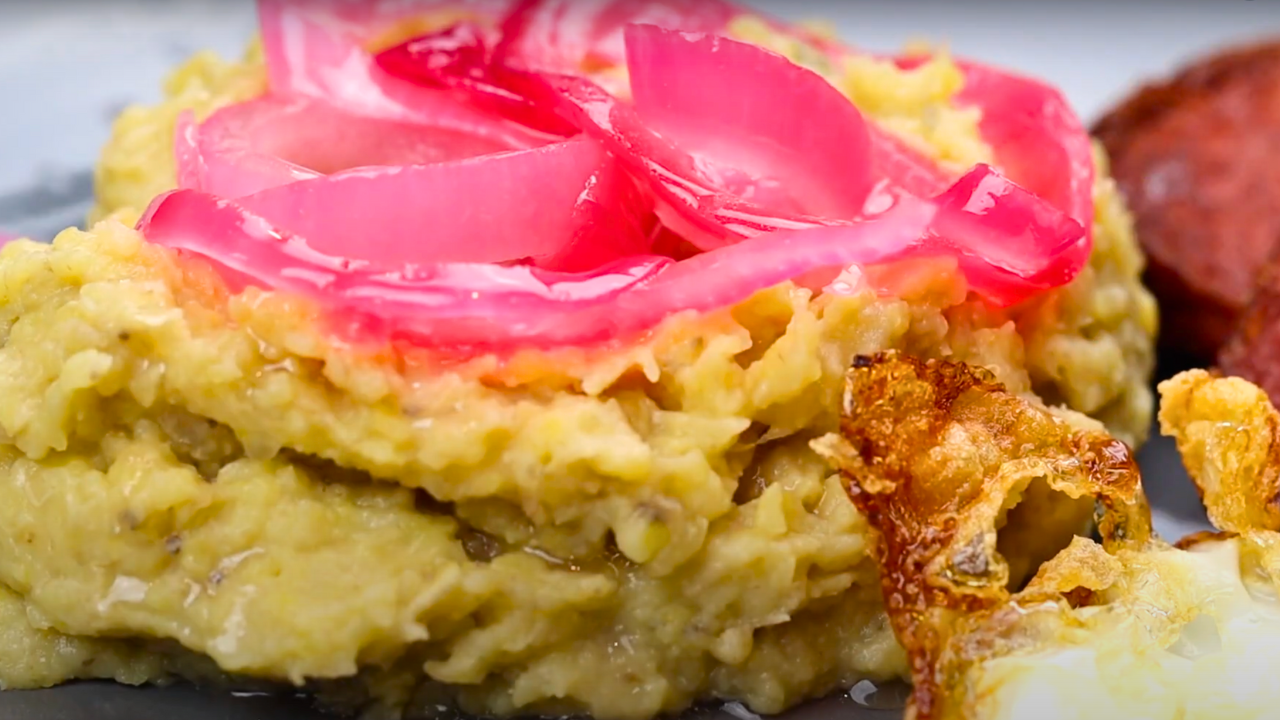
- Mangú: The classic pairing. Mashed plantains and fried cheese are Dominican soulmates.
- Salami frito and fried egg: Together they make up los tres golpes, the full Dominican breakfast.
- Arroz blanco: A few slices alongside rice and beans is a full Dominican lunch plate.
- Pan de agua: Stuff a slice of queso frito inside a fresh roll for a Dominican cheese sandwich.
- Sliced avocado: Cool, creamy avocado is the perfect counterpoint to hot salty cheese.
Frequently Asked Questions
What's the difference between queso de freír and queso blanco?
Queso de freír is firmer, saltier, and structured specifically so it doesn't melt when heated. Queso blanco is softer, milder, and melts into a puddle in a hot pan. They look similar in the store but behave completely differently. For queso frito, you need queso de freír. Always.
Can I use mozzarella or cheddar?
No. Both will melt into a puddle. The magic of queso frito is that it holds its shape and develops a crust while staying firm inside. Only non-melting cheeses work — queso de freír, halloumi, paneer, queso panela, or bryndza.
Where do I find queso de freír?
Any Latin grocery store in a Dominican, Puerto Rican, or Cuban neighborhood. Also available at some Whole Foods, and many larger supermarkets in the Latin cheese section. Brands like Tropical, La Chona, and Verdulandia are common in the US. Online via Amazon Fresh or LatinFoodsUSA if local options fail.
How thick should the slices be?
Exactly ½ inch. Thinner slices overcook and dry out; thicker slices don't heat through. ½ inch is the sweet spot for a crispy exterior and a soft, squeaky interior.
Why did mine turn out pale instead of golden?
Two likely causes: oil wasn't hot enough, or you flipped too early. The oil should shimmer before you add the cheese, and the first side needs 60-90 seconds of uninterrupted heat to develop color. Cold cheese straight from the fridge also takes longer — let it sit 5 minutes on the counter before frying.
Can I bake or air-fry it instead?
You can air-fry it (400°F for 5-7 minutes, flip halfway) and get decent results. Baking doesn't work as well — the cheese doesn't develop a crispy crust in a dry oven. Pan-frying remains the best method by a wide margin.
Can I make queso frito ahead?
No — it's at its best straight from the pan. As it cools, the exterior softens and the interior firms up, losing the contrast that makes queso frito special. If you must reheat leftovers, a quick re-fry in a hot pan (30 seconds per side) is the best recovery.
Do I need oil, or can I dry-fry?
A thin layer of oil is important — it helps the cheese develop an even golden crust and prevents sticking. Dry-frying works with some brands but is inconsistent. 2-3 tablespoon of oil is the right amount. You're not deep-frying; you're shallow pan-frying.
Why is my cheese squeaky?
That's the good squeak. Queso de freír has a casein-rich structure that makes it squeak slightly against your teeth when bitten. Halloumi does the same. It's a mark of authenticity, not a flaw — it's how you know you have the right cheese.
Is queso frito gluten-free?
Yes, naturally. Just cheese and oil — no flour, no breading, no wheat. Great option for gluten-free Dominican breakfasts and brunches. Just double-check the cheese label if you have serious sensitivities, since some processed cheeses list wheat-based additives.
Queso Frito (Dominican Fried Cheese)
Ingredients
Method
- Slice queso de freír ½-inch thick, about 4-5 slices of 4-5 oz each.

- Pat slices dry with paper towels to remove surface moisture.
- Heat 2-3 tablespoon oil in non-stick skillet over medium heat until shimmering, about 2 min.
- Place slices in single layer (don't crowd). Fry undisturbed 60-90 sec until bottom is deep golden.
- Flip once. Cook second side 60 sec until matching golden. Don't flip again.
- Transfer to plate (skip paper towel to preserve crust). Serve hot immediately.
Nutrition
Notes
Tried this recipe?
Let us know how it was!Shop This Recipe
View on Amazon →
View on Amazon →
View on Amazon →
As an Amazon Associate I earn from qualifying purchases at no extra cost to you.
Pick up queso de freír this weekend. Fry a slice. Welcome to Dominican breakfast.
You May Also Like
📺 Watch a similar recipe: Air Fryer Tostones — Crispy Caribbean Plantains
- Air Fryer Whole Fish Recipe (Crispy Caribbean Style) — Crispy on the outside, juicy on the inside — this Caribbean-style air fryer.
- Bacalaitos Recipe with a Twist — This Bacalaitos Recipe with a Twist is one of those recipes you'll find.
- Dominican Quipes — Quipes are a beautiful fusion of Middle Eastern kibbeh and Dominican flavor. Brought.


Leave a Reply