
Habichuelas con Dulce is one of the most beloved Dominican desserts — a rich, creamy sweet bean pudding made from red kidney beans simmered with coconut milk, evaporated milk, cinnamon, and cloves. Every Dominican family has their own version, and it's an absolute staple during Semana Santa (Easter week). This is my family's recipe, the one I grew up eating, and it hits different every single time.
Don't forget to subscribe to Kelvin's Kitchen on YouTube for more delicious recipes!

About This Recipe
Habichuelas con dulce literally translates to "sweet beans," and if you've never tried it, I know it sounds strange. Beans in a dessert? Trust me — once those kidney beans are blended silky smooth and simmered with coconut milk, evaporated milk, warm spices, and sugar, you get something that tastes like a cross between a creamy pudding and a warm milkshake. It's pure Dominican comfort food.
This dessert is deeply tied to Dominican Lenten and Easter traditions. During Semana Santa, families across the island (and in every Dominican neighborhood in New York, New Jersey, and Florida) make enormous batches to share with neighbors, friends, and family. It's a communal recipe — you'll see people walking around with containers of it, gifting it like the treasure it is. Growing up in the DR, the smell of habichuelas con dulce simmering on the stove meant Easter was coming.
The key to a perfect habichuelas con dulce is straining the beans after blending. This step removes all the skins and gives you that impossibly smooth, velvety texture. Some people skip it — don't be that person. The straining is what separates a good habichuelas con dulce from a great one.
Habichuelas con dulce is believed to have originated during the Spanish colonial period in the Dominican Republic, combining indigenous Taíno cooking techniques with Spanish and African ingredients. The dish was originally made without canned milk — early versions used fresh coconut milk exclusively, which the Taíno people had been using for centuries. Today, the mix of coconut milk and evaporated milk is the standard, but some abuelitas in the campo still make it the old way with freshly grated coconut. In modern Dominican culture, making habichuelas con dulce is essentially a social event. Families gather in the kitchen, everyone has a job — someone soaks the beans, someone blends, someone stirs the pot — and the result feeds the entire block. During Easter week in Santo Domingo, you'll see vendors selling it in plastic cups on the street, and it's common for offices and businesses to bring in a batch for everyone.
Ingredients for Habichuelas con Dulce
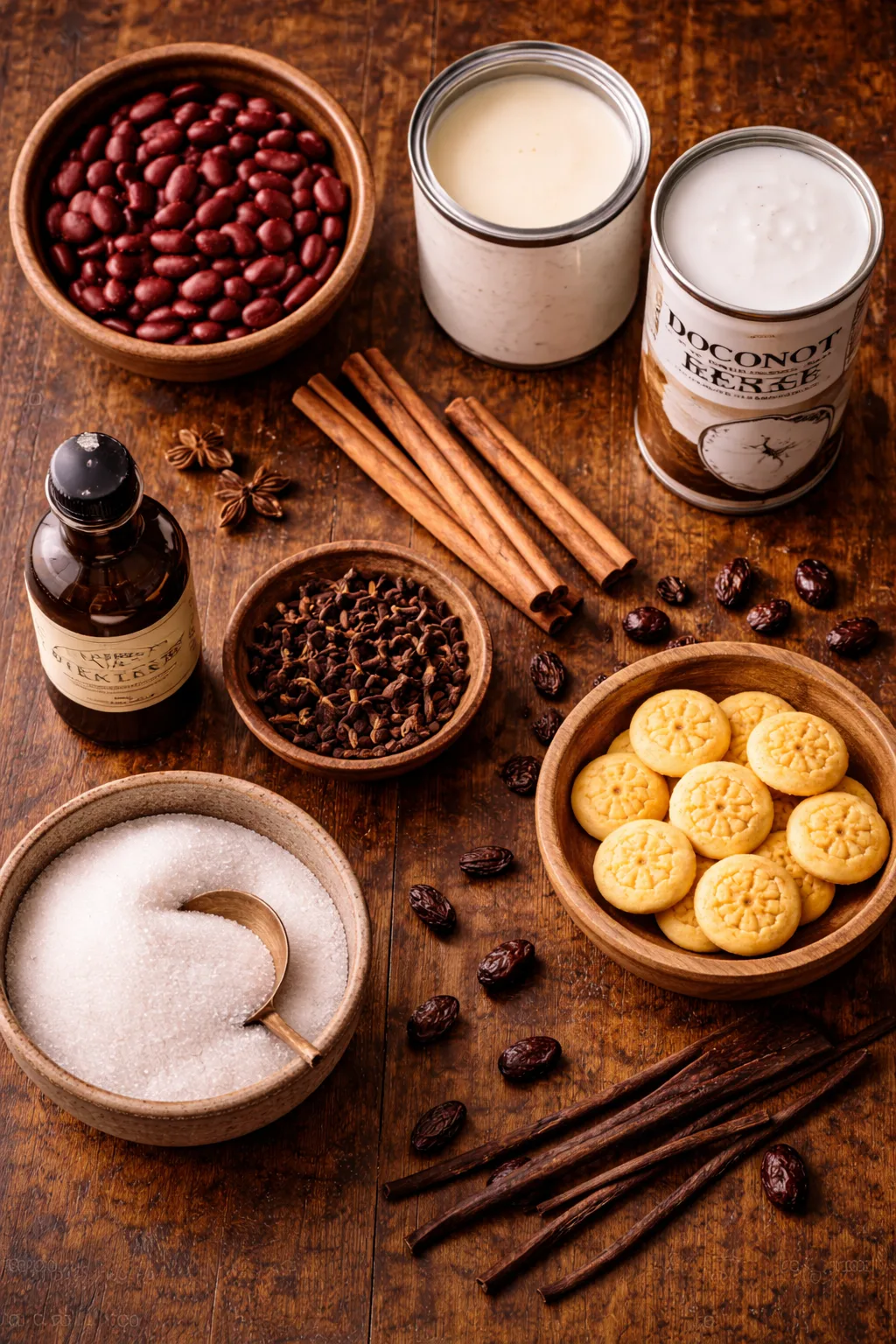
- 1 lb dried red kidney beans — soaked overnight
- 1 can (13.5 oz) coconut milk
- 1 can (12 oz) evaporated milk
- 1 cup sugar — adjust to taste
- 3 cinnamon sticks
- 6 whole cloves
- 1 teaspoon vanilla extract
- ½ cup raisins
- ½ teaspoon salt
- Galletas de leche — for garnish
- Ground cinnamon — for garnish
How to Make Habichuelas con Dulce
- Soak kidney beans overnight in cold water. Drain and rinse.
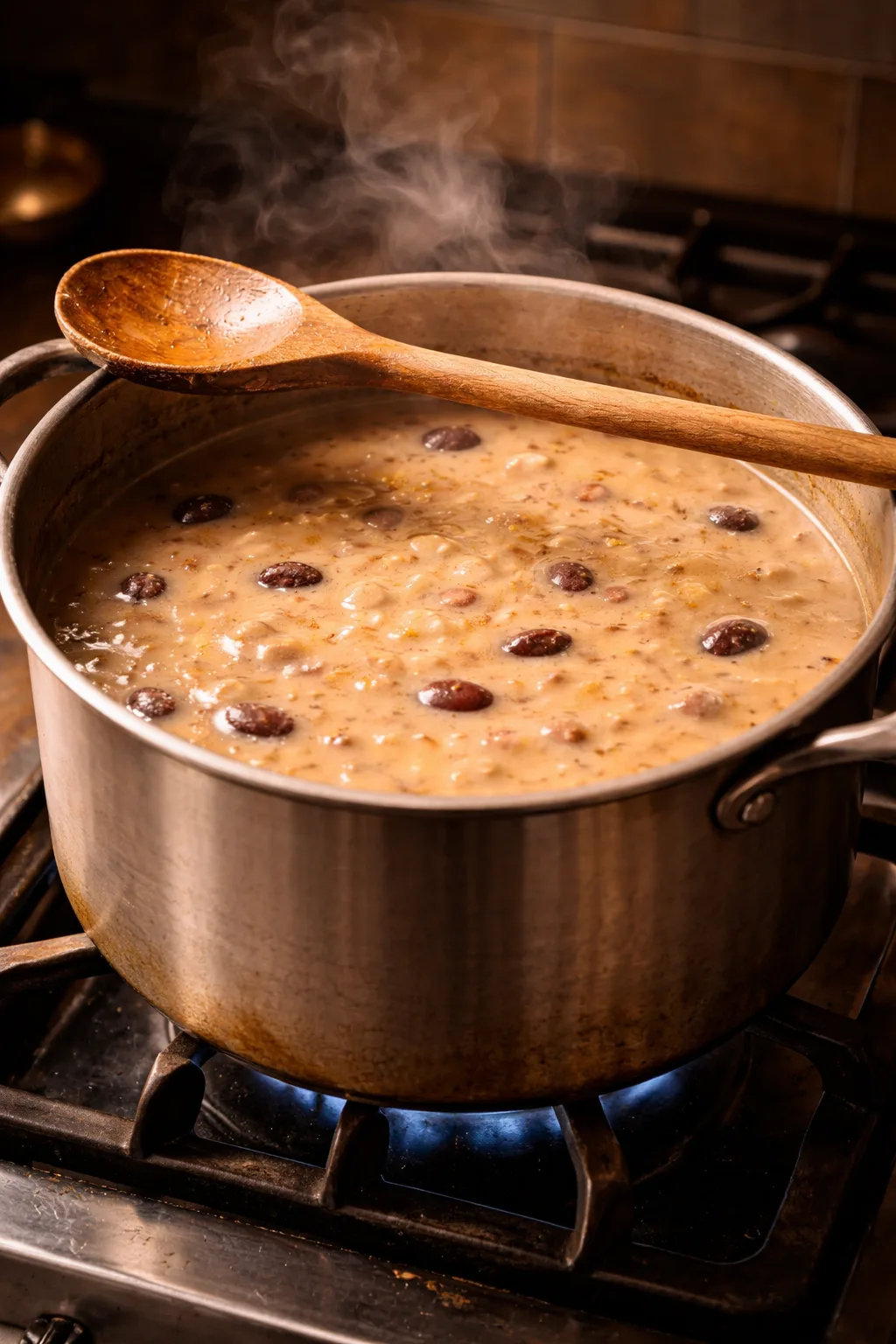
- Add beans to a large pot, cover with fresh water and boil until very soft, about 45-60 minutes.
- Drain beans and blend until completely smooth with 1 cup of coconut milk.
- Pass the blended beans through a fine mesh strainer back into the pot to remove skins.
- Add remaining coconut milk, evaporated milk, sugar, cinnamon sticks, cloves, and salt. Stir well.
- Cook over medium-low heat stirring frequently for 20-30 minutes until thickened.
- Add vanilla extract and raisins in the last 10 minutes.
- Taste and adjust sugar. Remove cinnamon sticks and cloves before serving.
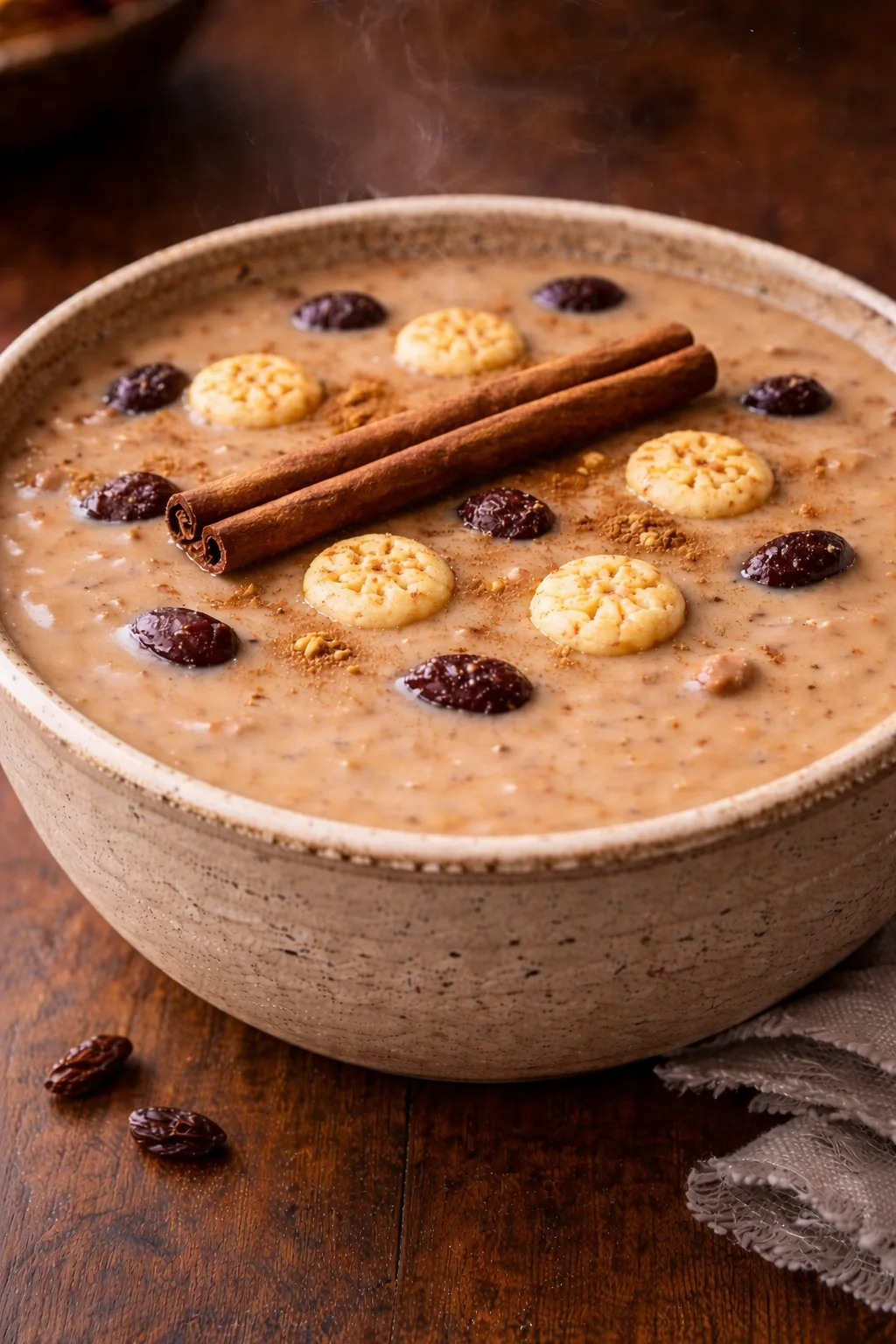
- Serve warm or cold, garnished with galletas de leche and a dusting of ground cinnamon.
Substitutions & Variations
- Canned beans — use 3 cans drained and rinsed kidney beans instead of dried. Skip the soaking and boiling steps. You'll need to blend and strain extra well for a smooth texture.
- Coconut milk — substitute with whole milk for a lighter version. The flavor will be less rich but still delicious.
- Sugar — reduce to ½ cup or use coconut sugar for a less sweet version. Taste as you go and adjust to your preference.
- Raisins — skip entirely if you don't like them, or substitute with dried cranberries for a tart twist.
- Galletas de leche — substitute with Maria cookies or animal crackers if you can't find them at your local Latin grocery store.
Storage and Meal Prep
Refrigerator: Store in an airtight container for up to 5 days. Habichuelas con dulce actually tastes better the next day as the flavors deepen and the texture thickens.
Freezer: Freeze in individual portions for up to 2 months. Thaw overnight in the refrigerator and stir well before serving. The texture may be slightly thinner after freezing — just simmer for a few minutes to thicken it back up.
Reheating: Warm gently over low heat, stirring frequently. Add a splash of coconut milk or evaporated milk if it's too thick. It's also delicious served cold straight from the fridge.
Meal prep tip: Make a big batch the weekend before Easter and let it chill. It gets better with time and saves you the stress of cooking during the holiday.
What to Serve With Habichuelas con Dulce
Galletas de leche (milk cookies) — the classic accompaniment. Crumble them on top or dip them directly into the bowl. This is the most traditional way to enjoy it in the Dominican Republic.
On its own, cold from the fridge — during Easter week, most Dominicans eat it chilled as a standalone dessert, straight from the container. No plate needed.
With a sprinkle of ground cinnamon — a final dusting of cinnamon on top adds aroma and visual appeal. Some families also add a drizzle of condensed milk for extra richness.
Alongside other Dominican Easter dishes — pair it with bacalao guisado (stewed salt cod), or serve after a traditional Dominican fish dinner during Semana Santa.
Frequently Asked Questions
What does habichuelas con dulce taste like?
It tastes like a rich, creamy cinnamon pudding with a subtle earthy undertone from the beans. The coconut milk and evaporated milk create a luscious texture, and the warm spices make it incredibly comforting. If you like horchata or arroz con leche, you'll love this.
Can I use canned beans instead of dried?
You can, but the texture won't be as smooth. If using canned, drain and rinse 3 cans of kidney beans and skip the soaking and boiling steps. You'll need to blend and strain extra well to compensate for the firmer texture.
Is habichuelas con dulce served hot or cold?
Both! Traditionally it's served at room temperature or chilled, especially during the warm Easter season in the Dominican Republic. But many people also enjoy it warm, especially on cooler days. It's delicious either way.
Can I make it less sweet?
Absolutely. Start with ½ cup of sugar and taste as you go. You can also use coconut sugar or a sugar substitute. Some modern versions reduce the sugar and let the natural sweetness of the coconut milk shine through.
What are galletas de leche?
Galletas de leche are simple Dominican milk cookies — round, slightly sweet, and with a crisp texture that softens beautifully when dipped in habichuelas con dulce. You can find them at any Latin grocery store, often in a round tin. If you can't find them, Maria cookies or animal crackers are the closest substitute.
Why do I need to strain the beans?
Straining removes the bean skins, which is what gives habichuelas con dulce its signature velvety smooth texture. Skipping this step will leave you with a grainier consistency. It's the most important step in the whole recipe.
Can I add other mix-ins?
Traditional additions include batata (sweet potato) chunks, which some families cook in the mixture until tender. You can also add a splash of rum or a tablespoon of butter for extra richness.
Is this recipe gluten-free?
The habichuelas con dulce itself is naturally gluten-free. Just check that your galletas de leche garnish is gluten-free if that's a concern, or skip the cookies.
Habichuelas con Dulce
Ingredients
Equipment
Method
- Soak kidney beans overnight in cold water. Drain and rinse.
- Add beans to a large pot, cover with fresh water and boil until very soft, about 45-60 minutes.
- Drain beans and blend until completely smooth with 1 cup of coconut milk.
- Pass the blended beans through a fine mesh strainer back into the pot to remove skins.
- Add remaining coconut milk, evaporated milk, sugar, cinnamon sticks, cloves, and salt. Stir well.
- Cook over medium-low heat stirring frequently for 20-30 minutes until thickened.
- Add vanilla extract and raisins in the last 10 minutes.
- Taste and adjust sugar. Remove cinnamon sticks and cloves before serving.
- Serve warm or cold, garnished with galletas de leche and a dusting of ground cinnamon.
Nutrition
Notes
- Soak the beans for at least 12 hours. This dramatically reduces cooking time and helps them blend smoother. Quick-soak method: boil for 2 minutes, then let sit covered for 1 hour.
- Strain, strain, strain. Blend the beans as smooth as possible, then pass through a fine mesh strainer. This is non-negotiable for that silky texture.
- Stir constantly once the milk goes in. The evaporated milk and coconut milk can scorch on the bottom. Low heat and frequent stirring are your friends.
- Taste as you go. Dominican families vary wildly on sweetness level. Start with ¾ cup sugar and work up.
- It thickens as it cools. If it looks slightly thinner than you want while hot, that's perfect. It will set up more in the fridge.
Tried this recipe?
Let us know how it was!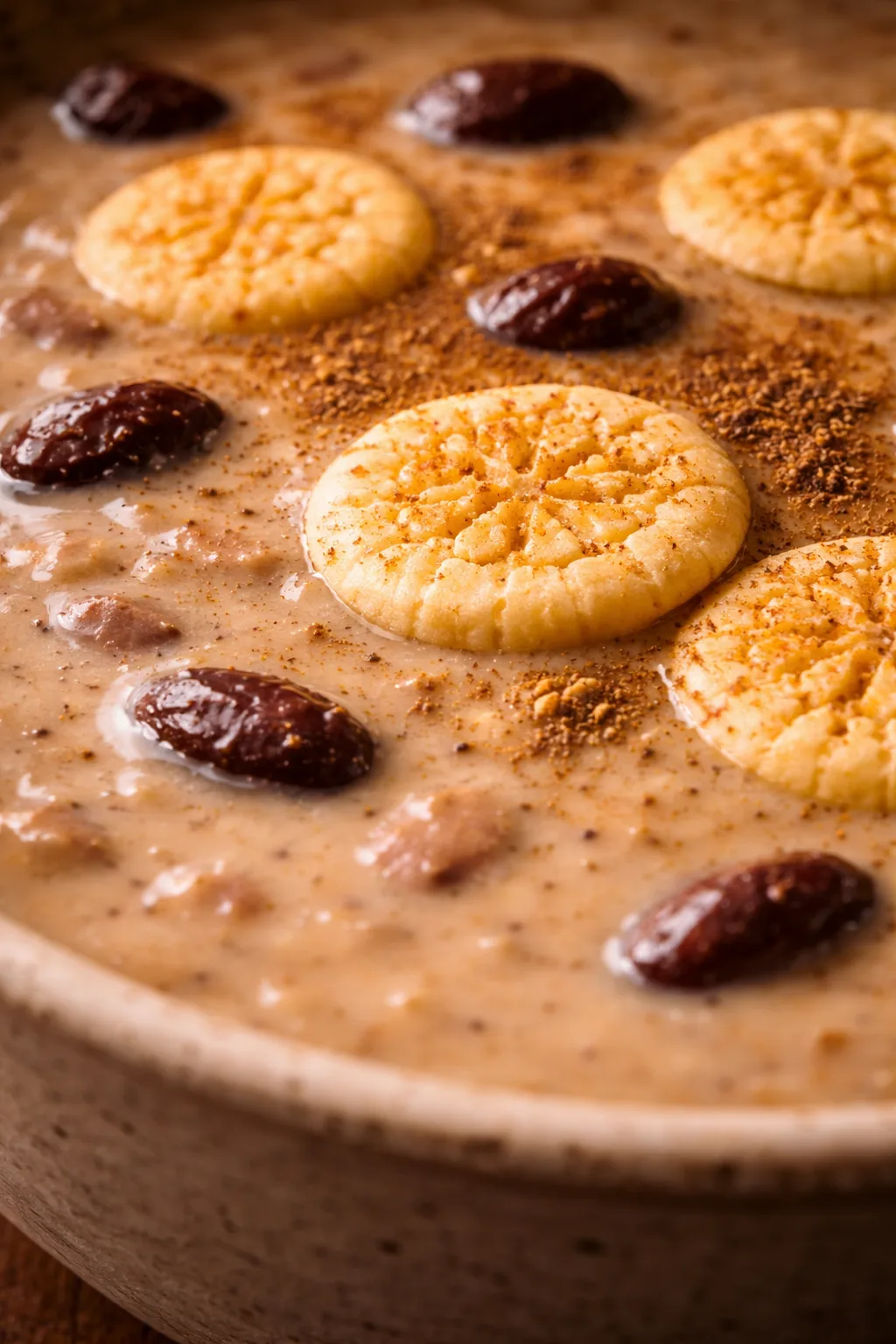
Filed Under


Leave a Reply