
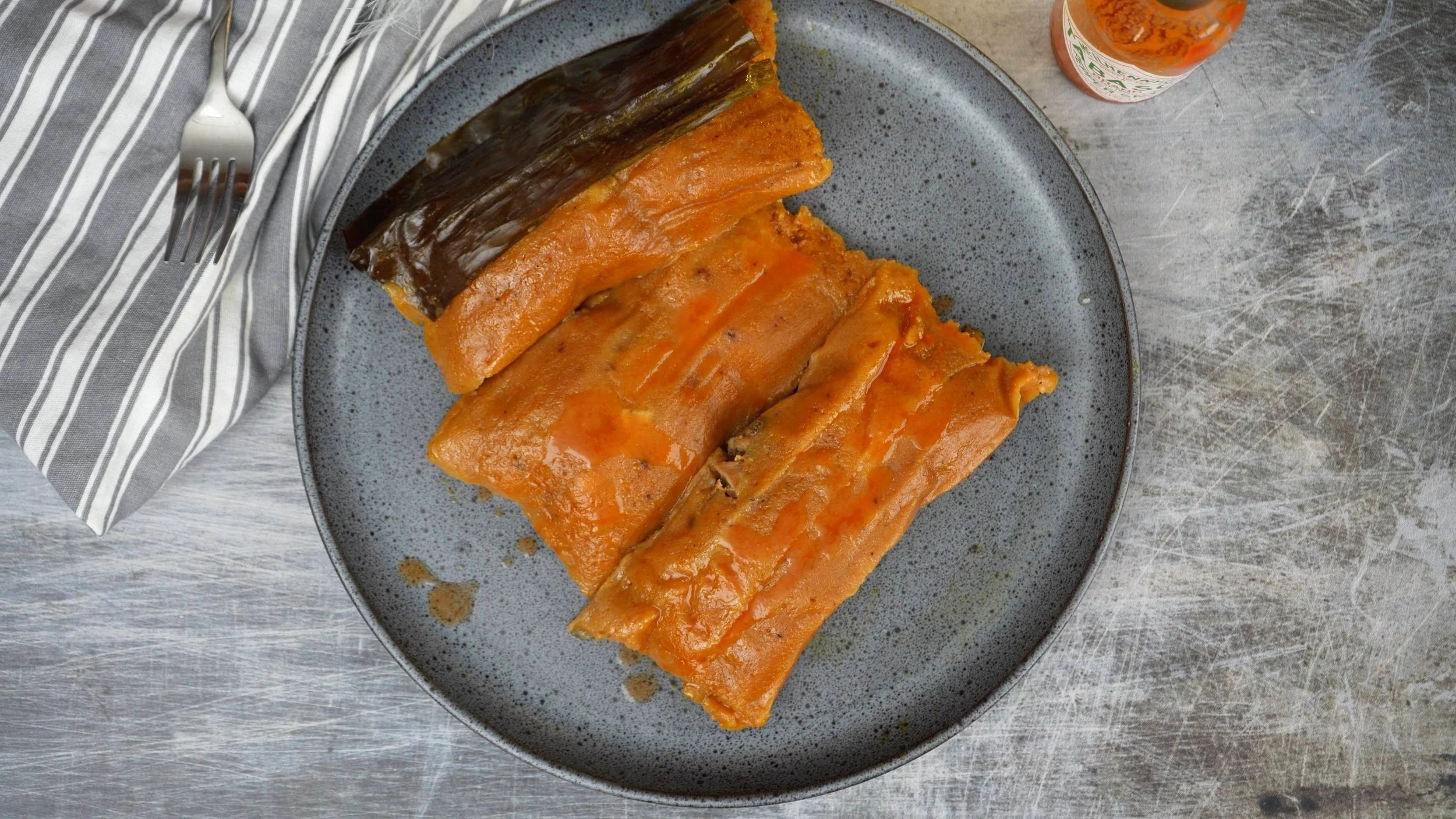
Homemade Pasteles are a beloved Puerto Rican tradition — savory meat filling wrapped in a seasoned masa made from green bananas and root vegetables, then steamed in banana leaves. Every bite is pure comfort. Find the full recipe below.
Did You Know?
Pasteles are deeply rooted in Puerto Rican and Dominican culture, traditionally made as a family affair during the Christmas holiday season. It's common for entire families to gather in the kitchen for a pastelón — an assembly line where everyone has a role in grating, filling, wrapping, and tying.
The masa for pasteles is unique in Latin American cuisine because it's made from grated green bananas and root vegetables like yautía (taro) and calabaza (tropical pumpkin), rather than corn. This gives pasteles their distinctive silky, slightly dense texture that sets them apart from tamales.
Pro Tips
- Use green (unripe) bananas — they must be green and firm to grate properly and achieve the right starchy texture.
- Grate the masa fine — a food processor makes this much easier. The finer the masa, the smoother the final texture.
- Soften banana leaves first — pass them briefly over an open flame or microwave for 30 seconds to make them pliable.
- Don't overfill — about 2 tablespoons of filling per pastel is enough. Overfilling makes them hard to wrap and they may burst.
- Tie them securely — use kitchen twine to tie them firmly so no water gets in during steaming.
Frequently Asked Questions
Can I use frozen banana leaves?
Yes — frozen banana leaves work perfectly. Thaw them, rinse, and pat dry before using.
Where do I find banana leaves?
Check the frozen section of Latin or Asian grocery stores. They're usually sold in large folded packages.
Can I freeze pasteles before cooking?
Yes! Wrap and tie them, then freeze for up to 3 months. Boil directly from frozen — just add 15 minutes to the cooking time.
How long do I boil pasteles?
Boil for about 1 hour if fresh, 1 hour 15 minutes if frozen, in well-salted water.
What meat is traditional for pasteles?
Pork shoulder is most traditional, but chicken, turkey, or a combination are also common.
Can I make the masa ahead of time?
You can prepare the masa a day ahead and refrigerate it. It may darken slightly, but that doesn't affect the taste.
Why did my pasteles come out soggy?
Make sure they're tied very tightly so water can't seep in during boiling.
What is annatto oil?
Oil infused with annatto (achiote) seeds, which gives the masa its traditional orange-yellow color and subtle earthy flavor.
1 tablespoon oregano (Dominican oregano for enhanced flavor)
Watch the Full Video
Watch the video above for a complete step-by-step walkthrough of this recipe. Don't forget to subscribe to Kelvin's Kitchen on YouTube for more delicious recipes!
Full Recipe
I Finally Made Pasteles From Scratch — Here's the Secret My Family Uses Recipe
Ingredients
Method
- 4 hours (or overnight)
- 5 hours (4 hours covered + 1 hour uncovered)
- In a small food processor, blend garlic, onion, Adobo seasoning, oregano, salt, cumin, thyme, rosemary, black pepper, chicken bouillon cube, Sazón, olive oil, and lemon juice until smooth.
- Pat dry the pork shoulder with paper towels to remove excess moisture. Use a sharp knife to poke holes all around the pork.
- Pour the marinade over the pork shoulder, ensuring it penetrates the holes for maximum flavor.
- Place the pork shoulder in a roasting pan with a wire rack, fat side up. Secure the skin with toothpicks to keep it from touching the foil. Cover with aluminum foil.
- Marinate in the fridge for at least 4 hours or overnight.
- Roast at 350°F for 4 hours covered. Then, remove the foil and roast uncovered for an additional hour until the skin is crispy. For extra crispiness, broil for the last 5 minutes.
- Let the pork rest for 10-15 minutes before carving.
- Peel and cut the green bananas, plantain, and Malanga root into smaller pieces. Soak in cold water until ready to process.
- Using a large food processor, blend the vegetables into a smooth masa consistency.
- Transfer the masa to a bowl and season with Adobo seasoning, Sazón, and black pepper. Mix well until evenly incorporated.
- In a saucepan over medium heat, add vegetable oil and annatto seeds. Sauté until the seeds release their vibrant color. Remove from heat and strain the oil.
- Lay out kitchen string and parchment paper. Place a piece of banana leaf on the paper, brush with infused oil, then spread a scoop of masa in the center. Add pork pieces and optional green olives. Fold to close the pastel.
- Tie the pastel bundles securely with kitchen string.
- Cook the pasteles in boiling salted water for 1 to 1.5 hours.
- Serve warm, traditionally with hot sauce and ketchup.
What to Serve With Homemade Pasteles
Arroz con gandules (rice with pigeon peas) is the classic holiday pairing — together with pasteles, it forms the heart of a traditional Puerto Rican Christmas dinner.
A tangy green sauce or hot sauce on the side brightens the rich, savory filling and adds a nice kick of heat.
Coquito — Puerto Rican coconut eggnog — is the traditional holiday drink to serve alongside. Its creamy sweetness complements the savory pasteles beautifully.
Leave a Reply