
This Savory Seared Salmon in Creamy Garlic Dijon Sauce is light, flavorful, and comes together in no time. Perfect for a healthy weeknight dinner or when you want something a little more elegant, this recipe never disappoints. Fresh, simple, and absolutely delicious!
Did You Know?
Pro Tips
Frequently Asked Questions
1. How do I get a perfect sear on salmon?
Pat the fillet completely dry, season generously, and place skin-side up in a screaming hot pan with oil. Do not move it for 4 minutes — the golden crust forms undisturbed.
2. What makes the creamy garlic Dijon sauce?
Saute garlic in the same pan after searing the salmon, deglaze with white wine, add Dijon mustard and heavy cream, and simmer until the sauce coats the back of a spoon.
3. What type of Dijon mustard should I use?
Smooth Dijon mustard (not whole grain) gives the creamiest, most integrated sauce. It adds a sharp, tangy depth without the grittiness of whole grain mustard seeds.
4. How long do I sear salmon on each side?
4 minutes skin-side up for the initial sear, then flip and cook 3-4 minutes skin-side down. The salmon should reach 130 degrees internal for medium, 140 for medium-well.
5. Should I use skin-on or skinless salmon?
Skin-on is recommended — sear flesh-side down first for the golden crust, then flip onto the skin side. The skin also prevents the fillet from overcooking on the bottom.
6. What wine works best for deglazing?
Dry white wine like Sauvignon Blanc or Pinot Grigio. The wine lifts the browned bits from the pan and adds acidity that balances the rich cream sauce.
7. Can I make this sauce without heavy cream?
Half-and-half works for a lighter version. Coconut cream is a dairy-free substitute. The sauce will be thinner but still flavorful with the wine and Dijon base.
8. What vegetables complement this salmon dish?
Sauteed spinach, roasted asparagus, steamed green beans, or a light arugula salad balance the rich, creamy Dijon sauce beautifully.
9. What starch should I serve alongside?
Mashed potatoes, rice pilaf, roasted fingerling potatoes, or orzo pasta are all excellent bases that soak up the creamy garlic Dijon sauce.
10. How do I reheat salmon without overcooking it?
Gently reheat at 275 degrees in the oven for 10-12 minutes. Alternatively, enjoy it cold over a salad — leftover salmon with Dijon sauce makes an elegant lunch.
Watch How to Make This
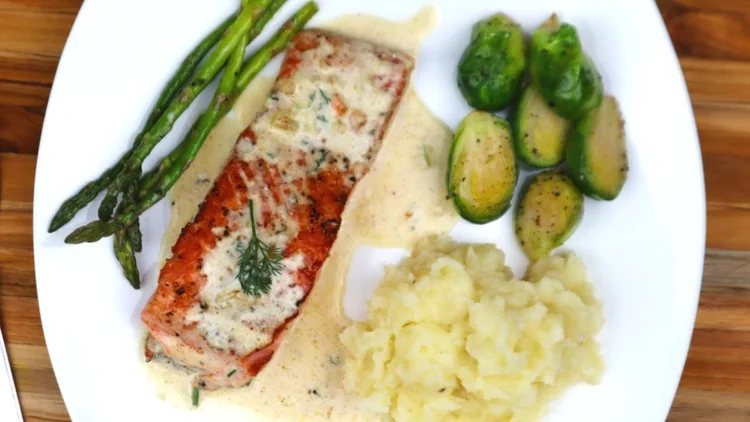
Savory Seared Salmon in Creamy Garlic Dijon Sauce
Ingredients
Method
-
Heat a large non-stick skillet over medium-high heat (or use two skillets if you used large 7 - 8 oz fillets as I did, so they aren't overcrowded).
-
Add 1 ½ teaspoon olive oil to each skillet. Dab both sides of salmon dry with paper towels and season both sides with salt and pepper.
-
Place salmon in a skillet (top of salmon turned down). Let sear until golden brown on the bottom, about 4 minutes then flip and continue to cook to desired doneness, about 2 - 3 minutes longer.
-
Meanwhile, in a liquid measuring cup whisk together cornstarch with 1 tablespoon cream, then mix in enough cream to measure ½ cup. Whisk in dijon mustard and honey.
-
Remove salmon from the skillet and transfer to a plate, leaving oil in one skillet. Tent salmon with foil.
-
Add garlic to the skillet with oil set over medium heat, and saute until just barely golden brown, about 20 - 30 seconds. Pour in chicken broth.
-
Bring to a simmer then reduce heat to medium-low and let simmer until reduced by about ⅔, about 3 minutes.
-
Whisk the cream mixture once more, then pour it into the skillet. Cook and stir, bringing to a simmer. Let simmer gently, while stirring, for about 30 seconds.
-
Remove from heat stir in dill, return salmon fillets to pan, and spoon sauce over salmon. Serve warm.
-
Enjoy your Savory Seared Salmon in Creamy Garlic Dijon Sauce Recipe!
-
Lemon Butter Pan Seared Salmon
-
Baked Salmon with Garlic and Djion
-
Air Fryer Honey Glazed Salmon
-
20 Minute Instant Pot Shrimp Scampi
Notes
Refrigerator: Store leftovers in an airtight container for up to 3-4 days.
Freezer: Freeze in a sealed container for up to 2-3 months. Thaw overnight in the fridge.
Reheat: Warm in a skillet over medium heat, in the microwave, or in a 350°F oven until heated through.
Nutrition Facts (Per Serving, Approximate)
Nutrition values are estimates and may vary based on ingredients and preparation.




Leave a Reply